
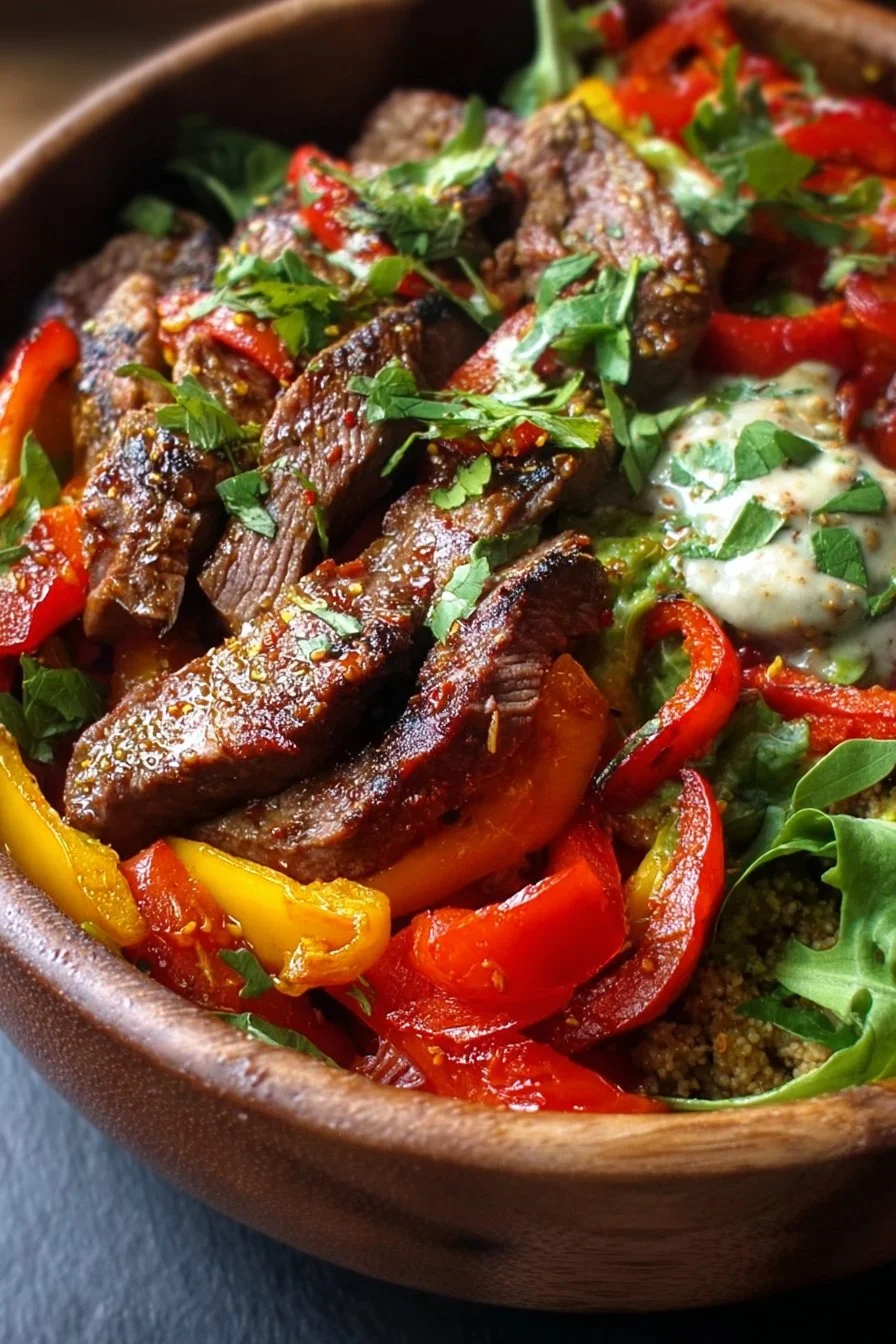
This High-Protein Steak Fajita Bowl is bold, savory, and built for weeknight satisfaction — smoky, seared skirt steak layered over bright, tender bell peppers and onions with a light, rice-like base of cauliflower. The textures bounce between crisp-tender veggies, succulent slices of beef, and fluffy cauliflower rice, while the lime and cilantro lift every bite. It’s an easy, one-skillet meal that comes together fast and feels special enough for guests yet simple enough for a busy weeknight. If you’re cutting carbs but want a hearty, protein-forward dinner, this is the bowl for you — and if you already love a classic version, this lighter spin keeps all the fajita flavor without the heavy carbs like a traditional steak fajita bowl.
Why You’ll Love This High-Protein Steak Fajita Bowl
- High in protein: skirt steak provides a satisfying protein punch that keeps you full and fueled.
- Low-carb, high-flavor: cauliflower rice stands in for grain-based rice without sacrificing texture.
- Speedy weeknight meal: everything cooks quickly in one skillet for minimal cleanup.
- Big, bright flavors: fajita seasoning, fresh cilantro, and lime wedges add zesty contrast.
- Versatile plating: serve it as a bowl for meal prep, a casual dinner, or a protein-packed lunch.
- Visual appeal: colorful bell peppers and sliced steak make it look restaurant-quality with little effort.
- Great for meal prep: components hold up well when stored separately and reassembled.
- Customizable: easy to tweak spice level and add optional extras without changing the core method.
What Is High-Protein Steak Fajita Bowl?
This dish is a composed bowl that features thinly sliced skirt steak seasoned with fajita spices, sautéed bell pepper and onion, and a base of riced cauliflower. It tastes like a classic Tex-Mex fajita — smoky, savory, with just enough char — but in bowl form and with lower carbs. The cooking method is fast stovetop sautéing and searing in a skillet, which gives the steak a caramelized exterior and the vegetables a tender-crisp finish. People typically serve it for dinner or meal-prep lunches, and it brings a relaxed, confident vibe: a comforting, protein-forward weeknight winner that still feels fresh and bright. For more ideas on protein-packed bowls that lean into similar flavor profiles, you might also enjoy this collection of high-protein breakfast bowls that use the same easy assembly concept.
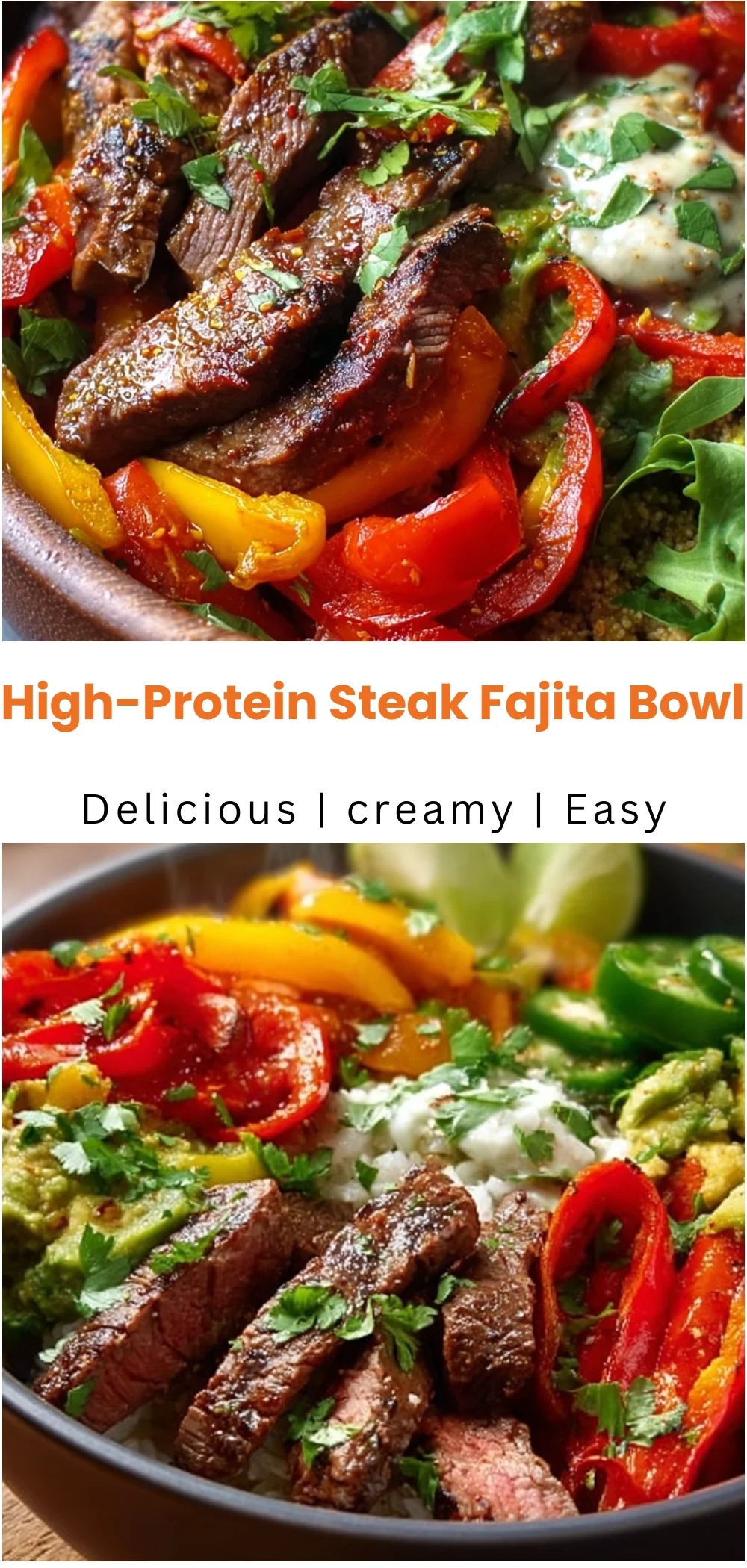
Ingredients for High-Protein Steak Fajita Bowl
For the Bowl
- 1 lb skirt steak
- 2 cups riced cauliflower
- 1 bell pepper, sliced
- 1 onion, sliced
- 2 tablespoons olive oil
- 1 tablespoon fajita seasoning
- Salt and pepper to taste
For Serving
- Fresh cilantro for garnish
- Lime wedges for serving
Ingredient Notes (Substitutions, Healthy Swaps)
- Skirt steak: If skirt isn’t available, flank steak or hanger steak are reasonable alternatives; they cook similarly and slice well across the grain. (Optional swap.)
- Riced cauliflower: Use pre-riced cauliflower from the store or pulse fresh cauliflower in a food processor until rice-sized. Frozen riced cauliflower works; thaw and drain slightly to avoid extra moisture.
- Olive oil: Any neutral oil with a high smoke point (avocado oil, grapeseed) will work if you prefer.
- Fajita seasoning: Use a homemade mix or store-bought; adjust salt to preference. If you want less sodium, halve the amount and add more black pepper and a squeeze of lime for brightness.
- Vegetable swaps (optional): Add sliced mushrooms or zucchini if you want more veg — add these in place of, not in addition to, the listed veggies to keep the dish close to the original.
- Dietary swaps: This recipe is naturally gluten-free and dairy-free as written.
Step-by-Step Instructions
Step 1 – Prep your ingredients
Trim any excess fat from the skirt steak and slice the bell pepper and onion into thin strips. Pat the steak dry and season evenly with the fajita seasoning, salt, and pepper.
Visual cue: The steak should look evenly coated but not caked with seasoning; veggies should be uniformly sliced for even cooking.
Step 2 – Sauté the onions and peppers
Heat 1 tablespoon of olive oil in a large skillet over medium-high heat. Add the sliced onion and bell pepper and cook, stirring occasionally, until softened and slightly charred at the edges.
Visual cue: Veggies should be glossy, slightly softened, and showing darker caramelized spots.
Step 3 – Sear the steak
Push the vegetables to the side, add the remaining tablespoon of oil if needed, and place the seasoned skirt steak in the hot skillet. Cook until the steak reaches your desired doneness — about 3–4 minutes per side for medium-rare to medium depending on thickness.
Pro cue: Use a hot pan and don’t move the steak for the first 2–3 minutes to allow a good sear that locks in flavor.
Step 4 – Rest and slice the steak
Remove the steak from the skillet and let it rest for a few minutes on a cutting board before slicing thinly across the grain.
Visual cue: Resting prevents juices from escaping and makes the slices look moist and tender.
Step 5 – Cook the riced cauliflower
In the same skillet (no need to clean), add the riced cauliflower and cook for 3–5 minutes, stirring occasionally, until tender and warmed through. Season lightly with a pinch of salt and pepper.
Pro cue: Cooking cauliflower in the steak’s residual pan juices adds extra beefy flavor — scrape any browned bits into the cauliflower as it cooks.
Step 6 – Assemble the bowls
Start with a base of riced cauliflower, top with sliced steak, and arrange the sautéed onion and bell pepper alongside. Garnish with fresh cilantro and serve with lime wedges on the side.
Visual cue: Bright green cilantro and lime wedges make the bowl pop; steak should be pinkish inside if cooked medium-rare to medium.
Pro Tips for Success
- Preheat the skillet: A properly heated pan ensures a great sear on the steak — it should sizzle on contact.
- Pat steak dry: Moisture prevents browning; use a paper towel to dry the surface before seasoning.
- Don’t overcrowd the pan: Give the steak room to sear; if the pan is crowded the meat will steam instead of brown.
- Slice against the grain: This shortens the muscle fibers and makes each bite more tender.
- Keep cauliflower tender, not mushy: 3–5 minutes is usually enough — overcooking makes it soggy.
- Taste and adjust salt: Fajita seasoning can be salty; add extra salt at the end only if needed.
- Rest the steak: A 3–5 minute rest yields juicier slices and cleaner plating.
- Use the pan juices: The caramelized bits left in the skillet are flavor gold — deglaze with a squeeze of lime or just scrape them into the cauliflower rice.
Flavor Variations (Optional)
- Spicy version (optional): Sprinkle red pepper flakes or cayenne into the fajita seasoning to crank up heat.
- Citrus-forward (optional): Add extra lime zest to the cauliflower rice for a bright citrus note.
- Herby finish (optional): Mix chopped cilantro into the riced cauliflower before serving for a herbier base.
- Veggie-forward (optional): Fold in extra sautéed vegetables (mushrooms, zucchini) for more volume while keeping the same method.
- Smoky twist (optional): Add a pinch of smoked paprika to the fajita seasoning for deeper smoky flavor.
- Lemon-lime swap (optional): Use lemon wedges instead of lime if you prefer a slightly different citrus profile.
Serving Suggestions
- Family dinner: Serve bowls family-style and let everyone squeeze lime and sprinkle cilantro to taste.
- Meal prep: Pack riced cauliflower and steak separately to keep textures fresh; combine when ready to eat.
- Weeknight hosting: Plate the slices of steak over the cauliflower and arrange veggies neatly for a simple dinner party presentation.
- Low-carb pairing: Add a side salad or steamed greens if you want more vegetables alongside the bowl.
- Casual get-together: Set up a “build-your-own bowl” station with cilantro and lime wedges on the side.
- Quick lunch: Scale down portions for a hearty high-protein lunch that reheats well.
Make-Ahead, Storage & Reheating
- Make-ahead: Cook components up to 24 hours in advance. Store the steak slices, riced cauliflower, and sautéed vegetables in separate airtight containers to preserve texture.
- Refrigerator storage: Store cooked components for up to 3–4 days.
- Reheating methods:
- Skillet: Reheat riced cauliflower and vegetables in a skillet over medium heat until warm, then add steak slices just to warm through (1–2 minutes).
- Microwave: Reheat in short bursts (30–45 seconds), stirring between intervals to avoid overcooking the steak.
- Texture changes: Cauliflower can soften further after refrigeration; quick skillet reheating helps revive some texture. Steak can dry slightly if reheated too long — aim to warm, not cook.
Storage and Freezing Instructions
- Freezing: This dish can be frozen, but texture will change. Freeze components separately in airtight, freezer-safe containers for up to 2 months.
- Thawing: Thaw in the refrigerator overnight before reheating.
- Why freezing is slightly imperfect: Riced cauliflower and cooked steak may lose some texture after freezing and thawing; flavors remain good, but the cauliflower can become softer. If you’re aiming for best texture, refrigerate and eat within 3–4 days instead of freezing.
Nutrition Facts (Per Serving)
| Calories | Protein | Carbs | Fat | Fiber | Sodium |
|———|——–|——|—–|——|——-|
| 341 kcal | 31 g | 8 g | 20 g | 2 g | 680 mg |
Nutrition values are estimates and may vary depending on ingredients and portion sizes.
FAQ About High-Protein Steak Fajita Bowl
Q: My steak cooked unevenly — how do I avoid that?
A: Let the pan get fully hot before adding the steak, and don’t overcrowd. If pieces vary in thickness, pound slightly or cut to a more uniform thickness.
Q: The riced cauliflower turned out soggy — what went wrong?
A: Likely too much moisture. Use a hot pan and cook off excess water quickly, or drain thawed frozen riced cauliflower before cooking.
Q: How do I know when the steak is done?
A: Use the touch test or a meat thermometer. For medium-rare aim for 130–135°F (54–57°C) before resting. The recipe’s 3–4 minutes per side is a guideline and will vary by thickness.
Q: Can I make this vegetarian?
A: As written, no — this recipe relies on skirt steak. For a vegetarian option, consider marinated, grilled portobello or extra hearty vegetables as an optional variation.
Q: How long will leftovers last in the fridge?
A: Store components separately in airtight containers for 3–4 days.
Q: What’s the best way to reheat without overcooking the steak?
A: Warm the cauliflower and veggies in a skillet first, then add steak slices just long enough to bring them to serving temperature (1–2 minutes).
Notes
- Plating idea: Slice the steak on an angle and fan it across the bowl for an attractive presentation.
- Small flavor upgrade: Finish with an extra squeeze of lime just before serving to brighten all the flavors.
- Seasoning adjustment: Taste the cauliflower rice after cooking and adjust salt; fajita seasoning can be salty, so season the rice conservatively at first.
- Presentation tip: Scatter chopped cilantro last to preserve its fresh green color and aroma.
High-Protein Steak Fajita Bowl
A bold and savory bowl featuring smoky skirt steak, sautéed bell peppers and onions, and a light base of riced cauliflower.
- Prep Time: 15 minutes
- Cook Time: 15 minutes
- Total Time: 30 minutes
- Yield: 4 servings
- Category: Main Course
- Method: Stovetop
- Cuisine: Tex-Mex
- Diet: Low-Carb
Ingredients
- 1 lb skirt steak
- 2 cups riced cauliflower
- 1 bell pepper, sliced
- 1 onion, sliced
- 2 tablespoons olive oil
- 1 tablespoon fajita seasoning
- Salt and pepper to taste
- Fresh cilantro for garnish
- Lime wedges for serving
Instructions
- Prep your ingredients: Trim any excess fat from the skirt steak and slice the bell pepper and onion into thin strips. Pat the steak dry and season evenly with the fajita seasoning, salt, and pepper.
- Sauté the onions and peppers: Heat 1 tablespoon of olive oil in a large skillet over medium-high heat. Add the sliced onion and bell pepper and cook, stirring occasionally, until softened and slightly charred at the edges.
- Sear the steak: Push the vegetables to the side, add the remaining tablespoon of oil if needed, and place the seasoned skirt steak in the hot skillet. Cook until the steak reaches your desired doneness — about 3–4 minutes per side for medium-rare to medium depending on thickness.
- Rest and slice the steak: Remove the steak from the skillet and let it rest for a few minutes on a cutting board before slicing thinly across the grain.
- Cook the riced cauliflower: In the same skillet (no need to clean), add the riced cauliflower and cook for 3–5 minutes, stirring occasionally, until tender and warmed through. Season lightly with a pinch of salt and pepper.
- Assemble the bowls: Start with a base of riced cauliflower, top with sliced steak, and arrange the sautéed onion and bell pepper alongside. Garnish with fresh cilantro and serve with lime wedges on the side.
Notes
Customize by adjusting spice levels or adding optional extras like mushrooms or zucchini.