
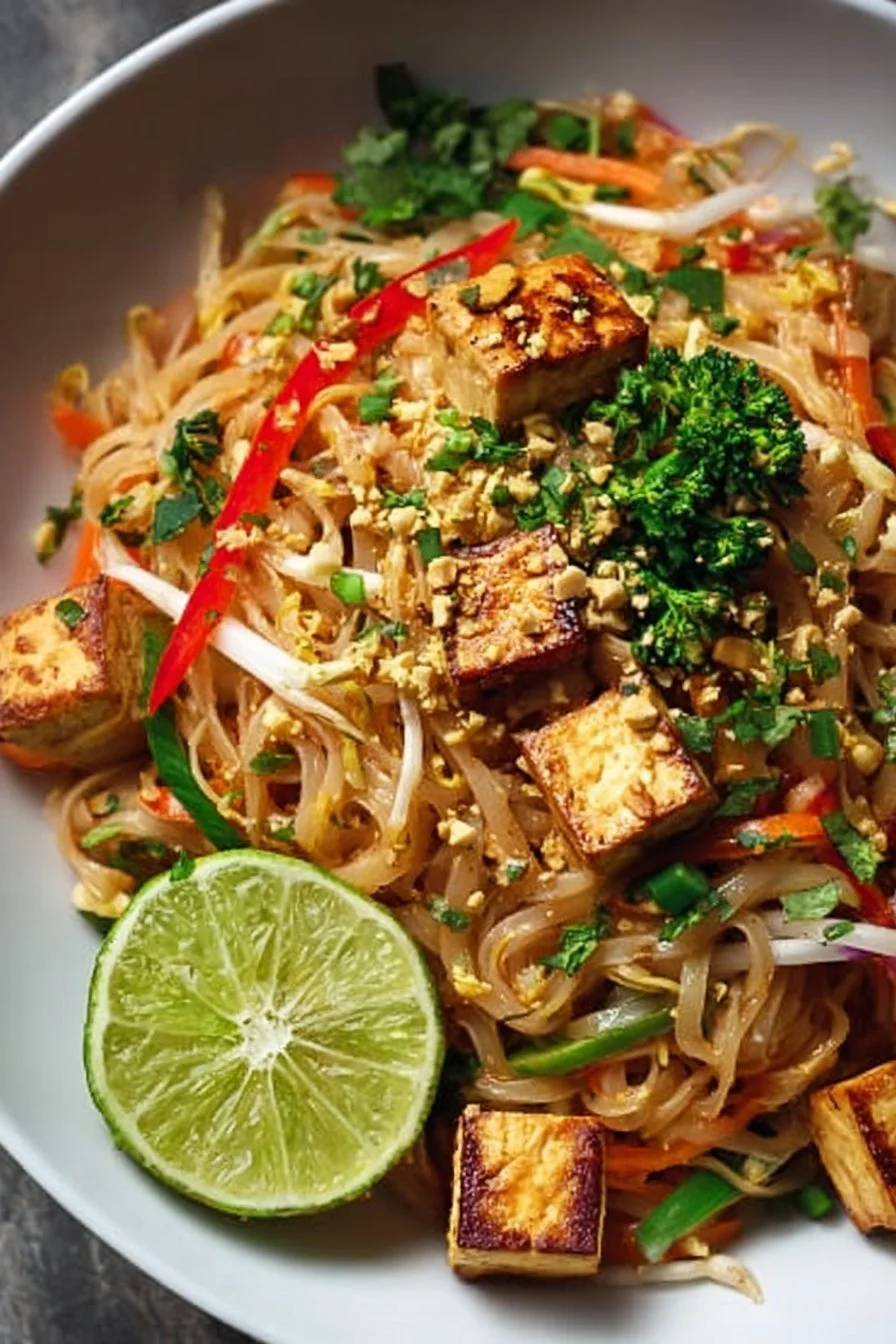
Bright, tangy, and satisfyingly chewy — this High Protein Tofu Pad Thai brings together crisp-tender vegetables, golden pan-fried tofu, and slippery rice noodles tossed in a simple peanut-soy-lime sauce. The flavors are familiar and comforting, with a nutty richness from peanut butter, a salty backbone from soy sauce, and a bright lift from lime wedges at the table. Texturally it sings: crunchy peanuts against soft noodles and crispy tofu cubes. It’s an easy weeknight favorite that comes together in about 30 minutes and makes a generous, protein-forward meal — serve it with extra lime wedges and a sprinkle of chopped peanuts for a restaurant-style finish. For more high-protein meal inspiration, I often pair recipes like this with a roundup of best high-protein recipe ideas when planning a weekly menu.
Why You’ll Love This High Protein Tofu Pad Thai
- High-protein and filling thanks to a full 14 oz of firm tofu — great for plant-forward diets.
- Fast and weeknight-friendly: most of the work is stovetop frying and a quick noodle cook.
- Balanced flavors: salty (soy), nutty (peanut butter), tangy (lime), and a hint of sweetness (sugar).
- Great texture contrast: crispy tofu, tender noodles, bright crunchy vegetables, and toasted peanuts.
- Easy to scale up for meal prep or double for leftovers.
- Flexible and forgiving — you can swap vegetables or adjust sauce ratios to suit your taste.
- Vegetarian and easily adaptable for gluten-free diets (see Ingredient Notes).
What Is High Protein Tofu Pad Thai?
Pad Thai is a classic stir-fried noodle dish from Thailand, traditionally made with rice noodles, a savory-sour sauce, vegetables, and protein. This version leans into plant-based protein by using a full 14 ounces of firm tofu that’s pressed, cubed, and pan-fried until golden and crispy. Flavor-wise it’s salty and nutty with bright citrus notes from lime; the peanut butter brings creaminess and body to the sauce instead of the more traditional fish sauce and tamarind. The cooking method is a quick stir-fry: high heat, quick tossing, and minimal fuss. It’s perfect as a comforting weeknight meal, a casual dinner for friends, or a hearty lunch that reheats well.
Ingredients for High Protein Tofu Pad Thai
For the Base
- 14 oz firm tofu, pressed and cubed
- 8 oz rice noodles
- 2 tablespoons vegetable oil
For the Vegetables
- 1 cup bean sprouts
- 1 cup bell peppers, sliced
- 1 cup carrots, julienned
- 3 green onions, chopped
- 3 cloves garlic, minced
For the Sauce
- 1/4 cup soy sauce
- 2 tablespoons peanut butter
- 1 tablespoon lime juice
- 1 teaspoon sugar
For Serving
- Chopped peanuts
- Lime wedges
Ingredient Notes (Substitutions, Healthy Swaps)
- Soy sauce: For a gluten-free version, substitute tamari or a gluten-free soy sauce 1:1. For lower sodium, use a reduced-sodium soy sauce and taste before adding more.
- Peanut butter: Use smooth peanut butter for a silky sauce. Almond butter can be used as an optional swap for a different nutty profile (optional).
- Tofu: Firm tofu provides the best texture. If you can’t press tofu, choose extra-firm and pat very dry with paper towels.
- Rice noodles: Use the 8 oz package as listed. If you prefer wider or thinner noodles, cook according to package directions — the cooking time can vary slightly.
- Vegetables: Stick to the vegetables listed for the recipe’s balance, but optional swaps like shredded cabbage or snap peas can be added sparingly.
For more ideas on protein-packed meals that pair nicely with this dish, see my round-up of top high-protein recipes.
Step-by-Step Instructions
Step 1 – Cook the noodles
- Cook the rice noodles according to package instructions, then drain and set aside.
Visual cue: Noodles should be tender but still slightly firm (al dente) and not mushy. Rinse briefly under warm water if they start to stick together.
Step 2 – Crisp the tofu
2. In a large skillet, heat vegetable oil over medium-high heat. Add the cubed tofu and cook until crispy on all sides.
Visual cue: Tofu cubes should be golden brown and have crisp edges.
Pro cue: Don’t crowd the pan — give tofu room so it browns evenly. If needed, fry in two batches.
Step 3 – Stir-fry aromatics and vegetables
3. Add garlic and vegetables (bell peppers, carrots, green onions). Stir-fry for about 3–4 minutes until tender.
Visual cue: Vegetables should be vibrant and tender-crisp, not limp.
Pro cue: Add garlic last among aromatics so it scents the oil but doesn’t burn.
Step 4 – Make and add the sauce
4. In a small bowl, mix soy sauce, peanut butter, lime juice, and sugar. Pour this sauce into the skillet and stir to combine.
Visual cue: The sauce will be glossy and coat the tofu and vegetables evenly.
Pro cue: If the sauce is too thick, add a teaspoon of warm water at a time to loosen it.
Step 5 – Combine noodles and bean sprouts
5. Add the cooked noodles and bean sprouts to the skillet, mixing everything together until heated through.
Visual cue: Noodles should be evenly coated in the sauce and the bean sprouts warmed but still crunchy.
Pro cue: Use tongs to lift and toss for even coating and to avoid breaking the noodles.
Step 6 – Plate and garnish
6. Serve garnished with chopped peanuts and lime wedges.
Visual cue: Finish with a generous sprinkle of chopped peanuts and a wedge of lime on the side for squeezing.
Pro cue: Offer extra lime at the table so each eater can brighten their bowl to taste.
Pro Tips for Success
- Heat control: Keep the pan at medium-high so vegetables char slightly but don’t burn; adjust the heat if anything seems to brown too quickly.
- Tofu texture: Press the tofu for at least 15–30 minutes to remove excess water so it crisps instead of steams.
- Sauce balance: Taste before tossing in the noodles; you can add more lime for acidity or more sugar for sweetness to balance soy’s saltiness.
- Prevent clumping: Toss noodles with a drizzle of oil immediately after draining to keep them from sticking.
- Timing: Have all sauce components mixed and veggies prepped before you start so the stir-fry moves quickly.
- Even cooking: If the skillet isn’t big enough, cook tofu first, remove it, then stir-fry veggies and combine everything at the end.
- Use fresh lime: Fresh lime juice brightens the dish far better than bottled.
Flavor Variations
(OPTIONAL)
- Spicy version: Add red pepper flakes or a drizzle of Sriracha to the sauce for heat.
- Crunch boost: Toss in thinly sliced raw cucumbers or extra bean sprouts at the end for more crunch.
- Nut-free version: Use sunflower butter or tahini instead of peanut butter (note: flavor changes).
- Extra herbs: Fold in fresh cilantro or Thai basil at the end for a herbaceous lift.
- Protein boost: Serve with extra chopped peanuts on top for more protein and crunch.
Serving Suggestions
- Plate in shallow bowls and finish with lime wedges and chopped peanuts for a restaurant feel.
- Serve alongside a simple green salad dressed in lime and oil for a bright contrast.
- Add steamed or roasted greens (like bok choy or broccoli) for a heartier plate.
- Perfect for casual weeknight dinners, potlucks, or for packing into lunches (cool before sealing containers).
- Pair with simple cucumber slices dressed in rice vinegar for a refreshing side.
Make-Ahead, Storage & Reheating
- Make-ahead: Cook noodles and press tofu ahead of time; store separately in the refrigerator for up to 24 hours. Combine and finish cooking when ready.
- Refrigerator storage: Store leftovers in an airtight container for up to 3–4 days.
- Reheating: Gently reheat in a skillet over medium heat with a splash of water to loosen the sauce, or microwave covered for 1–2 minutes, stirring halfway. Add a squeeze of fresh lime after reheating to revive flavors.
- Texture changes: Noodles may soften with storage; tossing briefly in a hot skillet helps restore their texture.
Storage and Freezing Instructions
- Freezing: This dish is not ideal for freezing because rice noodles tend to become overly soft and mushy after thawing. Tofu and sauce freeze better, but the overall texture of the noodles will degrade.
- Alternative: If you want to freeze components, freeze the sauce and tofu separately; thaw and cook fresh noodles when ready to eat for best texture.
Nutrition Facts (Per Serving)
| Calories | Protein | Carbs | Fat | Fiber | Sodium |
|———|——–|——|—–|——|——-|
| 490 kcal | 16 g | 51 g | 18 g | 4 g | 900 mg |
Nutrition values are estimates and may vary depending on ingredients and portion sizes.
FAQ About High Protein Tofu Pad Thai
Q: My tofu didn’t get crispy. What went wrong?
A: Likely too much moisture or overcrowding the pan. Press tofu longer and fry in a hot pan without crowding so moisture evaporates and surfaces brown.
Q: My noodles are mushy — how can I avoid that?
A: Cook noodles to al dente according to package directions and rinse briefly under warm water to stop cooking. Avoid overcooking in the skillet.
Q: Can I use peanut butter alternatives?
A: Yes — almond butter, sunflower seed butter, or tahini can work as optional swaps, but taste and creaminess will vary.
Q: How long will leftovers keep?
A: Stored in the fridge in an airtight container, leftovers keep for 3–4 days.
Q: How do I reheat without drying out the tofu?
A: Reheat briefly in a skillet with a splash of water or broth and cover for a minute to warm through without drying.
Q: Can I make this gluten-free?
A: Yes — replace the soy sauce with tamari or a certified gluten-free soy sauce (optional substitution).
Notes
- For best presentation, plate noodles in shallow bowls and sprinkle peanuts and green onions on top.
- Add an extra squeeze of lime right before serving to brighten all the flavors.
- If you like a silkier sauce, whisk the peanut butter with the soy sauce until smooth before adding to the skillet.
- Adjust sugar sparingly — it balances the sauce, but you can omit or reduce it if you prefer less sweetness.
- Serve immediately for the best contrast of textures; leftovers are tasty but the noodles soften over time.
High Protein Tofu Pad Thai
A bright and tangy High Protein Tofu Pad Thai featuring crispy tofu, fresh vegetables, and slippery rice noodles tossed in a peanut-soy-lime sauce.
- Prep Time: 15 minutes
- Cook Time: 30 minutes
- Total Time: 45 minutes
- Yield: 4 servings
- Category: Main Course
- Method: Stir-frying
- Cuisine: Thai
- Diet: Vegetarian
Ingredients
- 14 oz firm tofu, pressed and cubed
- 8 oz rice noodles
- 2 tablespoons vegetable oil
- 1 cup bean sprouts
- 1 cup bell peppers, sliced
- 1 cup carrots, julienned
- 3 green onions, chopped
- 3 cloves garlic, minced
- 1/4 cup soy sauce
- 2 tablespoons peanut butter
- 1 tablespoon lime juice
- 1 teaspoon sugar
- Chopped peanuts (for serving)
- Lime wedges (for serving)
Instructions
- Cook the rice noodles according to package instructions, then drain and set aside.
- In a large skillet, heat vegetable oil over medium-high heat. Add the cubed tofu and cook until crispy on all sides.
- Add garlic and vegetables (bell peppers, carrots, green onions). Stir-fry for about 3–4 minutes until tender.
- In a small bowl, mix soy sauce, peanut butter, lime juice, and sugar. Pour this sauce into the skillet and stir to combine.
- Add the cooked noodles and bean sprouts to the skillet, mixing everything together until heated through.
- Serve garnished with chopped peanuts and lime wedges.
Notes
For a gluten-free version, substitute tamari for soy sauce. Use smooth peanut butter for a silky sauce. Adjust sugar for preferred sweetness.