

There’s something quietly indulgent about ultra-creamy scrambled eggs, and folding cottage cheese into the mixture is the little trick that makes them silky without being heavy. These eggs are tender, softly set, and just tangy enough from the cottage cheese to feel bright and fresh. They’re unbelievably simple—just a quick whisk, a warm pan, and patient stirring—and they come together in under 10 minutes, which makes them perfect for busy mornings or a relaxed weekend brunch. If you’re curious how a small addition can transform texture, try this version alongside toast or a simple salad; for a slightly different take on this idea you can also check out another scrambled eggs with cottage cheese recipe that leans into a fluffier finish.
Why You’ll Love This Creamy Scrambled Eggs with Cottage Cheese
- Velvety texture: the cottage cheese adds creaminess without making the eggs heavy or greasy.
- Extra protein and tang: cottage cheese boosts protein and gives a subtle tang that brightens the flavor.
- Ridiculously quick: ready in about 8–10 minutes from start to finish—perfect for weekday breakfasts.
- Minimal ingredients: uses pantry basics and one dairy addition for a high-impact change.
- Versatile: pairs well with toast, fresh herbs, roasted tomatoes, or a quick salad for a complete meal.
- Great for beginners: forgiving technique—low heat and gentle stirring are the keys.
- Easy to adapt: can be lightened or amped up into richer versions with simple, optional tweaks.
What Is Creamy Scrambled Eggs with Cottage Cheese?
Creamy scrambled eggs with cottage cheese are simply scrambled eggs whisked together with a scoop of cottage cheese before cooking. The cottage cheese breaks down during whisking and cooking, creating a lusciously creamy texture that’s somewhere between classic scrambled eggs and soft, custardy eggs.
Taste: expect a mild, savory egg flavor with a gentle tang from the cottage cheese and a silky mouthfeel. The butter gives a rounded richness and helps the eggs cook evenly.
Cooking method: these are made in a non-stick skillet over medium heat with a short, attentive cook time and gentle stirring to keep the curds soft.
When to serve: perfect for breakfast or brunch, but also a quick, satisfying dinner option. They have a cozy, comforting vibe—think weekday morning comfort with a touch of brunch polish.
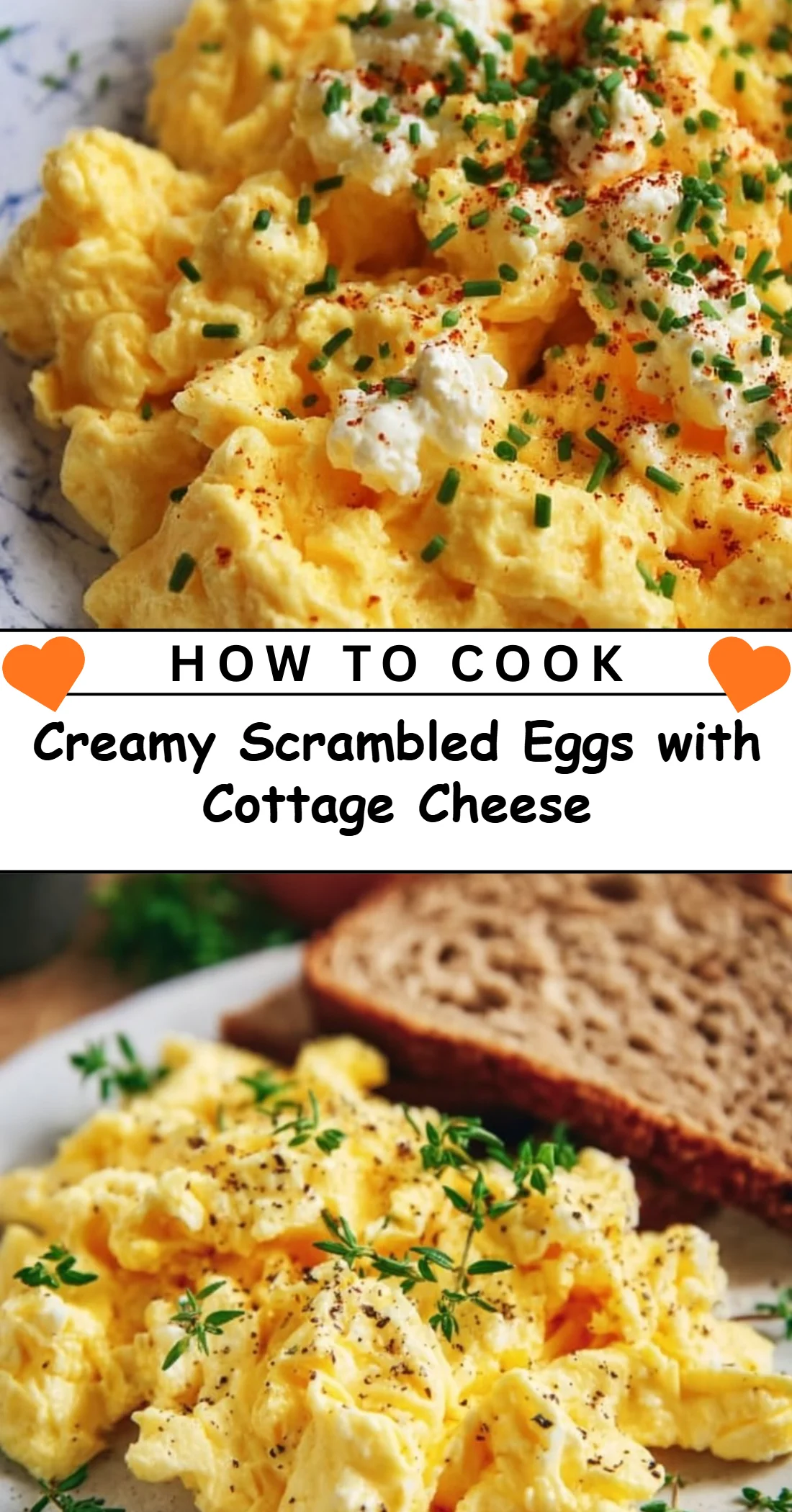
Ingredients for Creamy Scrambled Eggs with Cottage Cheese
For the Base
- 4 eggs
- 1/4 cup cottage cheese (about 60 ml)
For seasoning & cooking
- Salt and pepper to taste
- 1 tablespoon butter (about 14 g)
For serving (optional)
- Chives or parsley for garnish
Ingredient Notes (Substitutions, Healthy Swaps)
- Cottage cheese swaps (optional): If you don’t have cottage cheese, a small amount of ricotta or plain Greek yogurt can produce a similar creamy finish; use the same volume (1/4 cup). These maintain the mild tang and creaminess without changing the method.
- Dairy-free option (optional): Replace the cottage cheese with a thick, unsweetened plant-based yogurt and use vegan butter or olive oil for cooking. Texture will be slightly different but still creamy.
- Lower-fat option: Use low-fat cottage cheese or reduce the butter to 1 teaspoon and pan-cook on a lower heat—this will slightly reduce richness but keep creaminess.
- No changes to core ingredients: This recipe’s identity rests on eggs and cottage cheese, so keep those as the base and treat other changes as optional tweaks.
- Want more richness? Use full-fat cottage cheese and salted butter for a silkier, more decadent result.
In case you want to compare small technique or ingredient details, you might find helpful tips in another version of scrambled eggs with cottage cheese that emphasizes slight texture differences.
Step-by-Step Instructions
Use a non-stick skillet and a flexible spatula for the best results.
Step 1 – Whisk the eggs and cottage cheese
In a bowl, whisk together the 4 eggs, 1/4 cup cottage cheese, salt, and pepper until well combined. The cottage cheese should break up as you whisk.
Visual cue: The mixture will be slightly lumpy from the cottage cheese but uniformly pale yellow.Step 2 – Heat the skillet and melt the butter
Heat a non-stick skillet over medium heat and add the tablespoon of butter. Let the butter melt and foam but not brown.
Visual cue: Butter should be fully melted and bubbling gently, with no browned bits.Step 3 – Pour in the egg mixture
Once the butter is melted, pour in the egg mixture and let it sit undisturbed for a few seconds to begin setting at the edges.
Pro cue: Give the eggs about 8–12 seconds before stirring—this helps form tender curds without overcooking.Step 4 – Gently stir and fold
Gently stir with a spatula, pushing the eggs from the edges toward the center. Continue cooking, stirring occasionally, until the eggs are just set but still creamy.
Visual cue: Curds should look soft and slightly glossy; stop cooking when the eggs still look a touch wet—carryover heat will finish them.Step 5 – Remove from heat and serve immediately
Remove from heat and transfer to plates. Garnish with chopped chives or parsley if desired. Serve immediately for best texture.
Pro cue: Eggs continue to cook after you remove them from the pan—timing your finish a little early ensures they’re not dry.
Pro Tips for Success
- Use medium-low to medium heat: higher heat makes the eggs tough and dry; patience yields creamier curds.
- Whisk until homogeneous: break up the cottage cheese slightly while whisking, but you don’t need it perfectly smooth—tiny curd pieces add texture.
- Non-stick skillet matters: a good non-stick pan and flexible spatula reduce sticking and make stirring gentle and even.
- Small batches cook better: if you double the recipe, use a larger pan so the eggs don’t crowd and cook too quickly.
- Salt lightly at first: you can always add more at the table; seasoning during whisking allows even distribution but taste as you go.
- Remove early from heat: because of carryover cooking, take the eggs off while still glossy.
- For fluffier curds, stir gently and less frequently; for creamier silk, fold continuously and finish slightly earlier.
Flavor Variations (OPTIONAL)
- Spicy kick (optional): Stir in a pinch of cayenne or a few red pepper flakes into the egg mix before cooking for a subtle heat.
- Herb-forward (optional): Fold in finely chopped dill or basil right after removing from heat for a fresh herbal lift.
- Cheesy boost (optional): Add a tablespoon of grated Parmesan mixed into the eggs before whisking for an umami edge.
- Lighter version (optional): Use 2 whole eggs plus 2 egg whites and low-fat cottage cheese to reduce calories while keeping volume.
- Mediterranean twist (optional): Finish with a squeeze of lemon and a few halved cherry tomatoes on the side for brightness.
- Protein bump (optional): Serve alongside smoked salmon or white beans to increase protein without changing the scrambled base (note: additions served, not cooked into the base).
Serving Suggestions
- Toast: serve the eggs on buttered sourdough or whole-grain toast for contrast in texture.
- Grain bowl: spoon the eggs over quinoa or brown rice with avocado and roasted cherry tomatoes.
- Simple greens: pair with a lemony arugula or mixed greens salad for a light lunch.
- Classic brunch plate: add roasted potatoes or a simple green salad and a wedge of fresh fruit.
- Plated for guests: spoon eggs into warm shallow bowls, garnish with chopped chives and a drizzle of extra-virgin olive oil.
- Sandwich: pile onto an English muffin with a slice of tomato and spinach for a quick breakfast sandwich.
Make-Ahead, Storage & Reheating
- Make-ahead: you can whisk the eggs and cottage cheese together and refrigerate the mixture for up to 24 hours before cooking. This saves a few minutes in the morning. Keep covered.
- Refrigerator storage: cooked eggs store in an airtight container in the fridge for up to 3 days. Expect some textural changes—the curds firm up and may release moisture.
- Reheating: reheat gently over low heat in a non-stick skillet with a teaspoon of butter or in short bursts in the microwave (15–20 seconds), stirring between bursts to avoid rubberiness. Add a splash of water or milk to refresh creaminess if needed.
- Texture note: reheated scrambled eggs will never be as silky as freshly cooked; gentle reheating minimizes the change.
Storage and Freezing Instructions
- Freezing: frozen scrambled eggs are generally not recommended if you want to preserve the original creamy texture. The cottage cheese and eggs can separate when frozen and thawed, leading to a grainier, watery texture.
- Alternative: if you must freeze, consider freezing individual portions in airtight containers for up to 1 month, then thaw slowly in the refrigerator and reheat gently; expect some texture loss.
- Best approach: for best flavor and texture, cook fresh or store for short-term refrigeration and reheat gently as described above.
Nutrition Facts (Per Serving)
| Calories | Protein | Carbs | Fat | Fiber | Sodium |
|———|——–|——|—–|——|——-|
| 223 kcal | 15 g | 2 g | 17 g | 0 g | 420 mg |
Nutrition values are estimates and may vary depending on ingredients and portion sizes.
FAQ About Creamy Scrambled Eggs with Cottage Cheese
Q: Why are my eggs rubbery or dry?
A: That usually means they were cooked too long or over too high heat. Lower the temperature and remove the eggs while they still look a bit glossy.Q: Can I skip the butter?
A: Yes, you can cook in a little oil or a non-stick pan without fat, but butter adds flavor and helps create a soft texture.Q: How much cottage cheese is too much?
A: Sticking close to 1/4 cup for four eggs preserves the egg’s flavor while adding creaminess. Using much more can change the texture and make the mix wetter.Q: Are there texture problems when reheating?
A: Reheated eggs often firm up and dry out. Reheat gently with a splash of water or a small pat of butter to restore some moisture.Q: Can I make this for meal prep?
A: You can prepare the whisked egg-cottage cheese mix ahead for up to 24 hours; cooked eggs keep in the fridge for 2–3 days but are best eaten fresh.Q: How do I know when they’re done?
A: Stop cooking when the curds look soft and slightly glossy—carryover heat will finish them. They should be tender, not runny.
Notes
- Plate them simply: a scattering of chopped chives and a crack of black pepper makes for an elegant, effortless finish.
- Small flavor upgrade: a tiny squeeze of lemon just before serving can brighten the dish without overpowering it.
- Season in layers: season the egg mix lightly, then adjust at the table for individual preference.
- Presentation tip: serve immediately on a warm plate to keep the eggs soft and inviting.
- Leftover tip: if eggs release liquid in the fridge, drain briefly and reheat slowly with a small knob of butter to restore creaminess.
Creamy Scrambled Eggs with Cottage Cheese

Ultra-creamy scrambled eggs made with cottage cheese for a silky texture, perfect for breakfast or brunch.
- Prep Time: 5 minutes
- Cook Time: 5 minutes
- Total Time: 10 minutes
- Yield: 2 servings
- Category: Breakfast
- Method: Stovetop
- Cuisine: American
- Diet: Vegetarian
Ingredients
- 4 eggs
- 1/4 cup cottage cheese
- Salt and pepper to taste
- 1 tablespoon butter
- Chives or parsley for garnish (optional)
Instructions
- Whisk the eggs and cottage cheese together with salt and pepper until combined.
- Heat a non-stick skillet over medium heat and melt the butter.
- Pour in the egg mixture and let it sit for a few seconds to begin setting.
- Gently stir and fold the mixture until just set but still creamy.
- Remove from heat and serve immediately, garnished with chives or parsley if desired.
Notes
For fluffier curds, stir gently and less frequently. For creamier silk, fold continuously and finish slightly earlier.