
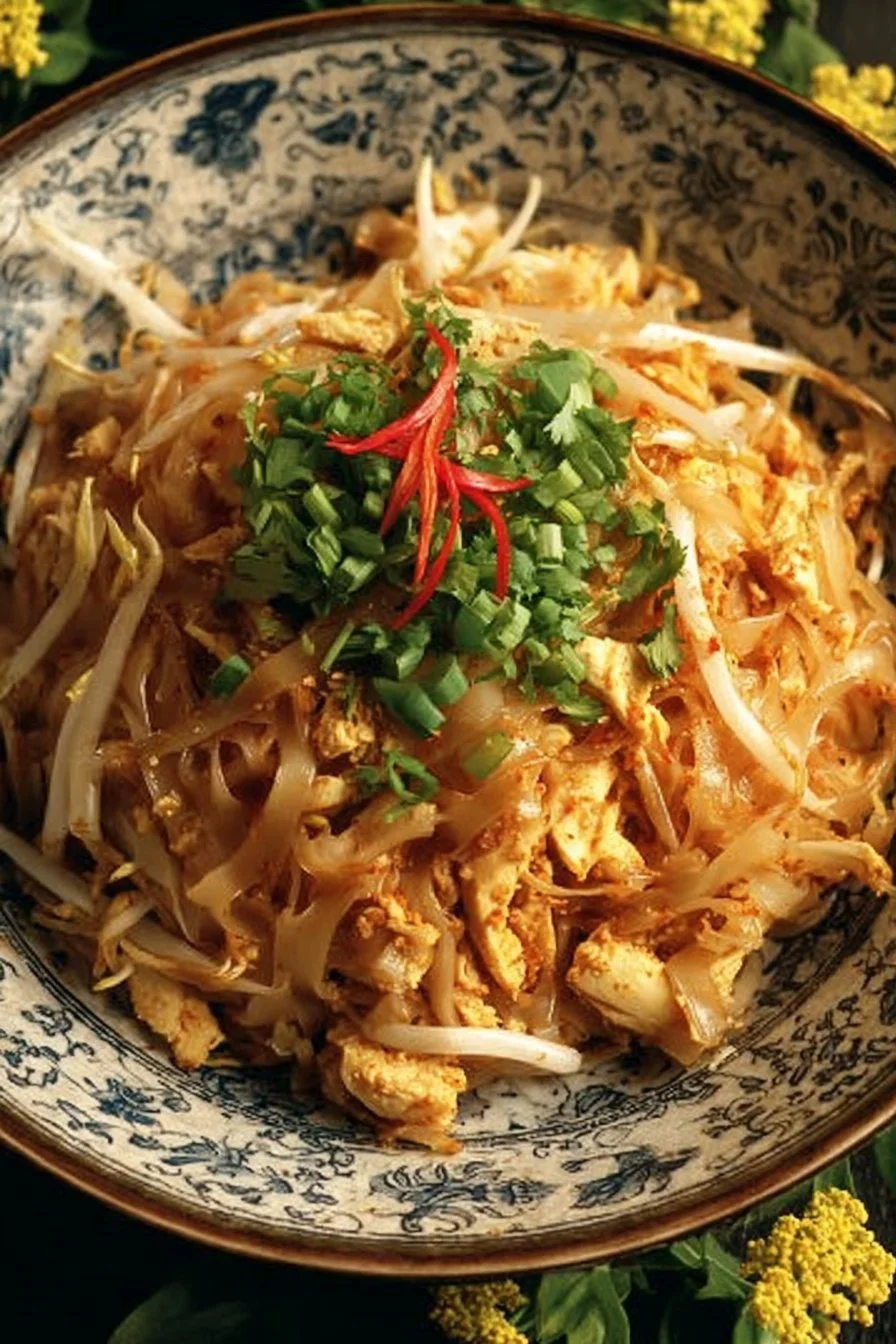
There’s a reason Chicken Pad Thai shows up on almost every Thai menu: it’s a perfect balance of tangy, sweet, salty, and nutty with a satisfying mix of textures — chewy rice noodles, tender chicken, crisp bean sprouts, and a little crunch from peanuts. This version is approachable for weeknights because it uses pantry-friendly ingredients and comes together quickly once the noodles are prepped. The sauce (fish sauce, tamarind, sugar, and lime) gives that classic sour-and-sweet punch while eggs add silkiness and body. Serve it simply with lime wedges and extra crushed peanuts for crunch, or pair with a light cucumber salad for brightness. If you love bold, simple Asian weeknight dinners, this is one to keep on repeat — and if you want a different chicken weeknight idea try Thai peanut chicken wraps with creamy sauce for a quick twist on similar flavors.
Why You’ll Love This Chicken Pad Thai
- Authentic-tasting flavor: tangy tamarind, salty fish sauce, sweet sugar, and bright lime combine like a street-food classic.
- Fast weeknight dinner: most hands-on time is the final stir-fry — noodles soak while you prep.
- Great texture contrast: soft rice noodles, tender sliced chicken, crunchy peanuts, and crisp bean sprouts.
- Minimal ingredients: straightforward pantry and fridge staples—you’ll be surprised how little you need.
- Versatile: serves as a solo meal or pairs well with light sides for entertaining.
- Easy to scale: double or halve the recipe without changing technique.
- Crowd-pleaser: familiar, comforting flavors that satisfy both adults and kids.
What Is Chicken Pad Thai?
Chicken Pad Thai is a classic Thai stir-fried noodle dish made with rice noodles, protein (here: sliced chicken breast), eggs, aromatics, and a tangy-sweet sauce. It tastes bright, slightly sweet, and savory with a pronounced umami from the fish sauce and a citrus finish from lime juice. The cooking method is a quick hot stir-fry — ingredients are cooked over medium-high heat in a large pan or wok so everything finishes hot and slightly caramelized. People serve it for weeknight dinners, casual gatherings, or as comforting takeout-style food at home. Overall, it’s a flexible, comforting dish that feels both homey and a little exotic.
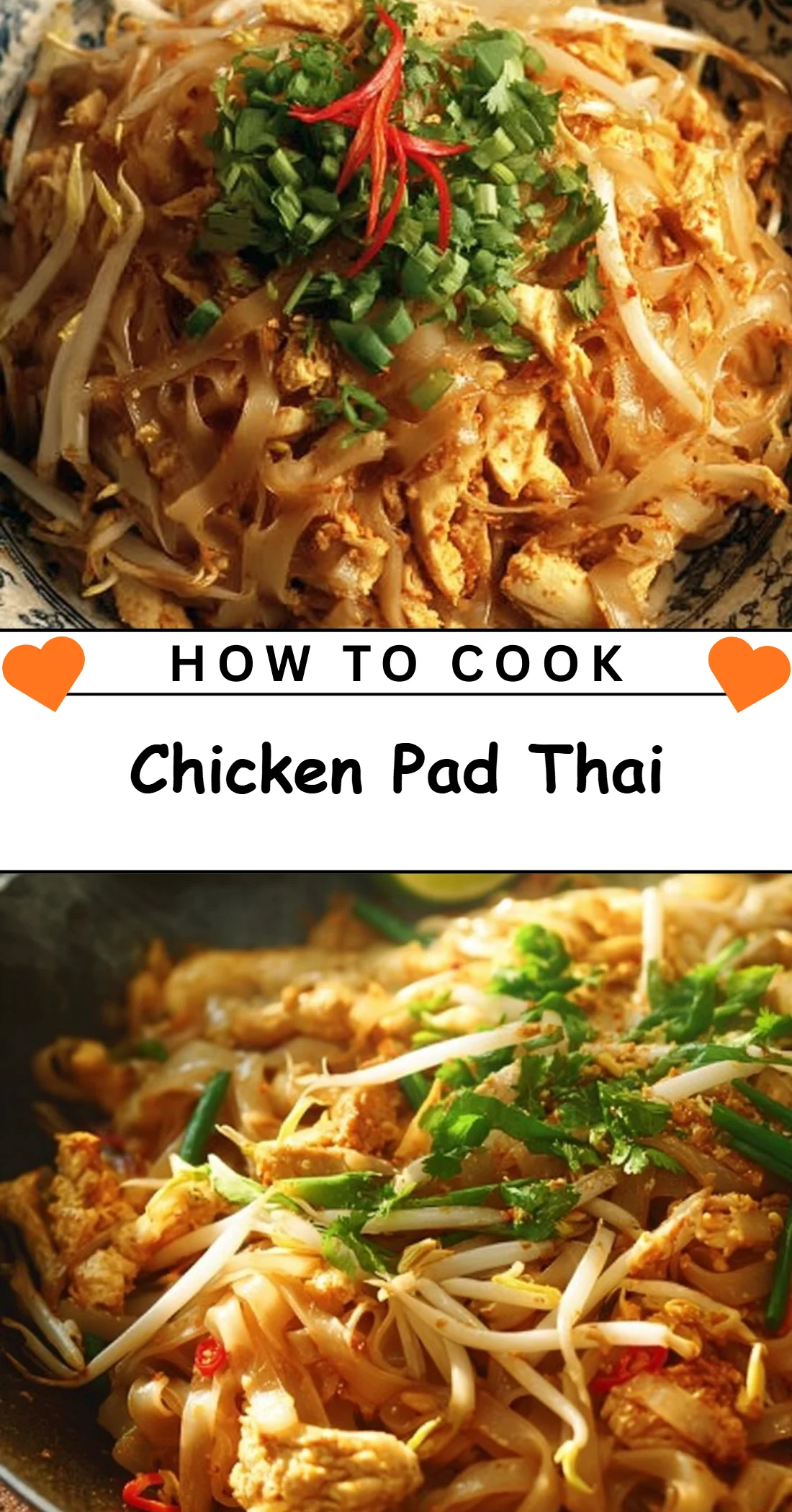
Ingredients for Chicken Pad Thai
For the Base
- 8 oz rice noodles
- 1 lb chicken breast, sliced
- 2 tablespoons vegetable oil
- 2 eggs, lightly beaten
- 1 cup bean sprouts
- 3 green onions, chopped
- 3 cloves garlic, minced
For the Sauce
- 1/4 cup fish sauce
- 2 tablespoons sugar
- 1 tablespoon tamarind paste
- 1 tablespoon lime juice
For Serving
- Crushed peanuts for garnish
- Lime wedges for serving
Ingredient Notes (Substitutions, Healthy Swaps)
- Fish sauce: essential for authentic umami. For lower sodium, use a reduced-sodium fish sauce or slightly reduce the amount and taste before serving. A light splash of low-sodium soy sauce can be used in a pinch, but it will shift the authentic flavor.
- Tamarind paste: gives that distinct tartness. If unavailable, use an equal amount of lime juice plus a touch of extra sugar to balance, but the depth will be different.
- Rice noodles: naturally gluten-free. Confirm packaging if you need a certified gluten-free brand.
- Chicken breast: lean and quick-cooking. Thighs can be used if you prefer more fat and juiciness.
- Vegetable oil: any neutral oil (canola, sunflower) works. Olive oil isn’t recommended for high-heat stir-frying.
- Make it lighter: reduce oil to 1 tablespoon and add more bean sprouts or sliced vegetables for bulk without many calories.
Step-by-Step Instructions
Step 1 – Soak the noodles
Soak the rice noodles in warm water for about 20 minutes or until softened. Drain and set aside.
Visual cue: The noodles should be pliable and slightly translucent but not mushy.
Step 2 – Cook the chicken
Heat 2 tablespoons vegetable oil in a large pan or wok over medium-high heat. Add the sliced chicken and cook until fully cooked through, about 4–5 minutes depending on thickness. Remove to one side of the pan if your pan is large enough.
Pro cue: Don’t overcrowd the pan — give chicken space so it sears rather than steams.
Step 3 – Scramble the eggs
Push the cooked chicken to the side and add the beaten eggs. Scramble until fully cooked and then mix with the chicken.
Visual cue: Eggs should be set but still moist, folding into the chicken rather than drying out.
Step 4 – Aromatics
Add the minced garlic and chopped green onions, stirring quickly for about 30 seconds until fragrant.
Pro cue: Garlic cooks fast and can burn; keep it moving in the pan and remove from direct high heat if it starts browning too quickly.
Step 5 – Combine noodles and sauce
Add the soaked noodles to the pan along with the fish sauce, sugar, tamarind paste, and lime juice. Toss everything together and cook for about 3–5 minutes until heated through and the noodles absorb the sauce.
Visual cue: Noodles should be coated in sauce, glossy, and slightly caramelized in places.
Step 6 – Finish with sprouts
Stir in the bean sprouts and cook for an additional minute so they stay crisp-tender. Remove from heat.
Pro cue: Add sprouts at the end to preserve crunch and freshness.
Step 7 – Serve
Serve hot, garnished with crushed peanuts and lime wedges. Squeeze lime over each plate to taste and sprinkle extra peanuts if you like more texture.
Pro Tips for Success
- Heat management: Maintain medium-high heat but adjust if the pan smokes — you want quick searing, not burning.
- Noodles: Soak until just flexible; a short final cook in the pan finishes them. Over-softened noodles will break apart.
- Sauce balance: Taste a small noodle strand before plating. If it’s too salty, a squeeze more lime or a pinch of sugar will rebalance it.
- Texture contrast: Add bean sprouts only at the end to keep them crunchy.
- Stir-frying technique: Keep everything moving in the pan so ingredients cook evenly and develop slight caramelization.
- Timing: Have all sauce ingredients pre-mixed and nearby — stir-fries move fast.
- Peanut garnish: Crush peanuts coarsely for the best textural contrast; finely ground peanuts can make the dish pasty.
Flavor Variations (OPTIONAL)
- Spicy Pad Thai: Add 1–2 teaspoons chili flakes or a spoonful of crushed red pepper when you add the sauce for heat.
- Veggie-forward (optional swap): Replace chicken with firm tofu (pressed and cubed) and pan-fry until golden before adding eggs.
- Extra lime brightness: Add an extra tablespoon of lime juice for a tarter finish; start with half and taste.
- More crunch: Toss in thinly sliced cucumbers or shredded carrot at the end for a refreshing crunch without changing the cooked base.
- Peanut-light: Use a smaller amount of crushed peanuts or swap for toasted sesame seeds for a different nutty note.
Serving Suggestions
- Simple plating: Serve the Pad Thai with lime wedges and a small pile of extra crushed peanuts on the side so guests can customize.
- Light side: A cucumber salad dressed with rice vinegar and a pinch of sugar complements the richness well.
- Family-style: Place the pan in the middle of the table with extra peanuts, lime, and green onions for topping.
- Occasion pairing: Serve with a crisp green salad or steamed vegetables for a balanced weeknight meal. If you like quick chicken dinners, also try 30-minute bruschetta chicken for another fast, flavor-forward option.
- Garnish ideas: Fresh cilantro or a sprinkle of thinly sliced red chili adds color and aroma.
Make-Ahead, Storage & Reheating
- Make-ahead prep: Soak the noodles and slice the chicken up to a day in advance. Keep them covered separately in the fridge. Mix sauce ingredients ahead to speed assembly.
- Refrigerator storage: Store leftovers in an airtight container for up to 3–4 days.
- Reheating: Reheat gently in a skillet over medium heat with a splash of water or lime juice to revive moisture, stirring frequently until heated through. Microwaving works for convenience — cover and heat in short intervals, stirring between, but the texture will be softer.
- Texture changes: Noodles will absorb sauce and become softer over time; reheating with a little liquid helps restore silkiness but won’t fully return to freshly cooked texture.
Storage and Freezing Instructions
- Freezing: Freezing is not ideal because rice noodles and bean sprouts lose their texture when frozen and thawed. For best results, freeze only the cooked chicken and sauce separately (no noodles or sprouts).
- Thawing: Thaw frozen chicken and sauce overnight in the refrigerator, then quickly reheat and toss with freshly soaked noodles and raw bean sprouts for a near-fresh result.
- Alternative: If you must freeze the full dish, expect textural changes; freeze in single portions to limit reheating time.
Nutrition Facts (Per Serving)
| Calories | Protein | Carbs | Fat | Fiber | Sodium |
|———|——–|——|—–|——|——-|
| 575 kcal | 38 g | 55 g | 18 g | 3 g | 1300 mg |
Nutrition values are estimates and may vary depending on ingredients and portion sizes.
FAQ About Chicken Pad Thai
Q: Why are my noodles clumping together?
A: They were likely over-soaked or not separated after draining. Toss them with a little oil or briefly rinse in warm water and separate before stir-frying.
Q: My dish tastes too salty — what can I do?
A: Add a splash more lime juice or a small pinch of sugar to balance saltiness, and add extra noodles or bean sprouts to dilute the flavor.
Q: How can I tell when the chicken is fully cooked?
A: Slice a thicker piece; it should be opaque throughout with no pink. Cook time depends on thickness but 4–6 minutes in a hot pan is typical for thin slices.
Q: Can I make this without fish sauce?
A: Fish sauce provides essential umami; if needed, reduce the amount and replace partially with low-sodium soy sauce. The flavor won’t be identical.
Q: How do I keep bean sprouts crisp?
A: Add them only at the very end and cook just 30–60 seconds — they should remain crunchy.
Q: Can I reheat leftovers in the microwave?
A: Yes. Cover and heat in short bursts, stirring between, but be prepared for slightly softer noodles than freshly cooked.
Notes
- Serve with extra lime wedges at the table so everyone can adjust acidity to taste.
- For restaurant-style color, finish with a handful of chopped green onions or cilantro right before serving.
- If you like more texture, add crushed peanuts generously and consider a light scatter of thinly sliced raw red chili for color.
- Taste as you go: pad thai relies on a balance of sweet, sour, and salty — small adjustments make a big difference.
Chicken Pad Thai
Classic Thai stir-fried noodle dish with a perfect balance of tangy, sweet, salty, and nutty flavors featuring tender chicken and chewy rice noodles.
- Prep Time: 20 minutes
- Cook Time: 15 minutes
- Total Time: 35 minutes
- Yield: 4 servings
- Category: Main Course
- Method: Stir-Frying
- Cuisine: Thai
- Diet: Gluten-Free
Ingredients
- 8 oz rice noodles
- 1 lb chicken breast, sliced
- 2 tablespoons vegetable oil
- 2 eggs, lightly beaten
- 1 cup bean sprouts
- 3 green onions, chopped
- 3 cloves garlic, minced
- 1/4 cup fish sauce
- 2 tablespoons sugar
- 1 tablespoon tamarind paste
- 1 tablespoon lime juice
- Crushed peanuts for garnish
- Lime wedges for serving
Instructions
- Soak the rice noodles in warm water for about 20 minutes or until softened. Drain and set aside.
- Heat 2 tablespoons vegetable oil in a large pan or wok over medium-high heat. Add the sliced chicken and cook until fully cooked through, about 4–5 minutes depending on thickness. Remove to one side of the pan if your pan is large enough.
- Push the cooked chicken to the side and add the beaten eggs. Scramble until fully cooked and then mix with the chicken.
- Add the minced garlic and chopped green onions, stirring quickly for about 30 seconds until fragrant.
- Add the soaked noodles to the pan along with the fish sauce, sugar, tamarind paste, and lime juice. Toss everything together and cook for about 3–5 minutes until heated through and the noodles absorb the sauce.
- Stir in the bean sprouts and cook for an additional minute. Remove from heat.
- Serve hot, garnished with crushed peanuts and lime wedges. Squeeze lime over each plate to taste.
Notes
For lower sodium, use reduced-sodium fish sauce. Store leftovers in an airtight container for up to 3–4 days.