

These savory cottage cheese flatbreads are tender, slightly tangy, and wonderfully pillowy with a crisp, golden exterior from a quick pan-fry. The cottage cheese keeps the dough moist and gives a subtle creamy flavor that pairs beautifully with a scatter of fresh herbs or a light drizzle of olive oil. They come together in one bowl with simple pantry staples and take less than 30 minutes from start to finish, making them an ideal weeknight bread, a brunch staple, or a quick base for open-faced sandwiches. If you like ultra-simple doughs, check out this 2-ingredient cottage cheese flatbread for another speedy idea.
Why You’ll Love This Savory Cottage Cheese Flatbread
- Super simple: only a handful of everyday ingredients and no yeast required.
- Tender interior with a crisp, golden crust from pan-frying.
- Mild, slightly tangy flavor from the cottage cheese — great with herbs or savory toppings.
- Quick to make: dough mixes in minutes and cooks in a few minutes per flatbread.
- Versatile: works as a breakfast base, a snack, or a side for soups and salads.
- Budget-friendly: cottage cheese and flour make a surprisingly rich-feeling bread without expensive ingredients.
- Kid-friendly texture: soft enough for little hands and easy to customize.
What Is Savory Cottage Cheese Flatbread?
This flatbread is a simple skillet bread made by combining cottage cheese with flour and a few leavening and seasoning agents to form a soft dough. It’s pan-fried in olive oil until each side is golden and slightly crisp. The finished flatbreads are soft and pillowy inside, with small pockets from the cottage cheese that yield a light, tender crumb. Typically served warm, they’re perfect for scooping, wrapping, or topping — think open-faced sandwiches, a quick side for a bowl of soup, or a weekend brunch item. The overall vibe is casual comfort food: approachable, slightly rustic, and deeply satisfying.
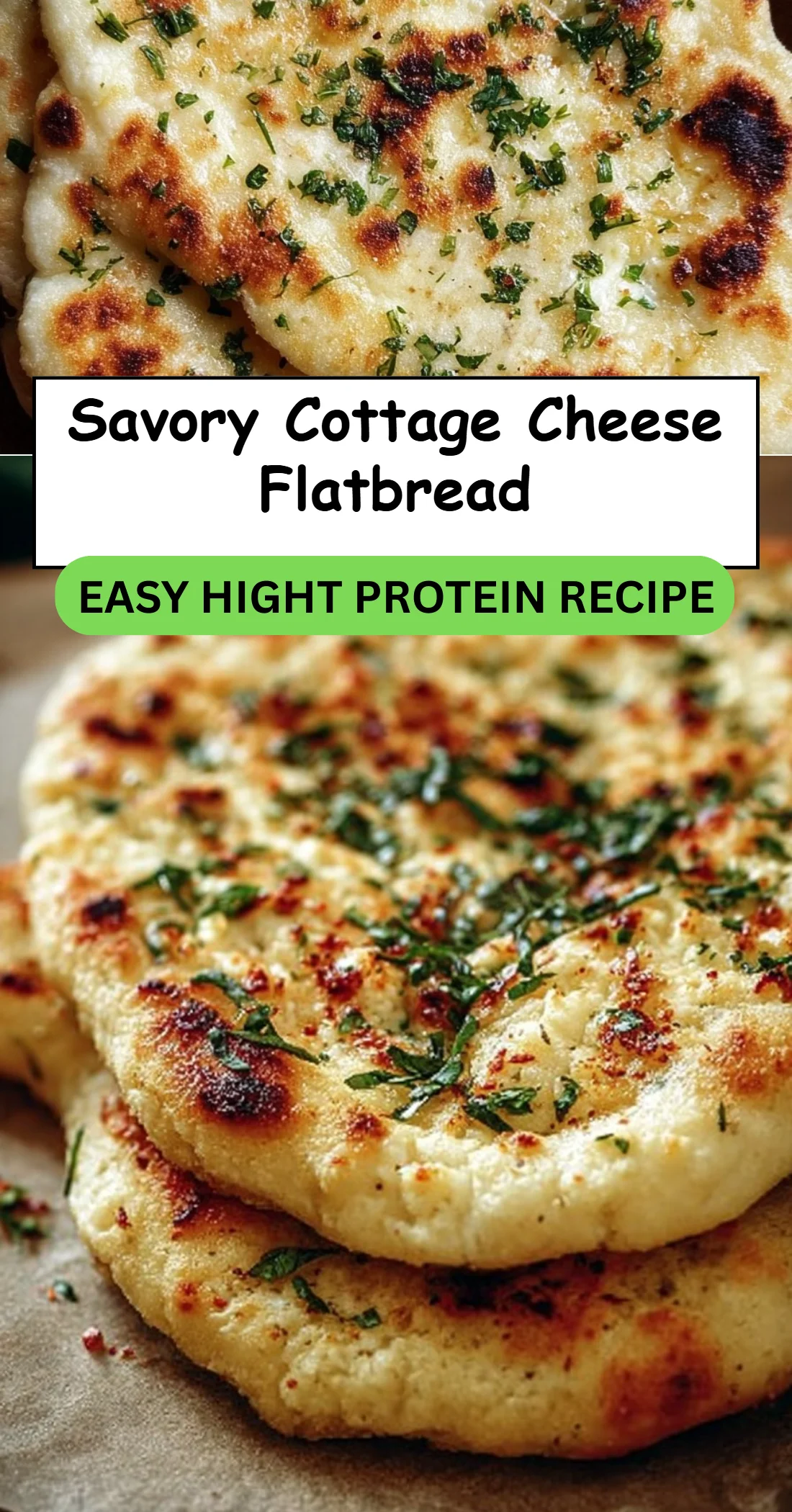
Ingredients for Savory Cottage Cheese Flatbread
For the Flatbread
- 1 cup cottage cheese (about 1 cup)
- 2 cups flour (all-purpose)
- 1 tsp salt
- 1/2 tsp baking powder
- 1/2 cup water (more as needed)
- Olive oil for frying (amount as needed)
For Serving (optional)
- Herbs (optional, e.g., chives, parsley)
Ingredient Notes (Substitutions, Healthy Swaps)
- Cottage cheese: Use any style you have—full-fat or low-fat will both work. Texture changes slightly (full-fat gives a richer result). If you prefer a smoother dough, briefly pulse the cottage cheese in a food processor before mixing.
- Flour: All-purpose is the straightforward choice. For a heartier texture, try whole wheat flour but expect denser flatbreads and you may need slightly more water.
- Gluten-free option: Substitute a 1:1 gluten-free flour blend that includes xanthan gum for structure. Dough may be stickier—chill briefly before shaping.
- Lower-fat swap: Use low-fat cottage cheese and reduce the olive oil used for frying (use a non-stick pan and just a light brushing). Texture will be slightly less rich but still tasty.
- Salt: If your cottage cheese is very salty, reduce the added salt to 1/2 tsp and adjust to taste. For very low-sodium needs, omit the added salt and season the top lightly after cooking.
- For another cottage cheese take, see this cottage cheese flatbread variation that explores a different ingredient balance and technique.
Step-by-Step Instructions
Step 1 – Combine the dry ingredients
In a medium bowl, whisk the flour, salt, and baking powder together so the leavening is evenly distributed.
Visual cue: The dry mix should look uniform with no clumps of baking powder.
Step 2 – Add cottage cheese and start the dough
Add the cottage cheese to the dry mix and begin folding with a spoon or your hands. The curds will break up as you work them into the flour. Gradually add the water until a shaggy dough forms.
Visual cue: Dough should come together and pull away from the sides of the bowl, but still be slightly tacky.
Pro cue: If your cottage cheese has large curds, break them up with the back of a fork or briefly pulse in a food processor first.
Step 3 – Knead briefly
Turn the dough onto a lightly floured surface and knead for 2–3 minutes until smooth and elastic. Don’t overwork it; you want a tender flatbread, not a chewy, dense loaf.
Visual cue: Dough should be smooth and spring back slightly when pressed.
Step 4 – Divide and shape
Divide the dough into small balls (6–8, depending on your preferred size). Roll each ball into a flat circle about 1/8–1/4 inch thick using a rolling pin or your hands.
Visual cue: Flatbreads should be even in thickness so they cook uniformly.
Pro cue: Dust the surface lightly with flour to prevent sticking; if the dough resists rolling, let it rest 5 minutes.
Step 5 – Pan-fry until golden
Heat a thin layer of olive oil in a skillet over medium heat. Add one flatbread at a time and cook for 2–3 minutes per side until golden brown and cooked through. Repeat with remaining pieces.
Visual cue: Look for even golden spots and a slightly crisp edge. If the flatbread browns too quickly, lower the heat.
Pro cue: A cast-iron or heavy-bottomed skillet gives the best golden crust.
Step 6 – Finish and serve
Transfer cooked flatbreads to a plate and top with herbs if desired. Serve warm.
Visual cue: Fresh herbs add a burst of color and fragrance right before serving.
Pro Tips for Success
- Heat control: Maintain medium heat—too hot and the outside burns before the inside cooks; too low and the flatbreads won’t brown.
- Dough texture: Aim for a slightly tacky dough. If it’s too wet, add a tablespoon of flour at a time; if too dry, add water by teaspoons.
- Even thickness: Roll or press each flatbread evenly so they cook at the same rate.
- Oil amount: Use enough olive oil to coat the pan but not so much that the flatbreads fry rather than pan-sear. Wipe or spoon out excess oil between batches if needed.
- Resting trick: If dough is sticky when shaping, a brief 5–10 minute rest in the fridge firms it up and makes handling easier.
- Flavor boost: Sprinkle a pinch of salt or chopped herbs on each flatbread while still warm to help flavors surface.
- Leftover crispness: Reheat flatbreads in a hot skillet for 30–60 seconds per side to regain crispness instead of microwaving.
Flavor Variations (OPTIONAL)
- Optional — Herb-studded: Knead 1–2 tablespoons chopped fresh herbs (chives, parsley, or dill) into the dough for aromatic flatbreads.
- Optional — Garlicky finish: Brush the warm flatbreads lightly with olive oil and rub with a cut clove of garlic for a subtle garlicky note.
- Optional — Spiced: Add 1/2 tsp smoked paprika or cumin to the dry mix for a warm, smoky flavor.
- Optional — Peppery: Fold in a tablespoon of finely chopped green onions or chives to the dough for a mild onion flavor.
- Optional — Cheesy top: After cooking, sprinkle a little grated cheese on top while still hot so it melts slightly (keep this optional if you avoid extra ingredients).
Serving Suggestions
- Use as a base for open-faced sandwiches topped with sautéed vegetables or fresh herbs.
- Serve alongside a bowl of soup or stew for dipping.
- Stack several flatbreads with a smear of olive oil and fresh herbs for a simple appetizer.
- Cut into wedges and serve as a bread plate with olives, roasted vegetables, or a simple salad.
- Pack for lunch as a handheld bread for wraps or sandwiches.
Make-Ahead, Storage & Reheating
- Make-ahead: The dough can be made and refrigerated, covered, for up to 24 hours. Let it come to room temperature for 15–20 minutes before shaping.
- Refrigerator: Cooked flatbreads stored in an airtight container will keep 3–4 days. Place a sheet of parchment between layers to prevent sticking.
- Reheating: For best texture, reheat in a hot skillet for 30–60 seconds per side or in a toaster oven until warmed through and slightly crisp. Microwaving will warm them quickly but makes them softer.
- Texture changes: Refrigeration may make flatbreads slightly firmer; a quick reheat restores softness and crispness.
Storage and Freezing Instructions
- Freezing: Cooked flatbreads freeze well. Cool completely, then layer with parchment and freeze in a zip-top bag for up to 2 months. Thaw at room temperature or briefly in the microwave, then crisp in a skillet.
- If you prefer not to freeze: Keep extras refrigerated and reheat as noted above. Freezing is recommended if you want long-term storage because the dough can change texture after prolonged refrigeration.
Nutrition Facts (Per Serving)
| Calories | Protein | Carbs | Fat | Fiber | Sodium |
|———|——–|——|—–|——|——-|
| 226 kcal | 9 g | 33 g | 7 g | 1 g | 512 mg |
Nutrition values are estimates and may vary depending on ingredients and portion sizes.
FAQ About Savory Cottage Cheese Flatbread
- My dough is too sticky — what should I do?
- Add flour by the tablespoon and knead lightly until the dough becomes manageable. Alternatively chill for 10 minutes to firm it up.
- The flatbreads are doughy inside — how can I fix that?
- Lower the heat slightly and cook a bit longer per side so the heat penetrates without burning the exterior. Thinner flatbreads cook more evenly.
- Can I use low-fat cottage cheese?
- Yes. Low-fat will work but the texture may be less rich. You may need slightly less water because low-fat cottage cheese can be denser.
- How can I make these gluten-free?
- Use a cup-for-cup gluten-free flour blend with xanthan gum; note the dough may be stickier and may benefit from a short chill before shaping.
- Best way to reheat without drying them out?
- Quick pan reheat in a hot skillet for 30–60 seconds per side keeps them crisp on the outside and soft inside. Avoid long microwaving.
- How many flatbreads does this recipe yield?
- Expect about 6 medium flatbreads (size depends on thickness). Adjust portion estimates accordingly.
Notes
- For attractive presentation, stack flatbreads on a wooden board and sprinkle chopped herbs just before serving.
- A light brush of olive oil and a scatter of fresh herbs after cooking brightens flavor instantly.
- Adjust salt carefully—cottage cheese can be salty, so taste a small spoonful and reduce added salt if needed.
- If you want uniformly thin rounds, press dough balls between two sheets of parchment and roll to the desired thickness.
- Serve warm for the best texture; cooled flatbreads are still tasty but less pillowy.
Savory Cottage Cheese Flatbread

Tender and slightly tangy flatbreads made with cottage cheese, perfect for breakfast, brunch, or as a side dish.
- Prep Time: 10 minutes
- Cook Time: 15 minutes
- Total Time: 25 minutes
- Yield: 6 servings
- Category: Bread
- Method: Pan-Frying
- Cuisine: International
- Diet: Vegetarian
Ingredients
- 1 cup cottage cheese
- 2 cups all-purpose flour
- 1 tsp salt
- 1/2 tsp baking powder
- 1/2 cup water (more as needed)
- Olive oil for frying (amount as needed)
- Herbs (optional, e.g., chives, parsley)
Instructions
- Combine the dry ingredients by whisking flour, salt, and baking powder in a medium bowl.
- Add cottage cheese to the dry mix and fold in slowly, adding water until a shaggy dough forms.
- Knead the dough on a floured surface for 2–3 minutes until smooth and elastic.
- Divide the dough into small balls and roll each into a flat circle about 1/8–1/4 inch thick.
- Heat olive oil in a skillet over medium heat and pan-fry each flatbread for 2–3 minutes per side until golden brown.
- Serve warm, topped with fresh herbs if desired.
Notes
For a gluten-free option, substitute with a 1:1 gluten-free flour blend. Adjust salt based on the saltiness of your cottage cheese.