
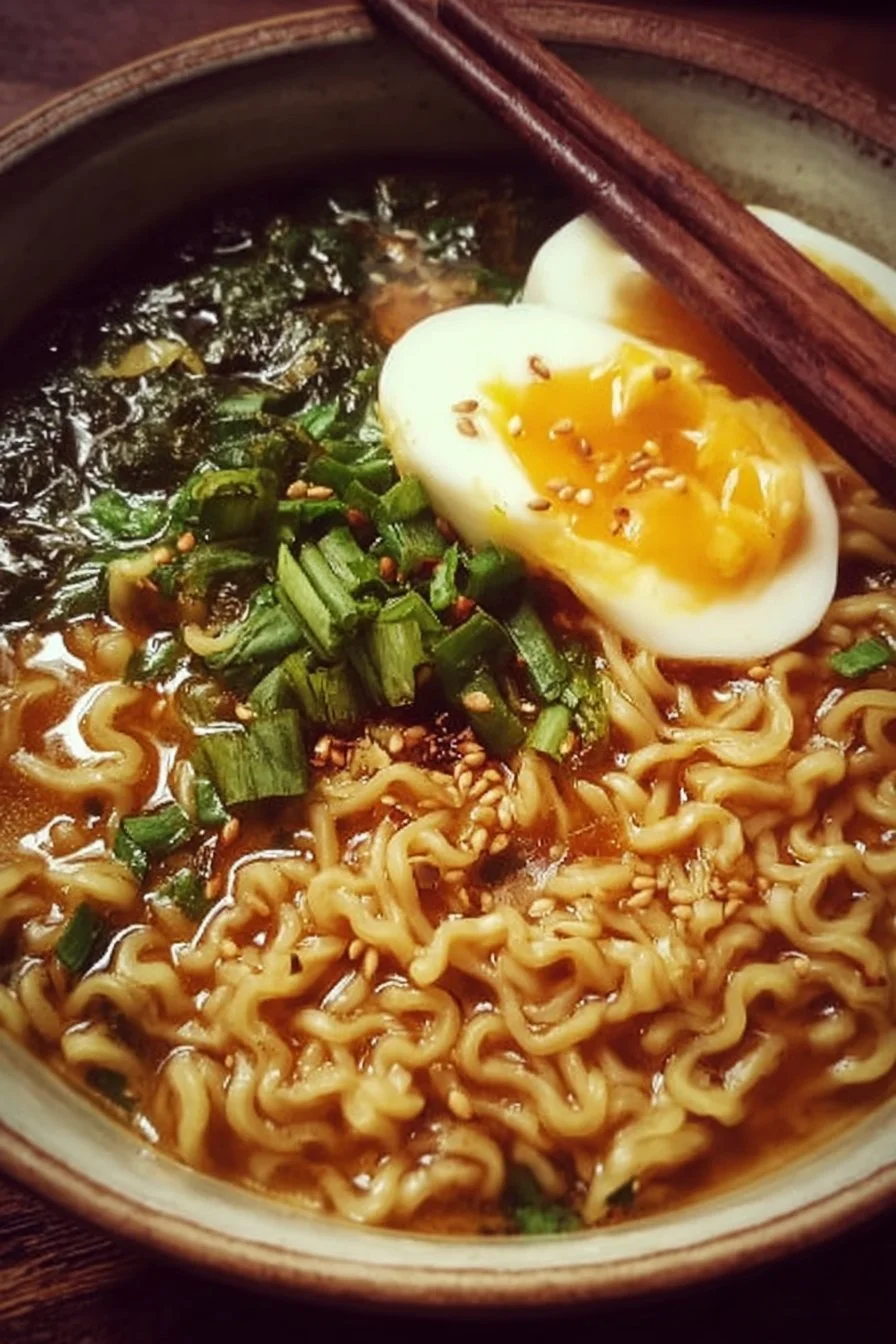
There’s something irresistibly soothing about a steaming bowl of ramen—slippery noodles, a fragrant savory broth, tender protein, and bright vegetables all in one bowl. This High-Protein Ramen Noodle Soup balances rich umami from soy and sesame with fresh green vegetables and the satisfying bite of chicken, tofu, or another favorite protein. It’s quick enough for a weeknight, cozy enough for a solo comfort meal, and flexible enough to make for lunches or a simple dinner party bowl. If you want to push the comfort factor in another direction, try my take on cheesy ramen noodles for an indulgent twist.
Why You’ll Love This High-Protein Ramen Noodle Soup
- Fast to make: uses quick-cooking ramen noodles and pre-cooked protein for a 15–20 minute meal.
- High in protein: built around cooked chicken, tofu, or another protein to keep you full longer.
- Deep flavor with minimal effort: soy sauce and sesame oil add a lot of umami without many steps.
- Vegetable-forward: spinach, mushrooms, and green onions brighten the bowl and add texture.
- Flexible: works as a light lunch, hearty dinner, or make-ahead lunch option.
- Customizable toppings: from seaweed to sesame seeds to chili oil for heat or crunch.
- Comforting texture contrast: silky broth, tender protein, and toothsome noodles.
- Great for every skill level: straightforward steps that deliver a restaurant-quality bowl.
What Is High-Protein Ramen Noodle Soup?
High-Protein Ramen Noodle Soup is a simple, brothy noodle soup built on instant-style ramen noodles, a flavorful chicken or vegetable broth, and a generous portion of cooked protein (like shredded chicken or cubed tofu). The taste is savory and umami-forward, with the nutty aroma of sesame oil and the salty depth of soy or tamari. Cooking is primarily stovetop simmering: bring the broth to a boil, cook the noodles, then fold in protein and vegetables until heated through. People commonly serve this as a quick weeknight dinner, a cozy solo meal, or a nourishing lunch. The overall vibe is comforting and approachable—think ramen from a favorite shop but pared down to an easy home version that emphasizes protein and vegetables.
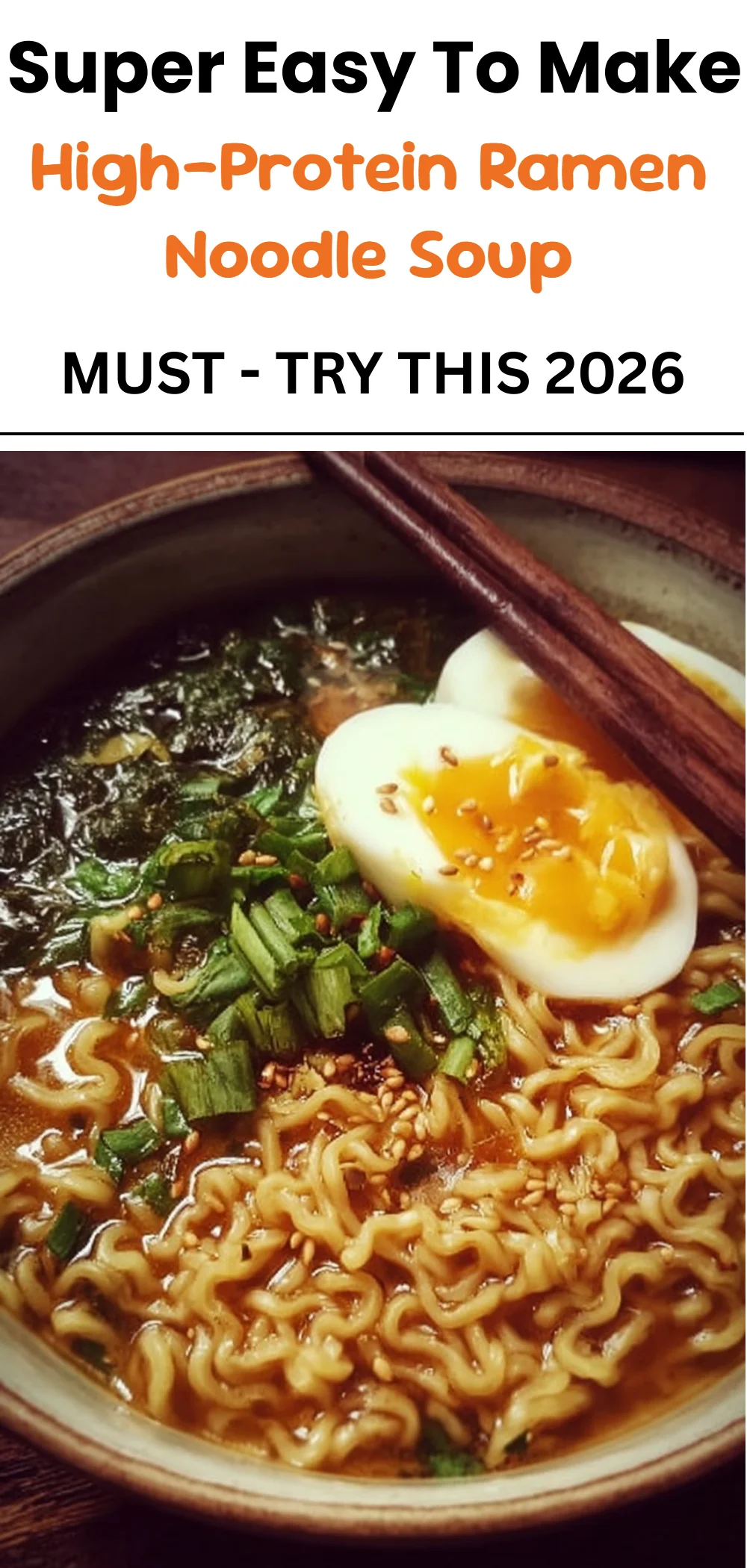
Ingredients for High-Protein Ramen Noodle Soup
For the Base
- Ramen noodles
For the Broth
- Chicken or vegetable broth
For the Protein
- Cooked chicken, tofu, or other protein
For the Vegetables
- Vegetables (e.g., spinach, mushrooms, green onions)
For Seasoning
- Soy sauce or tamari
- Sesame oil
- Eggs (optional)
For Serving / Toppings
- Toppings (e.g., seaweed, sesame seeds, chili oil)
Ingredient Notes (Substitutions, Healthy Swaps)
- Use vegetable broth and tofu for a vegetarian version. This keeps the profile the same while swapping protein and broth.
- If you need gluten-free, choose certified gluten-free ramen noodles and use tamari instead of soy sauce.
- To lower sodium, use a low-sodium chicken or vegetable broth and reduced-sodium soy sauce or tamari; taste and adjust seasoning as the last step.
- For a lighter bowl, focus on more vegetables (spinach cooks down to almost nothing) and choose a leaner protein like shredded chicken breast.
- Eggs are optional—poached directly in the simmering broth adds silkiness and extra protein without extra ingredients.
Step-by-Step Instructions
Follow the directions provided in straightforward, layered steps.
Step 1 – Heat the Broth
Bring the broth to a boil in a pot.
Visual cue: The surface should show rolling bubbles and steam rising, and the aroma of the broth will be noticeable.
Step 2 – Cook the Noodles
Add the ramen noodles and cook according to package instructions.
Pro cue: Break the noodles into the pot if you prefer shorter strands, and stir gently to separate them so they don’t clump.
Step 3 – Add Protein and Vegetables
Stir in your chosen protein and vegetables.
Visual cue: Vegetables should wilt but retain color; cooked chicken should be warmed through, and tofu should be heated on all sides.
Step 4 – Season the Soup
Add soy sauce and sesame oil to taste.
Pro cue: Start with a small splash of each, taste the broth, and then adjust—soy sauce brings salt and umami; sesame oil adds aroma, so a little goes a long way.
Step 5 – Poach Eggs (Optional)
If using eggs, gently crack them into the soup and poach for a few minutes.
Visual cue: Whites should set and the yolks should still look slightly soft unless you prefer fully set eggs.
Pro cue: To keep eggs together, reduce the heat to a gentle simmer and crack each egg into a small cup first, then slide into the broth.
Step 6 – Serve and Top
Serve in bowls and add toppings as desired.
Visual cue: A glossy surface from sesame oil, vibrant greens, and floating toppings like seaweed or sesame seeds make the bowl look finished.
Pro Tips for Success
- Control the heat: keep the broth at a gentle boil for noodles, then lower to a simmer when adding eggs to avoid overcooking them.
- Timing vegetables: add quick-wilt greens like spinach at the very end so they stay bright; sturdier mushrooms can go in slightly earlier.
- Season gradually: soy sauce and pre-made broths vary in salt—add small amounts, taste, then add more if needed.
- Avoid soggy noodles: cook noodles just to package timing; if making ahead, slightly undercook them so reheating doesn’t leave them mushy.
- Layer flavors: add sesame oil at the end for aroma rather than early in the cooking to preserve its fragrance.
- Warm bowls: rinse bowls with hot water before serving to keep the soup hotter longer.
- Texture check: if protein was refrigerated, shred or slice thin so it heats quickly and evenly in the broth.
Flavor Variations (OPTIONAL)
- Spicy (optional): Finish with a drizzle of chili oil from the toppings list for spicy depth.
- Egg-forward (optional): Use two poached eggs per bowl for extra richness and protein.
- Tofu boost (optional): Swap chicken for extra-firm tofu cut into cubes and warmed in the broth for a vegetarian protein option.
- Green-vegetable focus (optional): Double up on spinach and green onions for a brighter, lighter bowl.
- Mushroom-forward (optional): Add more mushrooms for a meaty, earthy flavor without changing the other ingredients.
- Low-sodium (optional): Use low-sodium broth and tamari, and omit extra soy sauce; rely on a small amount of sesame oil and toppings for flavor.
While exploring variations, keep the base method the same: broth → noodles → protein/vegetables → seasoning → toppings.
In one variation post, you might notice a heartier, spicier profile—if you enjoy that style, also check out this comforting easy spicy chicken soup ramen for inspiration that leans into heat and extra protein.
Serving Suggestions
- Keep it simple: serve bowls with a scattering of sesame seeds and thinly sliced green onions.
- Light sides: pair with a crisp cucumber salad or pickled vegetables to cut through the richness.
- Family-style: set out bowls of toppings (seaweed, sesame seeds, chili oil) so everyone customizes their bowl.
- Meal pairings: serve with steamed rice on the side for extra carbs, or a small plate of sautéed mushrooms for sharing.
- Presentation: ladle noodles first, then broth, top with protein and a soft-poached egg, finish with a drizzle of sesame oil and a sprinkle of sesame seeds.
- Occasion: great for a quick weeknight dinner, a solo comfort meal, or an easy lunch you can make in larger batches.
Make-Ahead, Storage & Reheating
- Make-ahead: Prepare the broth and cook protein ahead of time; cool and store separately from the noodles.
- Assemble later: keep noodles separate in the refrigerator and combine with hot broth when ready to eat to avoid soggy noodles.
- Refrigerator storage: store the assembled soup in airtight containers for up to 3–4 days; for best texture, keep noodles and broth separate when possible.
- Reheating: gently reheat broth on the stove until steaming, then add noodles and protein to warm through. If reheating a fully assembled bowl, do so over low heat to prevent overcooking eggs or wilting vegetables too far.
- Texture changes: note noodles tend to absorb broth and soften as they sit. Undercook noodles slightly if you plan to reheat.
Storage and Freezing Instructions
- Freezing assembled soup is not recommended because ramen noodles and some vegetables become mushy after thawing. If you plan to freeze, freeze only the broth and cooked protein (without noodles or delicate greens).
- To freeze: cool broth and protein completely, store in airtight freezer-safe containers for up to 3 months.
- Thawing: thaw overnight in the refrigerator, reheat gently on the stove, then add freshly cooked ramen noodles and vegetables before serving.
- Alternative: make larger batches of broth and protein, freeze in portions, and keep a supply of fresh noodles and vegetables for quick assembly.
Nutrition Facts (Per Serving)
| Calories | Protein | Carbs | Fat | Fiber | Sodium |
|———|——–|——|—–|——|——-|
| 480 kcal | 32 g | 54 g | 14 g | 4 g | 1100 mg |
Nutrition values are estimates and may vary depending on ingredients and portion sizes.
FAQ About High-Protein Ramen Noodle Soup
Q: My noodles got mushy—what did I do wrong?
A: Likely overcooking or letting them sit too long in the broth. Cook to package time and serve immediately, or undercook slightly if reheating later.
Q: Can I use raw chicken?
A: The recipe calls for cooked protein. If using raw chicken, cook it thoroughly before adding to the finished soup to ensure safety.
Q: How do I keep the eggs from breaking apart while poaching?
A: Reduce the heat to a gentle simmer and crack each egg into a small cup before sliding into the broth; avoid vigorous bubbling.
Q: How long will leftovers last in the fridge?
A: Up to 3–4 days when stored in an airtight container; keep noodles separate if possible to preserve texture.
Q: Can I make this vegetarian?
A: Yes—use vegetable broth and tofu as the protein to keep it vegetarian while staying true to the recipe.
Q: My soup tastes flat—how do I fix it?
A: Adjust with a little more soy sauce for salt/umami and a tiny splash of sesame oil for aroma. Taste after each small addition.
Notes
- Warm the bowls for a restaurant-style presentation and to keep the soup hotter longer.
- Finish with sesame oil just before serving to preserve its aroma and impact.
- Thinly slice or shred protein to help it heat quickly and distribute through the bowl.
- Use a mix of textures: soft poached egg or tofu, crisp green onions, and crunchy toppings like sesame seeds for contrast.
- If using precooked protein from the fridge, stir it into the hot broth briefly rather than simmering for long to prevent drying.
High-Protein Ramen Noodle Soup
A quick and comforting high-protein ramen noodle soup with savory broth, tender protein, and fresh vegetables.
- Prep Time: 15 minutes
- Cook Time: 10 minutes
- Total Time: 25 minutes
- Yield: 4 servings
- Category: Main Course
- Method: Stovetop
- Cuisine: Asian
- Diet: High Protein
Ingredients
- Ramen noodles
- Chicken or vegetable broth
- Cooked chicken, tofu, or other protein
- Spinach, mushrooms, and green onions
- Soy sauce or tamari
- Sesame oil
- Eggs (optional)
- Seaweed, sesame seeds, chili oil for toppings
Instructions
- Heat the broth by bringing it to a boil in a pot.
- Add the ramen noodles and cook according to package instructions.
- Stir in your chosen protein and vegetables.
- Add soy sauce and sesame oil to taste.
- If using eggs, crack them into the soup and poach for a few minutes.
- Serve in bowls and add toppings as desired.
Notes
For a vegetarian version, use vegetable broth and tofu. Adjust soy sauce to taste for saltiness.