
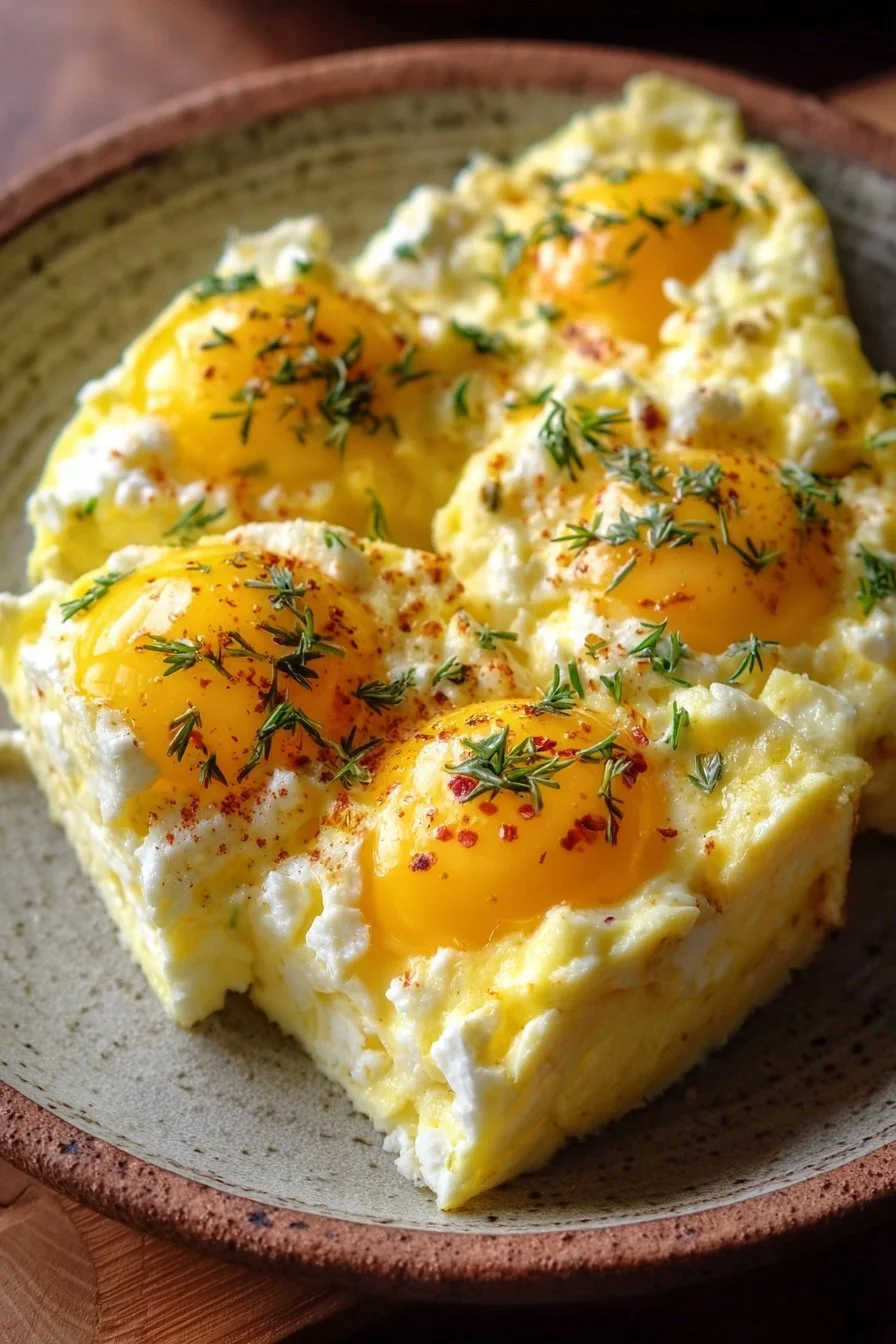
This Fluffy Cottage Cheese Eggs bake is a delight: light, tender curds of egg and cottage cheese meet pockets of melty shredded cheese and tender vegetables for a breakfast that feels indulgent yet clean and protein-packed. The texture is soft and slightly custardy from the cottage cheese, with a golden top and a gentle chew from the shredded cheese. It’s comfort food made simple — perfect for weekday mornings, a low-effort brunch, or a make-ahead meal for busy weeks. Slice into squares, serve with toast or a quick green salad, and you’ve got a satisfying plate. If you like this style of baked egg dishes, you may also enjoy a similar spin on the idea like baked eggs with cottage cheese.
Why You’ll Love This Fluffy Cottage Cheese Eggs
- High-protein breakfast that keeps you full and energized.
- Custardy, fluffy texture thanks to the cottage cheese whisked into the eggs.
- Simple sheet-pan method means hands-off baking and easy portioning.
- Versatile: swap vegetables or cheese to match what you have on hand.
- Great for meal prep — bakes once, eats all week.
- Kid-friendly and easy to slice into squares for lunchboxes.
- Mild, comforting flavors that pair well with both savory and fresh accents.
- Minimal equipment and short active time make it approachable for cooks of all levels.
What Is Fluffy Cottage Cheese Eggs?
This dish is a sheet-pan baked egg casserole made by whisking whole eggs with cottage cheese, folding in shredded cheese and diced vegetables, then baking until set. It tastes creamy and lightly tangy from the cottage cheese, with a golden, slightly crisp top from the shredded cheese. The cooking method is oven-baked on a sheet pan for even cooking and quick slicing. People typically serve it for breakfast, brunch, or a protein-rich light dinner. The overall vibe is cozy and unfussy — a weekday workhorse or a weekend brunch favorite that looks and tastes homemade without complicated steps.

Ingredients for Fluffy Cottage Cheese Eggs
For the Base
- 6 large eggs
- 1 cup cottage cheese (about 225 g)
For the Mix-ins
- 1 cup shredded cheese (cheddar or mozzarella), about 4 ounces (115 g)
- 1 cup diced vegetables (spinach, bell peppers, onions, etc.)
For Seasoning and Pan
- Salt and pepper to taste
- Olive oil or butter for greasing the pan
Ingredient Notes (Substitutions, Healthy Swaps)
- Cottage cheese: Use full-fat or low-fat cottage cheese depending on preference. Low-fat yields a slightly firmer bake; full-fat gives a richer custard.
- Shredded cheese: Cheddar gives savory depth; mozzarella keeps it milder and gooey. You can blend the two.
- Vegetables: Any diced, quick-cooking vegetables work — mushrooms, zucchini, or pre-wilted kale are fine. Keep them small so they cook evenly.
- Dairy alternatives: If you need a dairy-free option, try a plant-based cottage-cheese-style product labeled for baking, but expect textural differences. (Note: this will change the final texture somewhat.)
- Lower-sodium swap: Choose a lower-sodium shredded cheese or rinse cottage cheese briefly in a sieve to reduce sodium for sensitive diets.
- Budget tip: Use a block of cheese and shred it yourself — it melts better and is often less expensive than pre-shredded.
Step-by-Step Instructions
Step 1 – Preheat and Prepare
Preheat the oven to 375°F (190°C). Grease a sheet pan with olive oil or butter so the egg mixture won’t stick.
Visual cue: The pan surface should shimmer with a thin even coat of oil or appear lightly glossy from the butter.
Step 2 – Whisk Eggs and Cottage Cheese
In a large bowl, whisk together the 6 large eggs and 1 cup cottage cheese until well combined and slightly frothy.
Visual cue: The mixture should look uniformly pale with tiny cottage cheese curds dispersed; no distinct streaks of egg white or yellow.
Step 3 – Add Cheese and Vegetables
Stir in 1 cup shredded cheese, 1 cup diced vegetables, and salt and pepper to taste. Fold gently until evenly distributed.
Pro cue: If your vegetables are watery (like fresh tomatoes or mushrooms), pat them dry first to prevent excess moisture that can make the bake soggy.
Step 4 – Spread on the Pan
Pour the mixture onto the prepared sheet pan and spread it evenly with a spatula so the thickness is uniform.
Visual cue: The surface should be smooth and level with visible specks of cheese and vegetable pieces.
Step 5 – Bake Until Set
Bake in the oven for 25–30 minutes, or until the eggs are set and the top is golden. A knife inserted into the center should come out clean or with just a slight custard cling.
Pro cue: Rotate the sheet pan halfway through baking if your oven has hot spots to ensure even browning.
Step 6 – Cool, Slice, and Serve
Let the bake cool slightly before slicing into squares. Serve warm and enjoy your high-protein breakfast!
Visual cue: The edges should pull slightly away from the pan and the top should have a light golden finish.
Pro Tips for Success
- Temperature matters: Bake at the recommended 375°F (190°C) for even cooking; too low and it will be undercooked, too high and the exterior browns before the interior sets.
- Uniform thickness: Spread the mixture evenly so all pieces finish at the same time.
- Don’t overmix: Whisk until combined — overbeating can make the texture gummy.
- Watch moisture: Soggy vegetables can release water during baking; sauté or pat dry if needed.
- Test for doneness: A knife or skewer should come out clean from the center; a little custard cling is fine.
- Rest briefly: Cooling for 5–10 minutes makes slicing neater and helps the slices hold together.
- Season at the end: Taste the raw mixture carefully for seasoning before baking; cottage cheese can be salty, so adjust accordingly.
Flavor Variations (OPTIONAL)
- Spicy version: Add 1/2 cup diced jalapeños or a pinch of red pepper flakes to the mixture for a warm heat boost.
- Herb-forward: Fold in 2 tablespoons chopped fresh herbs (optional parsley, chives, or dill) for brightness.
- Extra cheesy: Increase shredded cheese to 1 1/2 cups for a more indulgent, gooey top.
- Veg-forward: Use 1 cup mixed roasted vegetables (bell peppers, zucchini, onions) for deeper flavor.
- Lighter version: Use low-fat cottage cheese and reduced-fat shredded cheese to cut calories while keeping protein.
- Sweet-savory (OPTIONAL): For an adventurous sweet-savory plate, serve squares alongside lightly grilled fruit; keep the base recipe intact and use a mild cheese.
Note: Variations labeled OPTIONAL keep the base ingredients and method unchanged.
Serving Suggestions
- Classic breakfast: Serve warm squares with buttered toast and a smear of avocado for texture contrast.
- Brunch spread: Plate alongside a simple green salad dressed with lemon vinaigrette and crusty bread.
- Sandwiches: Stack a slice between toasted bread or an English muffin with fresh greens.
- Lunch box: Pack cold or reheated squares with raw carrot sticks and hummus.
- Dinner idea: Pair with a bowl of homemade soup for a comforting weeknight meal.
- Entertaining: Arrange on a platter with fresh herbs and roasted cherry tomatoes for a casual brunch buffet.
If you enjoy cottage-cheese-forward bakes, try pairing this savory version concept with sweet cottage cheese loaves for brunch variety.
Make-Ahead, Storage & Reheating
- Make-ahead: You can prepare the mixture and store it covered in the refrigerator for up to 24 hours before baking. This is handy for weekend prep.
- Refrigerator: Store cooked squares in an airtight container in the refrigerator for 3–4 days.
- Reheating: Reheat individual slices in the microwave for 30–60 seconds, or in a preheated 350°F (175°C) oven for 8–10 minutes to restore a bit of crispness on top.
- Texture changes: Expect the custardy interior to firm up after refrigeration. A quick reheat will return some of the creaminess, but it won’t be as soft as fresh from the oven.
Storage and Freezing Instructions
- Freezing: This bake freezes reasonably well. Cool completely, then wrap individual squares in plastic wrap and place in a freezer-safe bag or container. Freeze for up to 2 months.
- Thawing and reheating: Thaw overnight in the refrigerator, then reheat in a 350°F (175°C) oven for 10–15 minutes or until heated through. Microwaving works for quick reheats but may make the texture slightly denser.
- If freezing is not desired: Store in the fridge and consume within 3–4 days. Freezing is a good option if you want long-term convenience.
Nutrition Facts (Per Serving)
| Calories | Protein | Carbs | Fat | Fiber | Sodium |
|———|——–|——|—–|——|——-|
| 220 kcal | 18 g | 3 g | 14 g | 0.5 g | 420 mg |
Nutrition values are estimates and may vary depending on ingredients and portion sizes.
FAQ About Fluffy Cottage Cheese Eggs
- How do I know when the eggs are fully cooked?
- Insert a knife into the center; it should come out clean or with a slight custard cling. The top should be golden and the edges set.
- My bake was watery — what went wrong?
- Watery results usually come from high-moisture vegetables or too little pre-drain on cottage cheese. Pat vegetables dry or sauté briefly; use less watery mix-ins.
- Can I use pre-shredded cheese?
- Yes, but freshly shredded cheese melts more smoothly and often gives a better texture. Pre-shredded sometimes contains anti-caking agents that affect melt.
- How long will leftovers keep?
- Stored in an airtight container, leftovers keep 3–4 days in the refrigerator.
- Can I make this vegetarian?
- Yes — the base recipe is already vegetarian if you use vegetable mix-ins and avoid meat.
- Will the texture change after refrigerating or freezing?
- Yes, it firms up in the fridge. Freezing and reheating can make it slightly denser; reheat gently to restore creaminess.
Notes
- Plating tip: Garnish with chopped chives or a sprinkle of extra shredded cheese just before serving for a fresh, attractive finish.
- Small flavor upgrade: Fold in a teaspoon of Dijon mustard for subtle tang without overpowering the original profile.
- Seasoning adjustment: Taste the raw mixture for salt and pepper before baking, since cottage cheese can be salty.
- Presentation: Cut into uniform squares and serve on a wooden board for a rustic brunch look.
- Leftovers idea: Chop baked squares and fold into a green salad for a protein-packed lunch.
- Kid-friendly tweak: Keep vegetables finely diced or use mild cheddar to appeal to younger palates.
Fluffy Cottage Cheese Eggs

A high-protein breakfast casserole featuring fluffy eggs and cottage cheese, perfect for meal prep or a quick brunch.
- Prep Time: 10 minutes
- Cook Time: 30 minutes
- Total Time: 40 minutes
- Yield: 4 servings
- Category: Breakfast
- Method: Baking
- Cuisine: American
- Diet: Vegetarian
Ingredients
- 6 large eggs
- 1 cup cottage cheese (about 225 g)
- 1 cup shredded cheese (cheddar or mozzarella, about 115 g)
- 1 cup diced vegetables (spinach, bell peppers, onions, etc.)
- Salt and pepper to taste
- Olive oil or butter for greasing the pan
Instructions
- Preheat the oven to 375°F (190°C). Grease a sheet pan with olive oil or butter.
- Whisk together the eggs and cottage cheese until well combined.
- Add in shredded cheese, diced vegetables, and seasoning. Fold gently until even.
- Spread the mixture onto the prepared sheet pan evenly.
- Bake for 25–30 minutes, or until the eggs are set and the top is golden.
- Cool slightly before slicing into squares and serve warm.
Notes
Great for meal prep and kid-friendly. Customize with different vegetables or cheeses.