
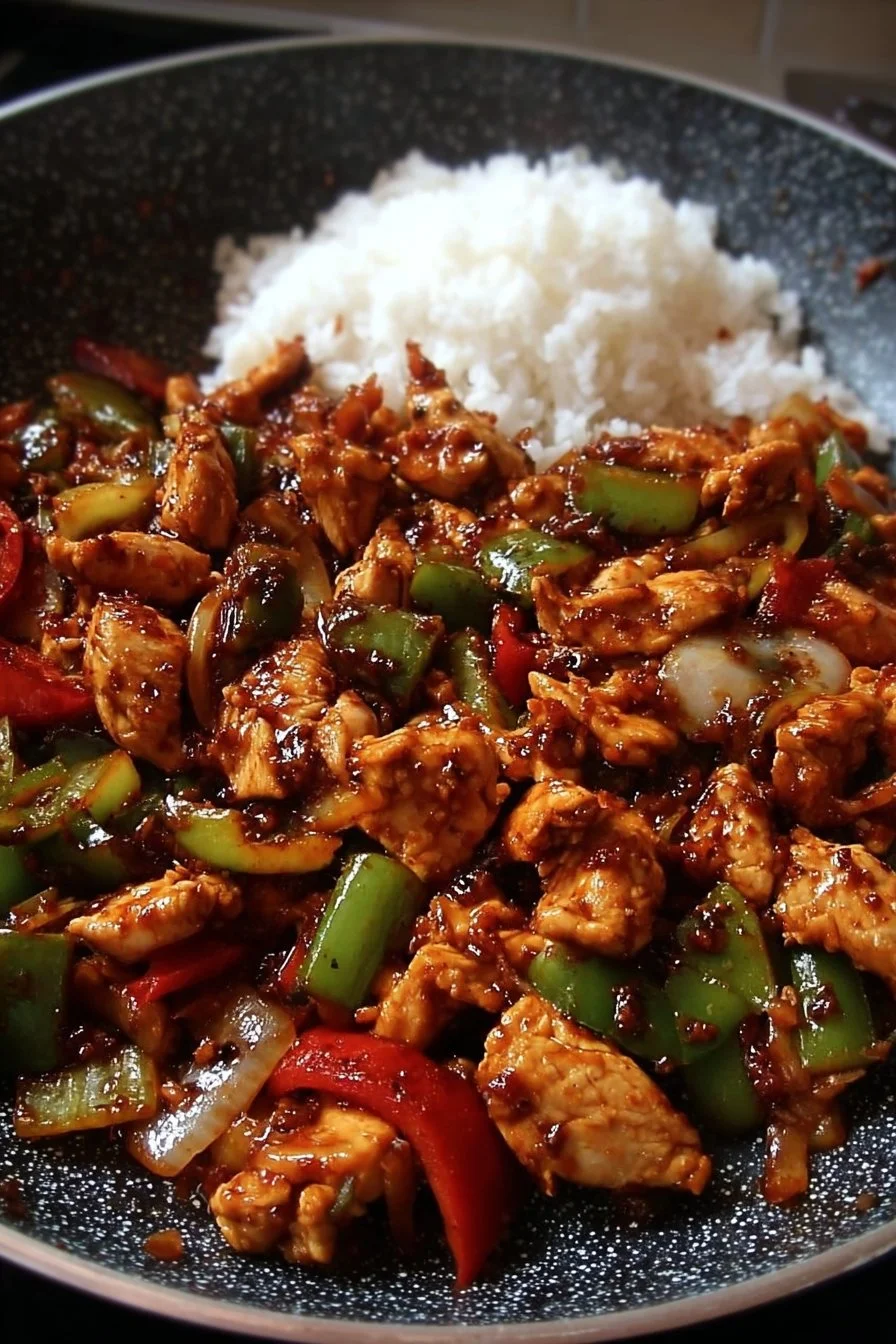
A quick, punchy stir-fry that balances heat, umami, and crisp veg — this Korean spicy chicken comes together in under 25 minutes and sings over steaming rice or chewy noodles. It’s the kind of weeknight dinner I reach for when I want bold flavor without fuss; the gochujang adds deep chili-and-fermented-soy character that coats the chicken and greens beautifully. If you’re into efficient Asian-style dinners, you might also enjoy this chicken and green bean stir-fry for another speedy, family-friendly option.
Why you’ll love this dish
This recipe hits the sweet spot between fast and flavorful. It uses pantry-friendly ingredients — soy sauce, gochujang, garlic, ginger — and a single skillet so cleanup is minimal. The texture contrast (tender chicken, crunchy vegetables) and bold sauce make it satisfying for adults and adaptable enough for kids by dialing back the gochujang.
“A family favorite: spicy but manageable, quick to make, and the leftovers taste even better the next day.” — home cook review
Perfect occasions: hectic weeknights, casual dinner parties when you want a main that’s more interesting than plain chicken, or meal-prep for lunches. It’s budget-friendly too: use whatever vegetables are on sale or leftover.
Preparing Korean Spicy Chicken Stir Fry
High-level plan: slice the chicken thin so it cooks quickly, sear over medium-high heat to get color, aromatics next (garlic + ginger), then toss in mixed vegetables and finish with a soy-gochujang sauce that coats everything. The whole process is stir-fry speed — about 20 minutes from pan to plate.
What to expect stepwise:
- Prep all ingredients first (mise en place) so you can work fast.
- Sear the chicken until just cooked and slightly browned.
- Add garlic/ginger briefly to release aroma.
- Stir-fry vegetables until tender-crisp.
- Add sauce, simmer 2–3 minutes until it clings to the ingredients.
- Adjust seasoning and serve over rice or noodles.
What you’ll need
- 1 lb boneless, skinless chicken breast, thinly sliced (about 2 large breasts)
- Sub: chicken thighs for juicier texture; increase cook time slightly.
- 2 cups mixed vegetables (bell peppers, broccoli florets, sliced carrots)
- Use frozen vegetables in a pinch; thaw and pat dry.
- 2 tablespoons soy sauce (low-sodium if preferred)
- 1 tablespoon gochujang (Korean chili paste)
- Sub: 1 tsp sambal oelek + 1 tsp miso paste if you don’t have gochujang.
- 2 cloves garlic, minced
- 1 tablespoon fresh ginger, minced or grated
- 2 tablespoons vegetable oil (or neutral oil with a high smoke point)
- Salt and freshly ground black pepper to taste
- Cooked rice or noodles for serving
Small notes: measure the gochujang by tablespoon — it’s thick, so scrape the spoon clean for an accurate amount. If you like more sauce, add 1–2 tablespoons of water or chicken stock when combining to loosen it.
Step-by-step instructions
- Prep: Slice chicken thinly across the grain into uniform pieces so they cook evenly. Chop vegetables into bite-sized pieces. Mince garlic and ginger. Have your sauce mixed and ready.
- Heat the pan: Place a large skillet or wok over medium-high heat and add 2 tablespoons vegetable oil. Let the oil get hot but not smoking.
- Cook chicken: Add the sliced chicken in a single layer. Let it sear without crowding for about 2 minutes, then stir and continue cooking 3–4 minutes until browned and cooked through. Transfer chicken to a plate briefly.
- Aromatics: Reduce heat slightly if the pan is smoking. Add garlic and ginger to the same skillet and stir-fry for about 30–60 seconds until fragrant — do not let them burn.
- Vegetables: Add the mixed vegetables and stir-fry 3–4 minutes until they are tender-crisp. If using dense veg like broccoli, you can splash a tablespoon of water and cover for 30 seconds to steam.
- Add sauce and combine: Stir together 2 tablespoons soy sauce and 1 tablespoon gochujang in a small bowl, then pour over the chicken and vegetables. Return the chicken to the pan, stirring to coat everything evenly.
- Finish: Cook an additional 2–3 minutes, stirring, until the sauce thickens slightly and glazes the ingredients. Taste and season with salt and pepper as needed.
- Serve: Scoop over hot rice or toss with noodles. Garnish with sliced scallions or toasted sesame seeds if you like.
Timing: prep 10 minutes, cook 10–12 minutes, total about 20–25 minutes.
How to plate and pair
Best ways to enjoy it: serve on steamed jasmine rice for a classic combo, or over udon/soba noodles for a heartier bowl. A squeeze of lime or a sprinkle of sesame seeds brightens the dish. For a crunchy contrast, top with chopped roasted peanuts or fried shallots.
For a bolder rice pairing or different stir-fry inspiration, try serving this with flavors reminiscent of the crispy chilli beef rice — the contrast of spicy-sweet rice works well alongside the gochujang glaze.
Bottle-pairing: crisp lager or a slightly sweet Riesling calms the heat; green tea keeps it light.
Storage and reheating tips
- Refrigerator: Store leftovers in an airtight container for up to 3–4 days. Cool to room temperature within two hours before refrigerating.
- Freezer: You can freeze cooked chicken stir-fry for up to 2 months. Thaw overnight in the refrigerator before reheating.
- Reheating: Reheat gently on the stovetop in a skillet over medium heat with a splash of water or broth to loosen the sauce, or microwave in short bursts stirring between intervals. Avoid overcooking the vegetables — add a quick fresh handful of sliced bell pepper while reheating to restore crunch if needed.
- Safety: Always reheat to an internal temperature of 165°F (74°C) to ensure food safety.
Helpful cooking tips
- Slice chicken thin and against the grain for tender bites. Even thinly sliced chicken breasts can dry out — don’t overcook.
- Pat chicken dry with paper towels before cooking; it browns better.
- Pre-mix the sauce so you can add it quickly and evenly.
- Work on high heat for searing and char; a well-heated pan is the key to good texture.
- If your gochujang is very thick and sticky, thin it with a teaspoon of water before mixing with soy sauce.
- Don’t overcrowd the pan — cook in batches if necessary to maintain a good sear.
Recipe variations
- Vegetarian: Replace chicken with firm tofu (press and cube) or tempeh; pan-fry until crisp and proceed the same.
- Higher heat: Use 1½ tablespoons gochujang or add 1 teaspoon Korean chili flakes (gochugaru) for more kick.
- Sweet-savory glaze: Add 1 tablespoon honey or brown sugar to the sauce for a sticky, caramelized finish.
- Ginger-forward: Increase ginger to 2 tablespoons for a zesty aroma.
- Noodle bowl: Toss with cooked ramen or rice noodles and drizzle toasted sesame oil before serving.
FAQ
Q: Can I use chicken thighs instead of breast?
A: Yes. Boneless skinless thighs are more forgiving and stay juicier. Cut into the same size pieces and follow the same cook time; thighs may take an extra minute or two.
Q: What can I substitute for gochujang?
A: Gochujang has a unique fermented sweetness and heat. If unavailable, mix sambal oelek (for heat) with a little miso paste or a touch of brown sugar to mimic the sweetness and depth. It won’t be identical but will still be delicious.
Q: How spicy is this recipe?
A: With 1 tablespoon gochujang it’s moderately spicy for most people. You can reduce to 1 teaspoon for a milder version, or add extra to increase heat. Balancing with a bit of sugar or extra soy helps soften the heat if needed.
Q: Can I meal-prep this for lunches?
A: Absolutely. Store portions in airtight containers over rice; they’ll keep 3–4 days refrigerated. Reheat on the stovetop with a splash of water to revive the sauce and vegetables.
Q: Is this kid-friendly?
A: Yes — reduce the gochujang or replace part of it with ketchup or hoisin to lower the heat while retaining a sweet-savory glaze kids enjoy.
If you want a printable shopping list or a version with chicken thighs and extra vegetables, tell me your preferences and I’ll tailor the recipe.
PrintKorean Spicy Chicken Stir Fry
A quick and flavorful Korean stir-fry that balances heat and umami, perfect for weeknight dinners.
- Prep Time: 10 minutes
- Cook Time: 12 minutes
- Total Time: 22 minutes
- Yield: 4 servings
- Category: Main Course
- Method: Stir Fry
- Cuisine: Korean
- Diet: Paleo
Ingredients
- 1 lb boneless, skinless chicken breast, thinly sliced
- 2 cups mixed vegetables (bell peppers, broccoli florets, sliced carrots)
- 2 tablespoons soy sauce
- 1 tablespoon gochujang (Korean chili paste)
- 2 cloves garlic, minced
- 1 tablespoon fresh ginger, minced or grated
- 2 tablespoons vegetable oil
- Salt and freshly ground black pepper to taste
- Cooked rice or noodles for serving
Instructions
- Prep all ingredients first (mise en place) so you can work fast.
- Heat the pan: Place a large skillet over medium-high heat and add vegetable oil.
- Cook chicken: Add the sliced chicken in a single layer, searing for 2 minutes, then stir and continue until browned.
- Aromatics: Add garlic and ginger to the skillet, stir-frying until fragrant.
- Vegetables: Add mixed vegetables and stir-fry until tender-crisp.
- Add sauce: Stir together soy sauce and gochujang, then combine with chicken and vegetables.
- Finish: Cook for another 2-3 minutes until sauce thickens slightly.
- Serve over hot rice or toss with noodles.
Notes
Adjust gochujang quantity for desired spice level; add water or stock for more sauce if needed.