
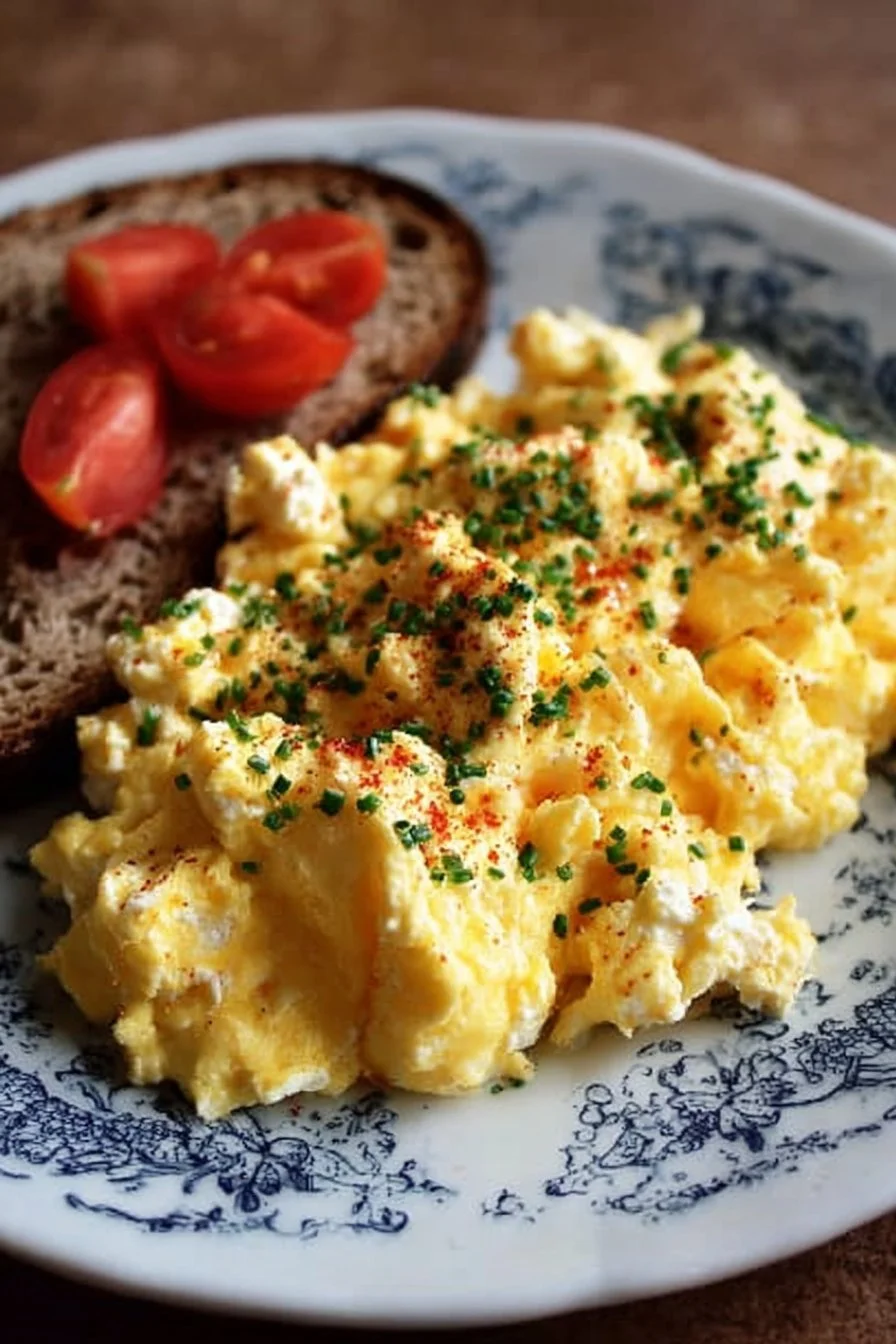
There’s something impossibly comforting about ultra-creamy scrambled eggs, and folding cottage cheese into the mix takes that creaminess to the next level—silky, slightly tangy, and luxuriously soft. These eggs are quick enough for a weekday breakfast but elegant enough for a relaxed weekend brunch. The cottage cheese adds body and a gentle tang that brightens the eggs without overpowering them, while a simple pat of butter finishes the texture with a rich sheen. Try them on buttery toast, tucked into a warm tortilla, or alongside roasted tomatoes for a satisfying meal in minutes. If you enjoy variations on this theme, you might also like a similar scrambled eggs with cottage cheese recipe that explores slightly different proportions and techniques.
Why You’ll Love This Creamy Scrambled Eggs with Cottage Cheese
- Ultra-creamy texture: cottage cheese adds moisture and a soft, custardy finish.
- Easy and fast: ready in about 5 minutes from bowl to plate.
- Protein-packed: eggs plus cottage cheese make it a filling morning choice.
- Mild tang balances richness: the cottage cheese brightens the eggs without changing their character.
- Versatile serving options: perfect on toast, in wraps, or as a brunch centerpiece.
- Kid-friendly: the mild flavors and creamy texture are usually a hit with picky eaters.
- Minimal cleanup: one bowl and one skillet—simple and low-fuss.
- Comfort food with a twist: familiar scrambled eggs made more luxurious without extra steps.
What Is Creamy Scrambled Eggs with Cottage Cheese?
This dish is a simple scrambled egg recipe where small curds of cottage cheese are whisked into the eggs before cooking. The result is a soft, creamy scramble that blends the familiar richness of eggs with the gentle tang and texture of cottage cheese. It’s cooked gently in a skillet over medium heat, stirred occasionally until soft curds form and the eggs are just set. People commonly serve it for breakfast or brunch, but it’s also a cozy late-night snack or light lunch. The overall vibe is approachable comfort food with a slightly upscale mouthfeel—comforting, quick, and unexpectedly elegant.

Ingredients for Creamy Scrambled Eggs with Cottage Cheese
For the base
- 2 large eggs
- 1/4 cup cottage cheese (about 60 mL)
For seasoning and cooking
- Salt and pepper to taste
- 1 tablespoon butter (about 14 g)
For serving (optional)
- Chives or green onions for garnish (optional)
Ingredient Notes (Substitutions, Healthy Swaps)
- Cottage cheese swaps (optional): If you don’t have cottage cheese, consider a small amount of ricotta or plain Greek yogurt as a similar tangy, creamy element—use the same 1/4 cup measure. These keep the texture creamy but will alter the flavor slightly.
- Lower-fat option: Use low-fat cottage cheese to reduce fat and calories; the texture will be slightly less rich but still very satisfying.
- Non-dairy alternatives (optional): Some plant-based “cottage cheese” or thick soy-based yogurts can mimic texture; keep in mind flavor and salt content will vary.
- Butter substitute (optional): For a lower-fat version, you can cook with a non-stick spray or a small drizzle of olive oil, though butter gives the recipe a classic glossy finish.
- Salt and pepper: Season to taste. Cottage cheese can be salty depending on the brand, so taste the mixture before adding too much salt.
Step-by-Step Instructions
Step 1 – Whisk the eggs and cottage cheese together
In a bowl, whisk the 2 large eggs with the 1/4 cup cottage cheese, plus salt and pepper to taste, until the mixture is well combined and slightly frothy. This helps break up the cottage cheese curds and distributes them evenly through the eggs.
Visual cue: The mixture should look homogenous with small visible curds of cottage cheese suspended throughout.
Step 2 – Melt the butter
Heat 1 tablespoon butter in a non-stick skillet over medium heat until melted and shimmering. The pan should be hot enough to sizzle a drop of water but not so hot that the butter browns immediately.
Pro cue: Use medium rather than high heat—cottage cheese in the eggs benefits from gentle cooking to stay creamy.
Step 3 – Pour in the egg mixture
Pour the whisked eggs and cottage cheese into the skillet. Let the mixture sit undisturbed for a few seconds to set around the edges.
Visual cue: The edges will begin to solidify while the middle remains glossy.
Step 4 – Stir gently until soft curds form
Using a spatula, stir gently and continuously, folding the eggs from the edges toward the center. Cook until the eggs are soft and just set—about 3–5 minutes depending on heat and pan size. Remove from heat as soon as the eggs are no longer runny but still creamy.
Pro cue: Stop cooking a few seconds earlier than you think; residual heat will finish the set and keep the texture tender.
Step 5 – Garnish and serve
Transfer the scrambled eggs immediately to plates and garnish with chopped chives or green onions if desired. Serve right away for the best texture.
Visual cue: The finished eggs should glisten, appear creamy, and hold soft, tender curds rather than looking dry or rubbery.
Pro Tips for Success
- Control the heat: Medium heat is ideal—too hot and the eggs firm up too quickly and dry out.
- Whisk well: Breaking up larger cottage cheese curds in the whisking stage helps distribute creaminess evenly.
- Timing is everything: Remove from heat when eggs are slightly underdone; carryover cooking will finish them.
- Use a non-stick skillet: It makes gentle stirring and quick release easier, preserving the soft texture.
- Season at the right time: Taste the egg-cottage cheese mix before adding salt—some cottage cheeses are salty already.
- Serve immediately: These eggs are best enjoyed the moment they’re cooked; they lose creaminess as they cool.
- Avoid over-stirring: Gentle folds and occasional stirring give large, silky curds—constant aggressive stirring makes them grainy.
Flavor Variations (Optional)
- Spicy kick (optional): Stir in a pinch of chili flakes or a small dash of hot sauce right before serving for heat without changing the core recipe.
- Herby uplift (optional): Fold in more fresh herbs like parsley or dill at the end for freshness while keeping the base ingredients the same.
- Cheesy finish (optional): If you want a cheesier version, sprinkle a little grated cheese on top immediately after cooking so it melts slightly—this is an optional add-on and not required.
- Veggie boost (optional): Serve the eggs over sautéed mushrooms or roasted cherry tomatoes to add texture and flavor while keeping the original recipe intact.
- Lighter version (optional): Use low-fat cottage cheese and swap butter for a minimal non-stick spray to reduce calories while preserving the basic method.
Serving Suggestions
- Toast topper: Pile the eggs on thick, buttered toast for a classic and comforting breakfast.
- Breakfast sandwich: Place between slices of toasted bread or an English muffin for an on-the-go breakfast.
- Greens and eggs: Serve atop a bed of lightly dressed baby spinach or arugula for a simple brunch plate.
- Wrapped: Tuck the eggs into a warm tortilla with a sprinkle of herbs for an easy wrap.
- Brunch spread: Add to a brunch board alongside fruit, roasted tomatoes, and a light salad.
- Simple plate: Pair with roasted or pan-seared potatoes for a heartier meal.
One of the best ways to see small technique differences is to compare this version to another cottage cheese scrambled egg recipe that highlights slightly different finishing touches.
Make-Ahead, Storage & Reheating
- Make-ahead: You can whisk the eggs with cottage cheese in advance and store the mixture covered in the refrigerator for up to 24 hours. Cook just before serving for best texture.
- Refrigerator storage: Cooked eggs should be cooled to room temperature and stored in an airtight container in the refrigerator for up to 3 days.
- Reheating methods: Gently reheat over low heat in a non-stick skillet, stirring occasionally to revive creaminess. Alternatively, microwave on low power in short 20–30 second bursts, stirring between intervals to avoid overcooking.
- Texture changes: Note that refrigerated and reheated eggs will be firmer and less creamy than fresh; use gentle reheating to minimize dryness.
Storage and Freezing Instructions
- Freezing not recommended: Cooked scrambled eggs with cottage cheese don’t freeze well—the texture becomes watery or grainy on thawing. The cottage cheese curds separate and eggs can become rubbery.
- Alternatives to freezing: If you need make-ahead convenience, store the uncooked egg and cottage cheese mixture in the fridge for up to 24 hours and cook fresh when ready. Or prepare serving elements ahead (toasts, roasted tomatoes) and cook the eggs last minute.
Nutrition Facts (Per Serving)
| Calories | Protein | Carbs | Fat | Fiber | Sodium |
|———|——–|——|—–|——|——-|
| 300 kcal | 19 g | 2 g | 24 g | 0 g | 530 mg |
Nutrition values are estimates and may vary depending on ingredients and portion sizes.
FAQ About Creamy Scrambled Eggs with Cottage Cheese
- Will the cottage cheese make the eggs grainy?
- Not if you whisk the mixture well first; small curds are normal, but thorough whisking reduces larger curds and yields creaminess.
- How can I prevent the eggs from overcooking?
- Remove the pan from heat when eggs are slightly underdone—the residual heat will finish them without drying them out.
- Can I use low-fat cottage cheese?
- Yes. Low-fat cottage cheese will produce a slightly less rich texture but the technique and timing remain the same.
- How long can I store leftovers?
- Keep cooked eggs in an airtight container in the refrigerator for up to 3 days.
- Do I have to use butter?
- Butter gives a glossy finish and flavor, but you may substitute a little oil or non-stick spray if needed.
- Why do my eggs look watery after cooking?
- Overcooking or high heat can cause the curds to expel moisture. Cook gently and remove from heat early to keep them creamy.
Notes
- Plate immediately: These eggs look and taste best right off the stove—serve quickly to preserve texture.
- Small flavor upgrades: A little fresh pepper or a tiny sprinkle of flaky sea salt at the end elevates the dish.
- Presentation tip: Use fresh, thinly sliced chives or green onions for a bright, attractive garnish.
- Temperature control: Keep your burner at medium; patience leads to silkier eggs.
- Portioning: This recipe makes a single generous serving—double carefully in the same-size pan to avoid crowding and uneven cooking.
Creamy Scrambled Eggs with Cottage Cheese

Ultra-creamy scrambled eggs enriched with cottage cheese for a silky, slightly tangy dish perfect for any meal.
- Prep Time: 2 minutes
- Cook Time: 3 minutes
- Total Time: 5 minutes
- Yield: 1 serving
- Category: Breakfast
- Method: Stovetop
- Cuisine: American
- Diet: Vegetarian
Ingredients
- 2 large eggs
- 1/4 cup cottage cheese (about 60 mL)
- Salt and pepper to taste
- 1 tablespoon butter (about 14 g)
- Chives or green onions for garnish (optional)
Instructions
- Whisk the eggs and cottage cheese together in a bowl until well combined and slightly frothy.
- Melt the butter in a non-stick skillet over medium heat until shimmering.
- Pour in the egg mixture and let it sit undisturbed for a few seconds.
- Stir gently and continuously, folding the eggs from the edges toward the center, until soft curds form and the eggs are just set (about 3–5 minutes).
- Transfer the scrambled eggs to plates and garnish with chives or green onions if desired.
Notes
Serve immediately for the best texture. Use fresh herbs or sprinkle with flaky sea salt for added flavor.