
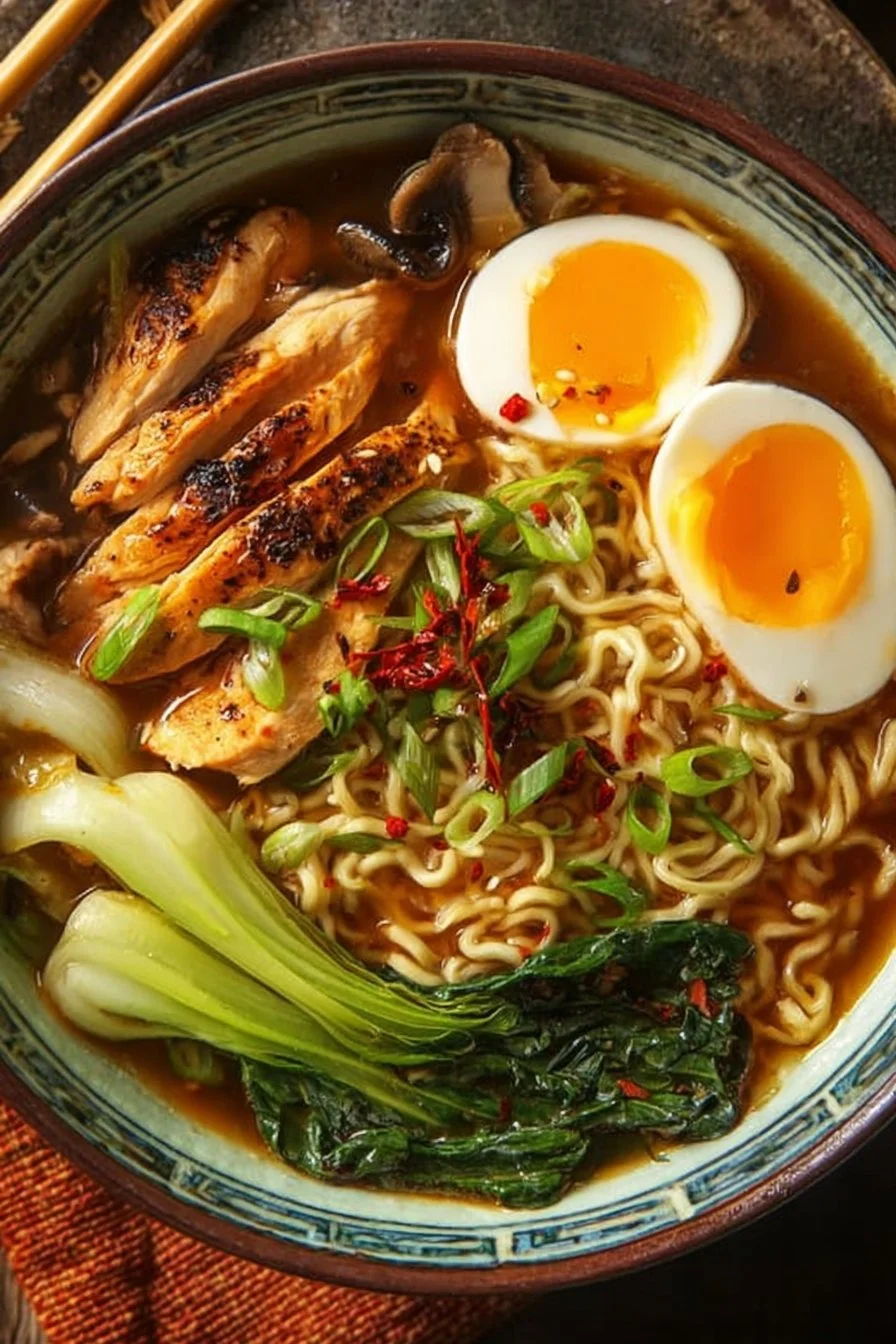
This gluten-free chicken ramen is everything you want on a busy weeknight: savory, warming broth, tender ribbons of chicken, crisp-tender vegetables, and chewy gluten-free noodles all in one bowl. The sesame oil and soy/tamari give it a toasty, umami backbone while fresh garlic and ginger add brightness and a gentle heat. Spinach wilts into the broth for a pop of color and nutrients, and green onions on top add a sharp finish and crunch. It’s easy to pull together in under 30 minutes, feels like real comfort food, and is endlessly adaptable to what’s in your fridge. For a spicier riff on this idea, I sometimes turn to an easy spicy chicken soup ramen for inspiration — it’s a great way to vary the heat without changing the base method.
Why You’ll Love This Gluten-Free Chicken Ramen
- Comforting, brothy bowl that’s lighter than traditional ramen but still deeply satisfying.
- Chewy gluten-free noodles mimic the ramen experience without gluten.
- Bright aromatics (garlic + ginger) keep the flavor fresh and inviting.
- Quick to make—perfect for busy weeknights or when you want something cozy fast.
- Versatile: add more veggies or toss in extras at the end for texture.
- Balanced meal in a bowl: protein from chicken, veggies for vitamins, noodles for carbs.
- Easy to scale up for meal prep or scale down for a solo dinner.
- Naturally dairy-free and easy to keep gluten-free by using tamari.
What Is Gluten-Free Chicken Ramen?
Gluten-free chicken ramen is a noodle soup built around a savory chicken broth, tender chunks of chicken breast, vegetables, and gluten-free ramen noodles. It tastes savory and slightly nutty from sesame oil, with warm, aromatic notes from garlic and ginger and a gentle saltiness from soy sauce or tamari. The cooking method is stove-top simmering: sauté aromatics and chicken, add vegetables and broth, then finish with noodles and greens. People typically serve it for weeknight dinners, as a comforting lunch, or whenever they crave a warming, bowl-based meal. The overall vibe is cozy and approachable—like a lighter, gluten-free take on classic ramen that still hits the same nostalgic comfort notes.
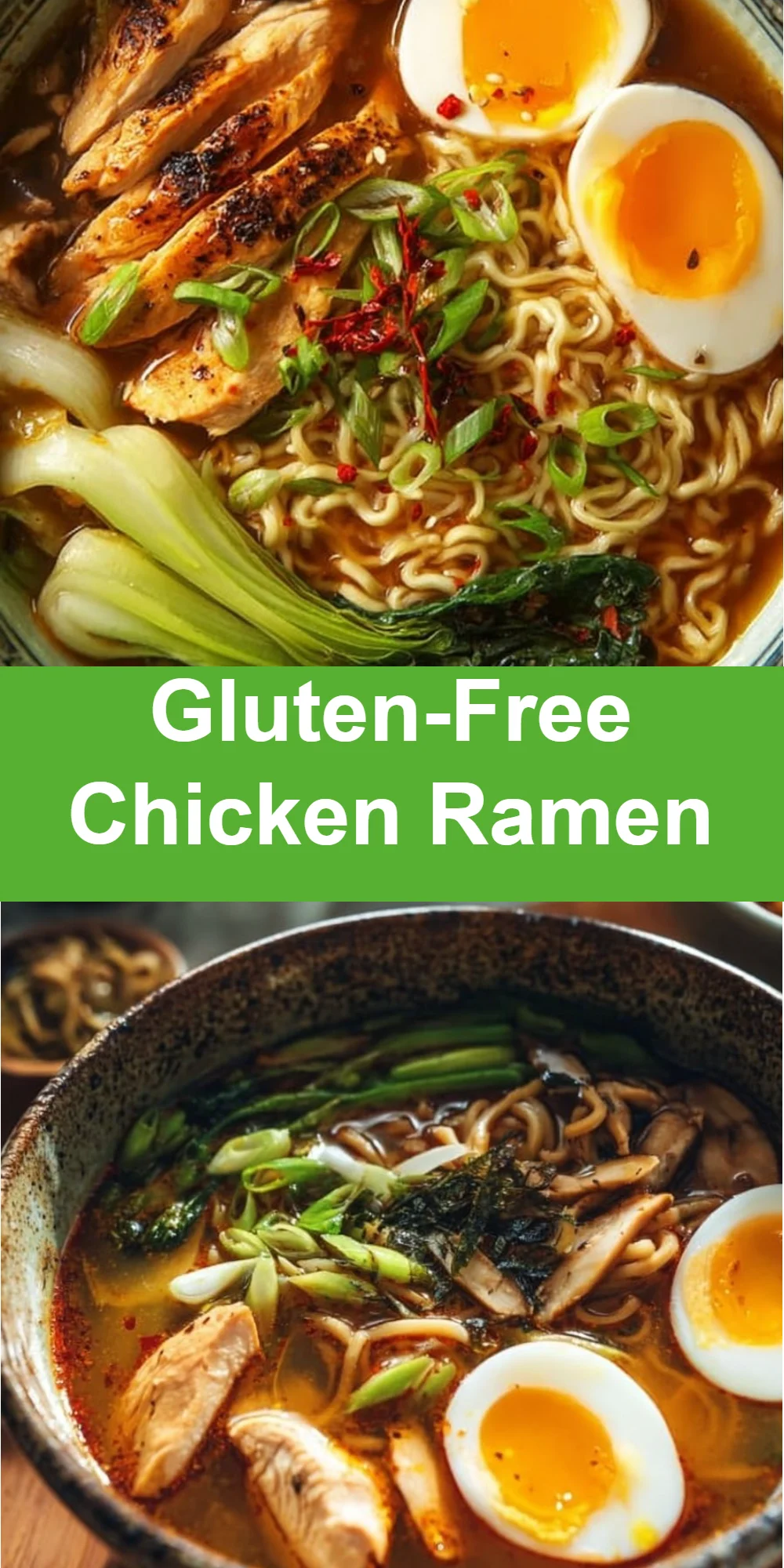
Ingredients for Gluten-Free Chicken Ramen
For the Base
- gluten-free ramen noodles
- chicken breast
- chicken broth
- sesame oil
Aromatics & Veggies
- garlic (minced)
- ginger (minced)
- carrots (chopped)
- bell peppers (chopped)
- spinach
For the Sauce & Finish
- soy sauce or tamari (for gluten-free)
- green onions (for garnish)
Ingredient Notes (Substitutions, Healthy Swaps)
- Tamari vs. Soy Sauce: Use tamari for a truly gluten-free option; regular soy sauce works if you don’t need gluten-free.
- Lower-sodium option: Choose low-sodium chicken broth and low-sodium tamari to control salt. Adjust final seasoning to taste.
- Noodle choices: Any gluten-free ramen-style noodles work—rice-based or other gluten-free blends—choose the brand you trust for texture.
- Vegetables: You can use frozen spinach if fresh isn’t on hand; add it in at the same step as fresh spinach so it wilts into the broth.
- Chicken cuts: Chicken breast is lean and cooks quickly; if you prefer darker meat, you could use boneless thighs as an optional variation (see Variations section).
- Oil: Sesame oil here provides flavor; if you’re out of sesame oil, a neutral oil can be used as a short-term swap but will change the flavor profile slightly.
Step-by-Step Instructions
Step 1 – Cook the noodles
Cook the gluten-free ramen noodles according to the package instructions. Drain and set aside.
Visual cue: Noodles should be tender but still springy (al dente), not mushy.
Step 2 – Warm the pot and oil
In a large pot, heat sesame oil over medium heat.
Visual cue: The oil should shimmer slightly — not smoking.
Step 3 – Sauté aromatics
Add minced garlic and ginger; sauté for 1 minute. Stir constantly to prevent burning.
Pro cue: Mince garlic and ginger finely so they release flavor quickly and evenly.
Step 4 – Brown the chicken
Add diced chicken breast and cook until browned. This seals juices and adds flavor.
Visual cue: Chicken pieces should be opaque with golden edges.
Pro cue: Don’t overcrowd the pot; if the chicken steams instead of browns, it won’t develop as much flavor.
Step 5 – Add the vegetables
Add chopped carrots and bell peppers, sauté for 3–4 minutes until slightly softened.
Visual cue: Carrots should begin to soften but still have a bite; peppers should look glossy.
Step 6 – Simmer the broth
Pour in chicken broth and bring to a simmer. Stir in soy sauce or tamari and cook for an additional 5 minutes. Add spinach and cooked ramen noodles, mix well.
Visual cue: Broth should be gently simmering and fragrant, spinach wilting to a deep green.
Pro cue: Taste the broth near the end and adjust soy/tamari — it’s easier to add saltiness than to pull it back.
Step 7 – Serve
Serve hot, garnished with sliced green onions.
Visual cue: Bright green onions on top give a fresh contrast to the golden broth.
Pro Tips for Success
- Heat control: Keep the pan at medium for sautéing so aromatics don’t burn; garlic burns quickly and tastes bitter.
- Texture control: Don’t overcook gluten-free noodles—most brands become mushy if boiled too long. Cook to package directions and finish in the broth briefly.
- Seasoning balance: Start with less soy/tamari and adjust after simmering; broths and tamari vary widely in saltiness.
- Browning: Let the chicken develop some color before stirring—those browned bits add depth to the broth.
- Veg timing: Add heartier vegetables like carrots earlier and delicate greens like spinach at the end to avoid overcooking.
- Use fresh aromatics: Fresh ginger and garlic make a big difference; powdered forms won’t provide the same brightness.
- One-pot finish: Once the noodles are cooked and added, warm gently rather than boiling to keep textures intact.
- Rest time: Let the soup sit for a couple of minutes off the heat before serving so flavors meld.
Flavor Variations (Optional)
- Spicy version: Stir in chili flakes or a spoonful of chili paste at the end for heat. For a complete spicy riff, see this fiery chicken ramen comfort bowl.
- Citrus brightness: Finish with a squeeze of lime or lemon juice right before serving to brighten the broth.
- Extra vegetables: Keep the base the same but add thinly sliced mushrooms or snap peas for more texture.
- Garlic-forward: Increase the garlic to boost aromatic punch; roast it first for a mellower, sweeter note.
- Softer-broth option: Simmer longer on low for a more melded, deeper-flavored broth if you have time.
Serving Suggestions
- Simple sides: Serve with steamed edamame or a crisp green salad for a balanced meal.
- Crunch element: Add a small bowl of toasted sesame seeds or crushed nuts on the side for sprinkling.
- Family-style: Serve in large bowls with garnishes (green onions, extra sesame oil) and let everyone customize.
- Occasion: Great for cold nights, post-workout recovery (high protein), or quick weekend lunches.
- Plating idea: Use wide, shallow bowls to show off noodles and garnishes; arrange chicken and veggies on top for a pretty presentation.
- Beverage pairing: A light, non-alcoholic iced tea or sparkling water with citrus complements the savory broth.
Make-Ahead, Storage & Reheating
- Make-ahead: You can prep the chicken, chop the vegetables, and cook the noodles ahead of time, storing components separately. Keep broth chilled in its own container and combine when ready.
- Refrigerator storage time: Store finished soup in an airtight container for up to 3–4 days. Keeping noodles separate extends texture quality.
- Reheating methods: Reheat gently on the stovetop over medium-low heat until warmed through. If refrigerated, add a splash of chicken broth or water while reheating to refresh the broth.
- Texture changes: Noodles absorb liquid over time and can become soft; storing them separately and adding when reheating preserves chewiness.
Storage and Freezing Instructions
- Freezing: The broth and cooked chicken freeze well, but cooked gluten-free noodles often turn mushy after freezing and thawing. If you plan to freeze, omit noodles and store them separately or cook fresh when ready to eat.
- To freeze: Cool the soup completely, transfer to freezer-safe containers leaving headspace, and freeze for up to 3 months. Thaw overnight in the fridge before reheating.
- If you prefer not to freeze: Make a larger batch of broth and chicken, cool, and refrigerate for up to 4 days; cook noodles fresh at serving time.
Nutrition Facts (Per Serving)
| Calories | Protein | Carbs | Fat | Fiber | Sodium |
|———|——–|——|—–|——|——-|
| 480 kcal | 34 g | 48 g | 14 g | 4 g | 980 mg |
Nutrition values are estimates and may vary depending on ingredients and portion sizes.
FAQ About Gluten-Free Chicken Ramen
Q: My noodles turned mushy—what went wrong?
A: Most gluten-free noodles overcook quickly. Follow package timing closely, drain promptly, and add them to the hot broth at the end rather than boiling them in the soup for a long time.
Q: Can I use leftover rotisserie chicken?
A: Yes—use shredded rotisserie chicken in place of cooking breast pieces. Add it near the end to warm through without overcooking.
Q: How do I know the chicken is cooked through?
A: Chicken breast pieces should be opaque throughout with no pink centers and reach 165°F (74°C) if measured with a thermometer.
Q: Will this work with vegetable broth for a lighter flavor?
A: Vegetable broth will change the flavor profile but can work if you want a lighter, vegetarian-style broth—just note you’d also need a plant protein swap if avoiding chicken entirely.
Q: Can I reheat this in the microwave?
A: Yes—reheat in short intervals, stirring between increments to ensure even heating and adding a splash of broth if it seems dry.
Q: How can I reduce sodium without losing flavor?
A: Use low-sodium chicken broth and low-sodium tamari, then taste and add a little more if needed. Fresh ginger and garlic also amplify perceived saltiness.
Notes
- Presentation tip: Arrange the chicken and veggies on top of the noodles rather than mixing everything in—this makes the bowl look more inviting.
- Small flavor upgrade: A drizzle of toasted sesame oil right before serving deepens the nutty aroma.
- Seasoning adjustment: Always taste the broth before serving and tweak with more soy/tamari or a pinch of salt if needed.
- Texture balance: Keep at least one crunchy element like raw green onion slices or a side of crisp vegetables to contrast the soft noodles.
- Leftovers idea: When reheating leftovers, add fresh greens or herbs to revive the bowl and brighten flavors.
Gluten-Free Chicken Ramen
Comforting gluten-free chicken ramen with savory broth, tender chicken, and fresh vegetables, ready in under 30 minutes.
- Prep Time: 10 minutes
- Cook Time: 20 minutes
- Total Time: 30 minutes
- Yield: 4 servings
- Category: Main Course
- Method: Stovetop
- Cuisine: Japanese
- Diet: Gluten-Free
Ingredients
- gluten-free ramen noodles
- 1 lb chicken breast, diced
- 4 cups chicken broth
- 1 tbsp sesame oil
- 3 cloves garlic, minced
- 1 inch ginger, minced
- 2 carrots, chopped
- 1 bell pepper, chopped
- 2 cups spinach
- 2 tbsp soy sauce or tamari
- 2 green onions, sliced (for garnish)
Instructions
- Cook the gluten-free ramen noodles according to package instructions. Drain and set aside.
- Warm a large pot and heat sesame oil over medium heat.
- Sauté minced garlic and ginger for 1 minute, stirring constantly.
- Brown the diced chicken breast until opaque and golden.
- Add chopped carrots and bell peppers, sautéing for 3–4 minutes until slightly softened.
- Pour in chicken broth, bring to a simmer, and stir in soy sauce or tamari. Cook for an additional 5 minutes.
- Add spinach and cooked ramen noodles, mixing well.
- Serve hot, garnished with sliced green onions.
Notes
Use tamari for gluten-free. Adjust seasonings to taste, especially with broth and soy sauce.