
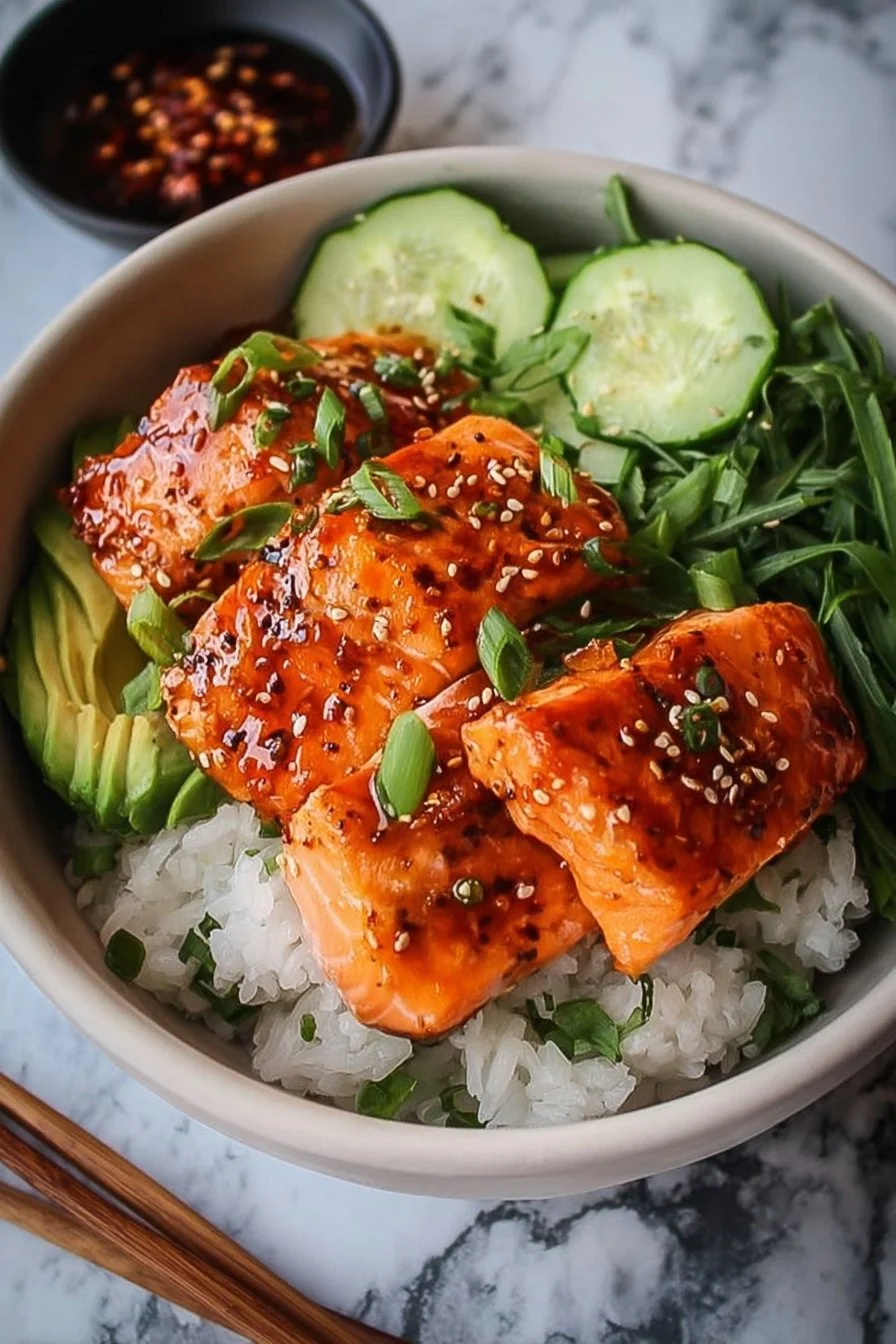
Bright, savory, and comforting, these Salmon Rice Bowls bring together flaky pan-seared salmon, tender mixed vegetables, and fluffy rice with a punchy soy-ginger drizzle. The textures play nicely — crisp-tender veggies, a satin soy-ginger sauce, and rich salmon that flakes with a fork — making every spoonful satisfying. It’s an easy, weeknight-friendly recipe that comes together quickly and feels special enough for guests. If you enjoy hearty, one-bowl dinners, you might also like this take on a different comfort-forward bowl like the Philly Cheesesteak Rice Bowls for more bowl inspiration.
Why You’ll Love This Salmon Rice Bowls
- Balanced flavors: savory soy, bright ginger, and naturally rich salmon create a well-rounded bite.
- Textural contrast: flaky, pan-seared salmon paired with crisp-tender mixed vegetables and soft rice.
- Quick and approachable: uses basic stovetop techniques and finishes in about 20–30 minutes.
- Minimal ingredients: pantry-friendly staples — rice, salmon, soy, ginger, oil — no fuss.
- Versatile: easy to adapt to what’s on hand or to scale up for guests.
- One-bowl comfort: perfect for weeknights, meal prep lunches, or a simple dinner that still feels elevated.
- Fresh garnish-friendly: green onions add a pop of color and brightness (optional).
What Is Salmon Rice Bowls?
Salmon Rice Bowls are a simple, comforting one-bowl meal built on a base of cooked rice, topped with pan-seared salmon and a medley of mixed vegetables, finished with a soy-ginger dressing. Taste-wise, expect savory and slightly salty notes from the soy sauce, a fresh zing from grated ginger, and the rich, buttery flavor of cooked salmon. The primary cooking method is pan-searing the salmon and stir-frying the vegetables in the same pan for quick flavor-building and easy cleanup. People typically serve this for weeknight dinners, casual lunch bowls, or a relaxed dinner-party main when you want something effortless but polished. Overall, it reads as comfort food with a light, modern twist — wholesome, balanced, and crowd-pleasing.
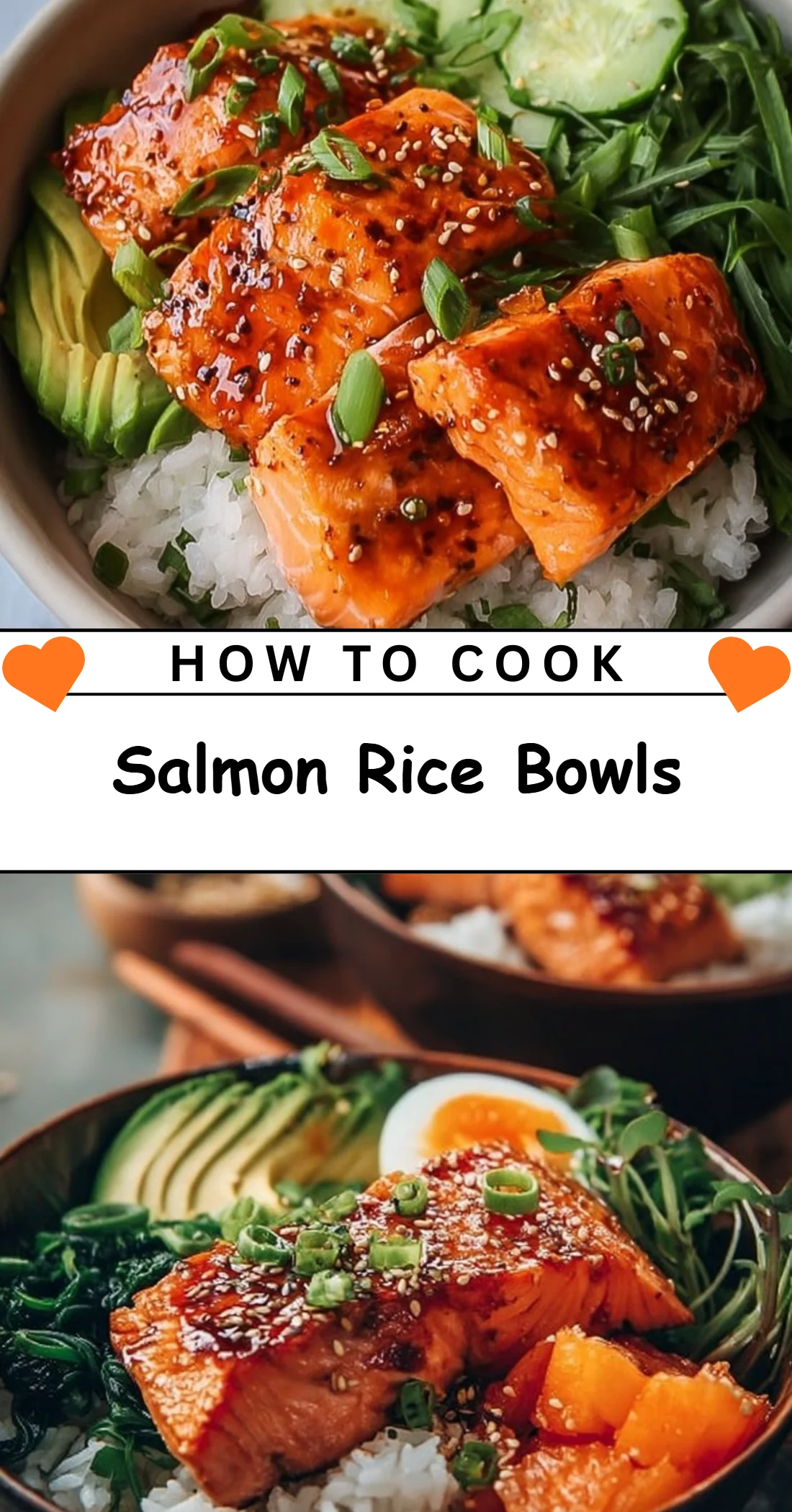
Ingredients for Salmon Rice Bowls
For the Base
- 2 cups cooked rice (white or brown)
For the Salmon & Vegetables
- 2 salmon fillets
- 1 cup mixed vegetables (like broccoli, carrots, and bell peppers)
- 1 tablespoon olive oil
- Salt and pepper to taste
For the Sauce
- 2 tablespoons soy sauce
- 1 tablespoon fresh ginger, grated
For Serving (optional)
- Green onions for garnish
Ingredient Notes (Substitutions, Healthy Swaps)
- Rice: Use brown rice for added fiber and a nuttier flavor; note cooking time and texture will differ from white rice.
- Salmon fillets: Any firm, oily fish (optional variation) can be swapped, but to keep the recipe identity, use salmon as written.
- Mixed vegetables: The recipe is written for a 1-cup mixed veg variety. You can use frozen mixed vegetables if fresh isn’t available — thaw slightly and drain excess water before adding to the pan.
- Olive oil: Can be swapped for a neutral oil like vegetable or avocado oil if preferred.
- Soy sauce: For a gluten-free option, use gluten-free tamari or coconut aminos (optional swap). Sodium will change accordingly.
- Ginger: Fresh grated ginger gives the best flavor. If unavailable, a small pinch of ground ginger can be used in a pinch, but it’s not ideal.
- Seasoning: Salt is used to taste. If you’re watching sodium, reduce the added salt and rely on soy sauce for seasoning, or use low-sodium soy sauce.
Step-by-Step Instructions
Follow these concise steps to make the bowls from start to finish.
Step 1 – Prepare the Rice
- Cook rice according to package instructions and set aside.
- Visual cue: Rice should be fluffy with separated grains, not gluey.
Step 2 – Season the Salmon
- Pat the salmon fillets dry and season both sides with salt and pepper.
- Visual cue: Even seasoning coverage; salmon should look dry on the surface so it sears well.
- Pro cue: Patting the fillets dry removes surface moisture and makes for a better crust when searing.
Step 3 – Sear the Salmon
- Heat 1 tablespoon olive oil in a pan over medium heat. Add salmon fillets skin-side down (if skin is on). Cook about 4–5 minutes on each side or until cooked through.
- Visual cue: The surface should be golden-brown and the flesh should flake easily with a fork.
- Pro cue: Resist moving the fillet around in the first few minutes — a stationary fish develops a nicer sear.
Step 4 – Stir-Fry the Vegetables
- In the last few minutes of cooking the salmon, add the mixed vegetables to the pan and stir-fry until tender (2–4 minutes, depending on the veg).
- Visual cue: Vegetables should be bright in color and just tender-crisp, not mushy.
- Pro cue: If vegetables are cooking faster than the salmon, remove them briefly to avoid overcooking and return when the salmon is nearly done.
Step 5 – Make the Soy-Ginger Dressing
- In a small bowl, whisk together 2 tablespoons soy sauce and 1 tablespoon grated fresh ginger.
- Visual cue: The sauce should be smooth with visible grated ginger pieces.
Step 6 – Assemble the Bowls
- To serve, place a portion of rice in a bowl, top with a salmon fillet and the sautéed vegetables. Drizzle with the soy-ginger dressing and garnish with sliced green onions if desired.
- Visual cue: A colorful bowl with a glossy dressing drizzle and a sprinkle of green onions for brightness.
- Pro cue: Serve immediately for best texture; the salmon is best enjoyed hot and flaky.
Pro Tips for Success
- Heat control: Use medium heat to sear the salmon so it cooks through without burning. If the oil starts smoking, reduce the heat.
- Dry fish: Always pat salmon dry before seasoning to ensure a good sear and prevent steaming.
- Even cooking: Thicker fillets may need a minute or two longer; thinner ones require less time. Check doneness by flaking the thickest part.
- Vegetables: Add vegetables toward the end to keep them crisp-tender; overcooked veg loses color and nutrients.
- Sauce balance: Grated ginger is aromatic and sharp — taste the soy-ginger sauce and adjust (more soy for salt, more ginger for warmth).
- Resting: Let cooked salmon rest 1–2 minutes off the heat before assembling to let juices redistribute.
- Timing: Cook rice in advance or use leftover rice to speed weeknight prep.
Flavor Variations
(ALL OPTIONAL — these keep the base recipe intact)
- Spicy kick: Add a drizzle of sriracha or a pinch of crushed red pepper to the soy-ginger dressing.
- Citrus brightness: Stir a teaspoon of lemon or lime juice into the dressing for freshness.
- Sesame touch: Sprinkle toasted sesame seeds when serving, or add a few drops of toasted sesame oil (optional use).
- Ginger-forward: Double the grated ginger in the sauce for more aromatic heat.
- Veg boost: Add an extra cup of mixed vegetables for a heartier, vegetable-forward bowl (increase cook time slightly).
Serving Suggestions
- Light side salad: A simple green salad with a lemon vinaigrette pairs well and adds freshness.
- Quick pickles: Serve with quick-pickled cucumber or radish for brightness and crunch.
- Weeknight dinner: Serve as a standalone main for an easy family meal.
- Casual entertaining: Plate bowls family-style and let guests garnish with green onions.
- Bento-style: Portion into meal-prep containers for portable lunches.
- Comfort pairings: Complement the bowl with steamed edamame or a small miso-soup (optional additions).
Also, if you enjoy building a rotation of rice bowls, try pairing this salmon bowl meal day with a hearty beef option like the Beef Pepper Rice Bowl for variety.
Make-Ahead, Storage & Reheating
- Make-ahead: Cook the rice and prepare the soy-ginger sauce up to a day ahead. Store separately in airtight containers.
- Assembly later: Cook salmon and vegetables just before serving for the best texture. If you must prep salmon ahead, slightly undercook it so reheating won’t dry it out.
- Refrigerator storage: Store assembled bowls for up to 2 days. For best texture, store rice, salmon, and vegetables separately.
- Reheating methods:
- Microwave: Reheat rice and vegetables covered for 60–90 seconds. Reheat salmon gently in 20–30 second bursts to avoid drying.
- Oven: Reheat at 300°F (150°C) for 8–12 minutes, covered, to retain moisture.
- Texture changes: Rice may firm up in the fridge; reheat with a splash of water to restore softness. Salmon will be firmer after refrigeration.
Storage and Freezing Instructions
- Freezing: Freezing cooked salmon fillets is possible but not ideal for texture — the fish can become a bit dry or flaky after thawing. If you plan to freeze, store salmon separately in airtight freezer-safe bags for up to 1 month.
- Rice and vegetables: Cooked rice and sautéed vegetables can be frozen but may suffer texture changes (softer vegetables). Freeze in portioned containers for up to 1 month.
- Recommended approach: For best quality, freeze components separately (rice and vegetables) if you must, and refrigerate salmon for up to 2 days instead of freezing.
- Thawing: Thaw frozen components overnight in the refrigerator before reheating gently.
Nutrition Facts (Per Serving)
| Calories | Protein | Carbs | Fat | Fiber | Sodium |
|———|——–|——|—–|——|——-|
| 650 kcal | 40 g | 50 g | 30 g | 3 g | 900 mg |
Nutrition values are estimates and may vary depending on ingredients and portion sizes.
FAQ About Salmon Rice Bowls
- How do I know when the salmon is cooked through?
- The salmon should flake easily with a fork and the center should be opaque. Cook about 4–5 minutes per side for average fillets; thicker pieces may need more time.
- Can I use frozen mixed vegetables?
- Yes. Thaw and pat dry to remove excess moisture before stir-frying to avoid steaming them in the pan.
- Is this recipe gluten-free?
- The core recipe uses soy sauce which contains gluten. For a gluten-free option, use gluten-free tamari or coconut aminos (optional swap).
- What’s the best way to reheat salmon without drying it out?
- Reheat gently using short bursts in the microwave or low oven (300°F/150°C), covered. Adding a splash of water or a light drizzle of oil helps retain moisture.
- Can I make this ahead for meal prep?
- Yes. Cook rice and sauce ahead. For best texture, cook salmon and vegetables fresh or slightly undercook and finish when reheating.
- How salty will the dish be with soy sauce?
- Soy sauce adds significant sodium. Use low-sodium soy sauce if you want to reduce saltiness, and adjust additional table salt to taste.
Notes
- Plating idea: Slice the salmon and fan it across the rice for a restaurant-style presentation.
- Small flavor upgrades: Add a few thinly sliced green onions at the end for color and brightness.
- Seasoning adjustments: Taste the soy-ginger dressing before drizzling; adjust ginger or soy to balance heat and salt.
- Presentation tip: Wipe the edges of the bowl for a clean look and add a final sprinkle of optional sesame seeds or chopped green onions for contrast.
- Meal scaling: Double the ingredients to feed more people — maintain cooking times by using a larger pan or cooking in batches.
- Texture reminder: Aim for crisp-tender vegetables and a flaky salmon to keep the bowl texturally interesting.
Salmon Rice Bowls
Bright, savory, and comforting, these Salmon Rice Bowls bring together flaky pan-seared salmon, tender mixed vegetables, and fluffy rice with a punchy soy-ginger drizzle.
- Prep Time: 10 minutes
- Cook Time: 20 minutes
- Total Time: 30 minutes
- Yield: 2 servings
- Category: Main Course
- Method: Pan-searing
- Cuisine: Japanese
- Diet: Gluten-Free
Ingredients
- 2 cups cooked rice (white or brown)
- 2 salmon fillets
- 1 cup mixed vegetables (like broccoli, carrots, and bell peppers)
- 1 tablespoon olive oil
- Salt and pepper to taste
- 2 tablespoons soy sauce
- 1 tablespoon fresh ginger, grated
- Green onions for garnish (optional)
Instructions
- Cook rice according to package instructions and set aside.
- Pat the salmon fillets dry and season both sides with salt and pepper.
- Heat 1 tablespoon olive oil in a pan over medium heat. Add salmon fillets skin-side down (if skin is on) and cook about 4–5 minutes on each side or until cooked through.
- Add the mixed vegetables to the pan and stir-fry until tender (2–4 minutes, depending on the veg).
- Whisk together 2 tablespoons soy sauce and 1 tablespoon grated fresh ginger in a small bowl.
- Place a portion of rice in a bowl, top with a salmon fillet and the sautéed vegetables. Drizzle with the soy-ginger dressing and garnish with sliced green onions if desired.
Notes
For a gluten-free option, use gluten-free tamari or coconut aminos instead of soy sauce. Adjust seasoning to taste.