

There’s something comforting about a smooth, golden bowl of butternut squash soup: velvety texture, gentle sweetness from roasted squash, and warm notes of cinnamon that make it feel like a hug in a bowl. This version is simple to pull together on a weeknight—just sauté, simmer, blend, and finish with creamy coconut milk for a silky finish that’s both dairy-free and indulgent. It’s great on its own or paired with crusty bread, and if you’re building a cozy soup night, try it alongside a flavorful hearty chicken enchilada soup recipe for variety and contrast.
Why You’ll Love This Butternut Squash Soup
- Silky-smooth texture that’s naturally creamy thanks to blended squash and coconut milk.
- Warm, comforting flavor profile—sweet squash balanced with savory broth and a hint of cinnamon.
- Quick and approachable: minimal prep and pantry-friendly ingredients.
- Dairy-free and naturally vegetarian when made with vegetable broth and coconut milk.
- Versatile—works as a starter, light lunch, or the centerpiece of a cozy dinner.
- Easy to scale up for guests or to make-ahead for busy weeknights.
- Mild spice works for kids, but you can easily kick up heat if you like.
- Pretty to serve: the orange hue pops with a sprinkle of fresh herbs.
What Is Butternut Squash Soup?
Butternut squash soup is a pureed, comforting soup made primarily from cooked butternut squash, aromatics, broth, and a creamy element. The taste is mildly sweet and nutty from the squash, with savory depth from onions, garlic, and vegetable broth. Texture is smooth and velvety after blending, with a body that can be as thick or thin as you prefer depending on how much broth you use.
This recipe uses stovetop simmering—sauté aromatics, add squash and broth, simmer until tender, then puree—so it’s fast and reliable. People commonly serve this soup in autumn and winter when squash is in season, but its mellow flavor and easy prep make it a year-round favorite for weeknight dinners, lunch with a salad, or as a starter at a holiday meal. The overall vibe is cozy, nurturing, and slightly elegant when finished with fresh herbs.
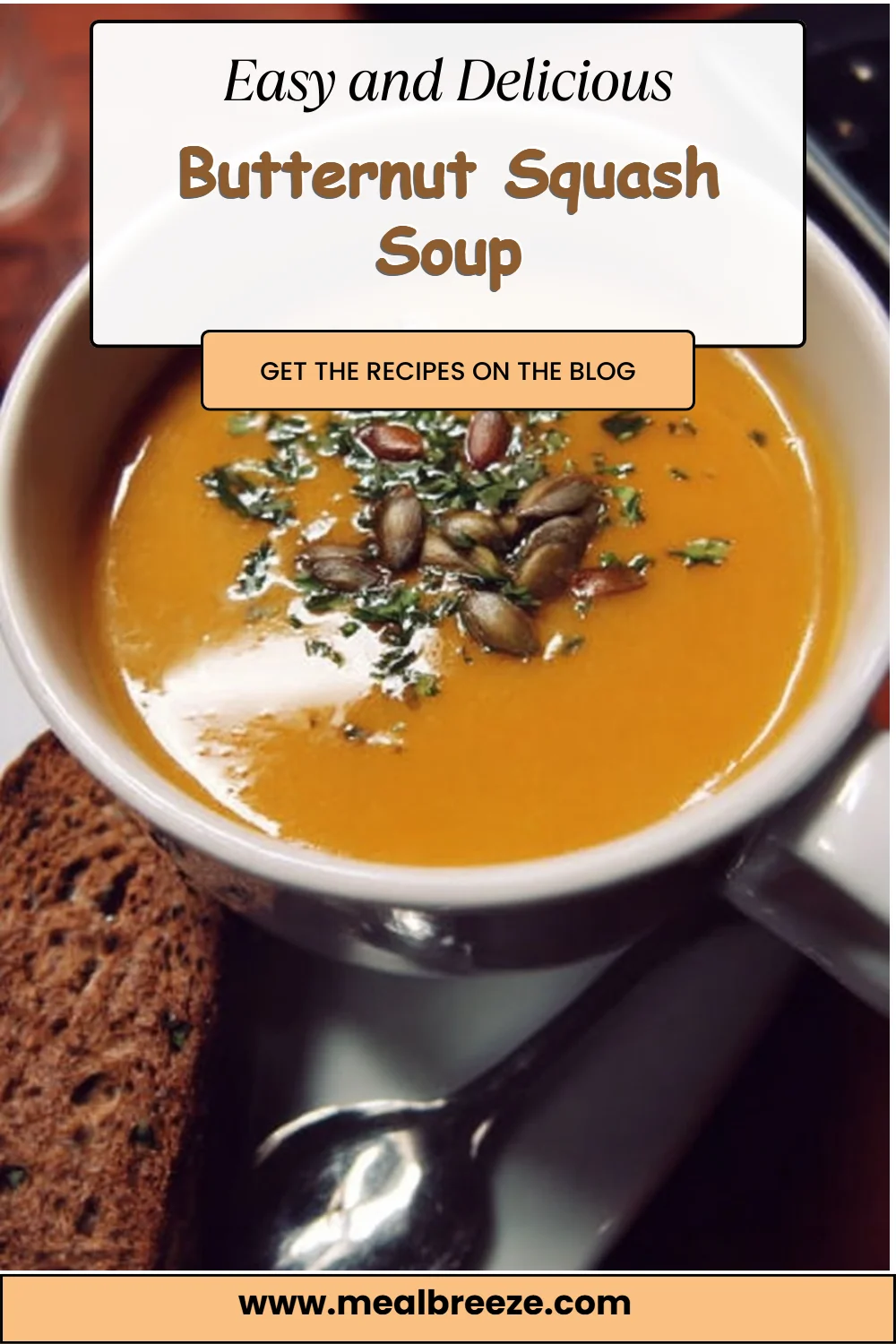
Ingredients for Butternut Squash Soup
For the Soup
- 1 medium butternut squash, peeled and chopped (about 2–3 lb / 900–1,400 g, peeled and chopped)
- 1 onion, chopped
- 2 garlic cloves, minced
- 4 cups vegetable broth (about 960 ml)
- 1 cup coconut milk (about 240 ml)
- 1 teaspoon ground cinnamon
- Salt and pepper to taste
- Olive oil (for sautéing; amount as needed)
For Serving
- Fresh herbs for garnish (such as parsley or cilantro)
Ingredient Notes (Substitutions, Healthy Swaps)
- Coconut milk: This recipe uses coconut milk for creaminess and a slightly tropical finish. If you prefer a lighter texture, you can optionally use a lower-fat coconut milk or a plant-based milk like unsweetened almond milk (optional swap). Be aware the flavor will be milder.
- Vegetable broth: Choose a low-sodium broth to control the final salt level; adjust seasoning at the end. Homemade broth can deepen flavor if available.
- Olive oil: If you want to reduce fat, you can sauté the onion and garlic in a couple of tablespoons of vegetable broth instead of oil (optional).
- Cinnamon: This warm spice is subtle—if you prefer, you can reduce to 1/2 teaspoon for a less pronounced note.
- Salt & pepper: Season to taste at the end, because broth sodium varies widely.
Note: All swaps above are optional and do not change the core method—sauté, simmer, blend, finish with coconut milk and cinnamon.
Step-by-Step Instructions
Step 1 – Sauté the aromatics
In a large pot, heat olive oil over medium heat. Add the chopped onion and garlic, and sauté until softened.
Visual cue: The onion should be translucent and fragrant, not browned.
Step 2 – Add the squash
Add the chopped butternut squash and continue to cook for a few minutes, stirring to coat the pieces in the oil and aromatics.
Pro cue: Give the squash a minute or two to pick up flavor from the onion; it doesn’t need to brown—just a light sheen.
Step 3 – Simmer in broth
Pour in the vegetable broth and bring to a boil. Reduce heat and let it simmer until the squash is tender, about 20 minutes.
Visual cue: The squash will be fork-tender and easy to pierce.
Step 4 – Puree until smooth
Use an immersion blender to puree the soup until smooth. Alternatively, transfer the soup in batches to a blender.
Pro cue: If using a blender, fill it only halfway and hold the lid with a towel to avoid splatters; blend in pulses for an even texture.
Step 5 – Finish with coconut milk and cinnamon
Stir in the coconut milk and ground cinnamon. Season with salt and pepper to taste. Return to gentle heat to warm through, but don’t boil after adding coconut milk to preserve its creaminess.
Step 6 – Serve
Serve warm, garnished with fresh herbs. Adjust seasoning with extra pepper or a small pinch of salt if needed.
Visual cue: The soup should be smooth, glossy, and pourable—thicker than broth but not pudding-like.
Pro Tips for Success
- Use uniform chop sizes: Cut the squash into roughly equal pieces so everything cooks evenly in about 20 minutes.
- Watch your heat while sautéing: Medium heat will soften onions without burning the garlic, keeping flavors mellow.
- Test doneness with a fork: Squash should be tender enough to mash easily—this ensures a silky puree.
- Blend in batches safely: When using a stand blender, vent slightly and cover the lid with a towel to release steam and prevent splatters.
- Adjust thickness with broth: Prefer a thinner soup? Add an extra 1/2–1 cup broth before blending. Want it heartier? Use slightly less broth.
- Season gradually: Add a little salt at a time—broths vary, so finish seasoning after adding coconut milk.
- Reheat gently: Bring back to temperature over low heat to avoid breaking the coconut milk.
Flavor Variations (OPTIONAL)
- Spicy version: Add a pinch of cayenne or a diced jalapeño during the sauté step for a gentle heat boost. (OPTIONAL)
- Herb-forward: Stir in a small handful of chopped fresh herbs like sage or thyme just before serving. (OPTIONAL)
- Ginger-laced: Add 1 teaspoon of freshly grated ginger with the garlic for a bright, warming note. (OPTIONAL)
- Toasted seed garnish: Sprinkle toasted pumpkin or sunflower seeds on top for crunch and a nutty contrast. (OPTIONAL)
- Lighter version: Swap full-fat coconut milk for a light coconut milk or unsweetened almond milk to reduce calories. (OPTIONAL)
Serving Suggestions
- Serve with crusty bread or a warm baguette for dipping—its crispness contrasts perfectly with the silky soup.
- Add a side salad with bright vinaigrette to cut through the creaminess and round out a lunch.
- For a heartier meal, pair with a simple grilled cheese or a grain bowl.
- Make it part of a soup tasting night—this butternut squash soup pairs well alongside richer, savory options like a chicken pot pie soup for variety.
- Use it as an elegant starter for holiday dinners; garnish with herbs just before serving for a polished look.
Make-Ahead, Storage & Reheating
- Make-ahead: You can complete the soup up to the blending step, cool, and refrigerate for up to 24 hours before blending and finishing. Alternatively, blend fully and store cooled.
- Refrigerator storage: Store in an airtight container for up to 3–4 days. The flavors may meld and deepen after a day.
- Reheating: Reheat over low to medium-low heat on the stove, stirring occasionally. If the soup seems too thick after refrigeration, thin with a splash of vegetable broth or water while warming.
- Texture changes: Creamy soups sometimes thicken when chilled. Stirring in a little extra broth while reheating restores the desired consistency.
Storage and Freezing Instructions
- Freezing: This soup freezes well. Cool completely, then transfer to freezer-safe containers or heavy-duty freezer bags, leaving headspace for expansion. Freeze for up to 3 months.
- Thawing: Thaw overnight in the refrigerator before reheating on the stove. If you’re short on time, thaw gently in a saucepan over low heat.
- After freezing, texture may separate slightly; whisk or blend briefly while reheating to restore a smooth consistency.
- If you don’t want to freeze, consider making a larger batch and refrigerating for up to 4 days or using it as a sauce over grains within that window.
Nutrition Facts (Per Serving)
| Calories | Protein | Carbs | Fat | Fiber | Sodium |
|———|——–|——|—–|——|——-|
| 263 kcal | 3 g | 25 g | 18 g | 4 g | 450 mg |
Nutrition values are estimates and may vary depending on ingredients and portion sizes.
FAQ About Butternut Squash Soup
Q: My soup turned out watery—what happened?
A: You likely added too much broth or under-blended the squash. Reduce the broth next time or blend longer to emulsify the squash for a thicker texture.Q: How can I tell when the squash is cooked enough?
A: It should be fork-tender and easily mashed when pierced—about 20 minutes simmering as directed.Q: My soup is bland—how do I fix it?
A: Adjust salt and pepper at the end. A little more salt often brightens flavors; a small pinch of cinnamon can also enhance warmth.Q: Can I use an oven-roasted squash instead of simmering?
A: The recipe’s directions call for simmering in broth, but if you prefer roasting for deeper caramelized flavor, roast and then follow the blending and finishing steps—this is an optional technique.Q: Will the coconut milk separate when reheated?
A: If overheated at high temperature, coconut milk can separate. Reheat gently over low heat and stir frequently to maintain a smooth texture.Q: How long will leftovers keep in the fridge?
A: Stored in an airtight container, leftovers should keep 3–4 days in the refrigerator.
Notes
- For a restaurant-style presentation, drizzle a little extra coconut milk in a swirl and finish with finely chopped fresh herbs.
- If you like texture contrast, reserve a few cubes of cooked squash before blending and stir them back in for bite-sized pieces.
- Taste as you go: because broth and coconut milk vary in intensity, final seasoning should be adjusted to your preference.
- Use a high-powered blender for the silkiest finish, but an immersion blender is perfectly fine and easier for hot liquids.
- Garnish ideas: finely chopped herbs, a crack of black pepper, or a sprinkle of toasted seeds add visual and textural appeal.
Butternut Squash Soup

A creamy and comforting butternut squash soup that’s dairy-free and perfect for any season.
- Prep Time: 10 minutes
- Cook Time: 30 minutes
- Total Time: 40 minutes
- Yield: 4 servings
- Category: Soup
- Method: Stovetop
- Cuisine: American
- Diet: Vegan
Ingredients
- 1 medium butternut squash, peeled and chopped (about 2–3 lb / 900–1,400 g)
- 1 onion, chopped
- 2 garlic cloves, minced
- 4 cups vegetable broth (about 960 ml)
- 1 cup coconut milk (about 240 ml)
- 1 teaspoon ground cinnamon
- Salt and pepper to taste
- Olive oil (for sautéing; amount as needed)
- Fresh herbs for garnish (such as parsley or cilantro)
Instructions
- Sauté the aromatics: In a large pot, heat olive oil over medium heat. Add the chopped onion and garlic, and sauté until softened.
- Add the squash: Add the chopped butternut squash and continue to cook for a few minutes, stirring to coat the pieces in the oil and aromatics.
- Simmer in broth: Pour in the vegetable broth and bring to a boil. Reduce heat and let it simmer until the squash is tender, about 20 minutes.
- Puree until smooth: Use an immersion blender to puree the soup until smooth, or transfer the soup in batches to a blender.
- Finish with coconut milk and cinnamon: Stir in the coconut milk and ground cinnamon. Season with salt and pepper to taste. Return to gentle heat to warm through, but don’t boil after adding coconut milk.
- Serve: Serve warm, garnished with fresh herbs.
Notes
You can make the soup ahead of time by refrigerating it before blending. The soup also freezes well for up to 3 months.