
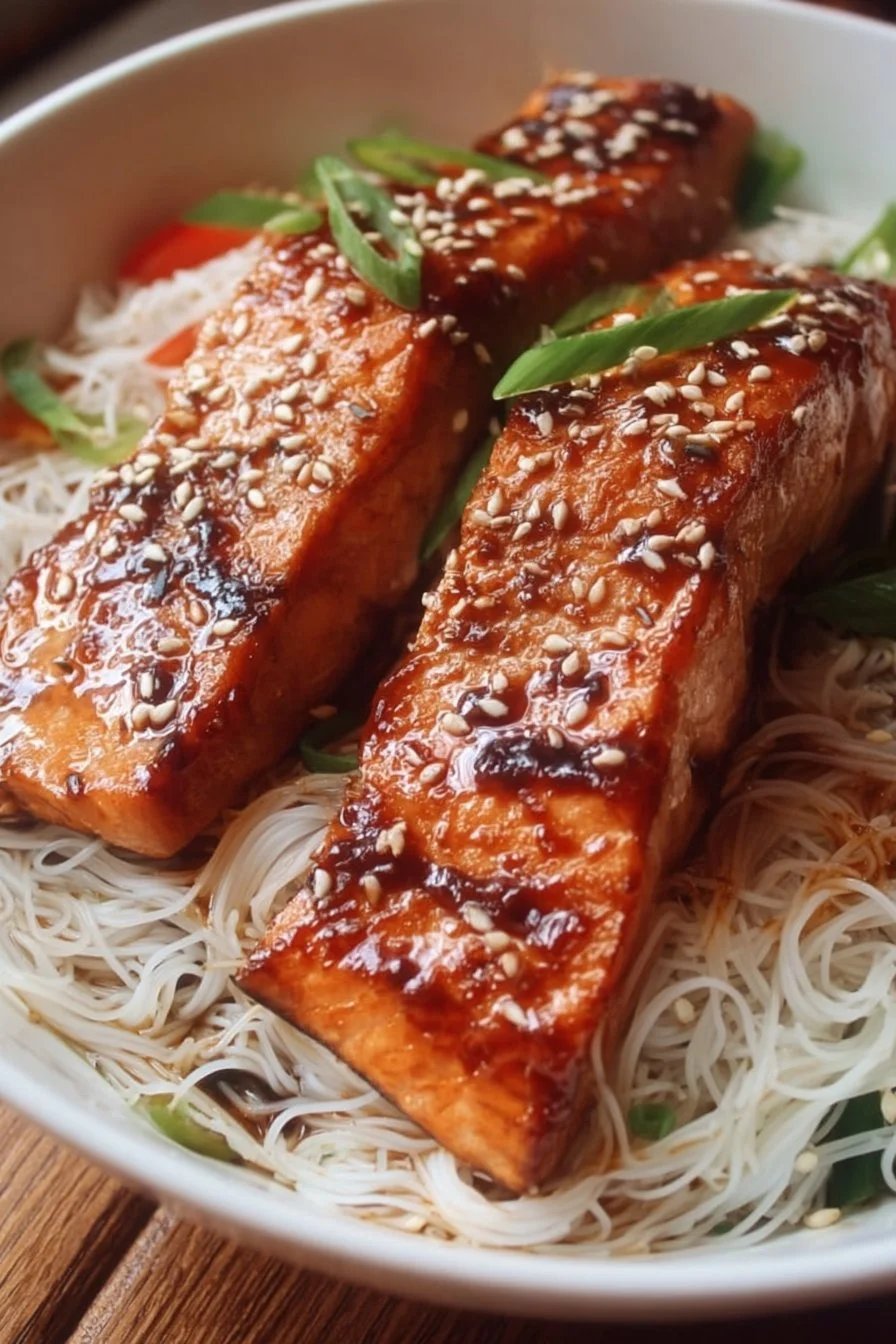
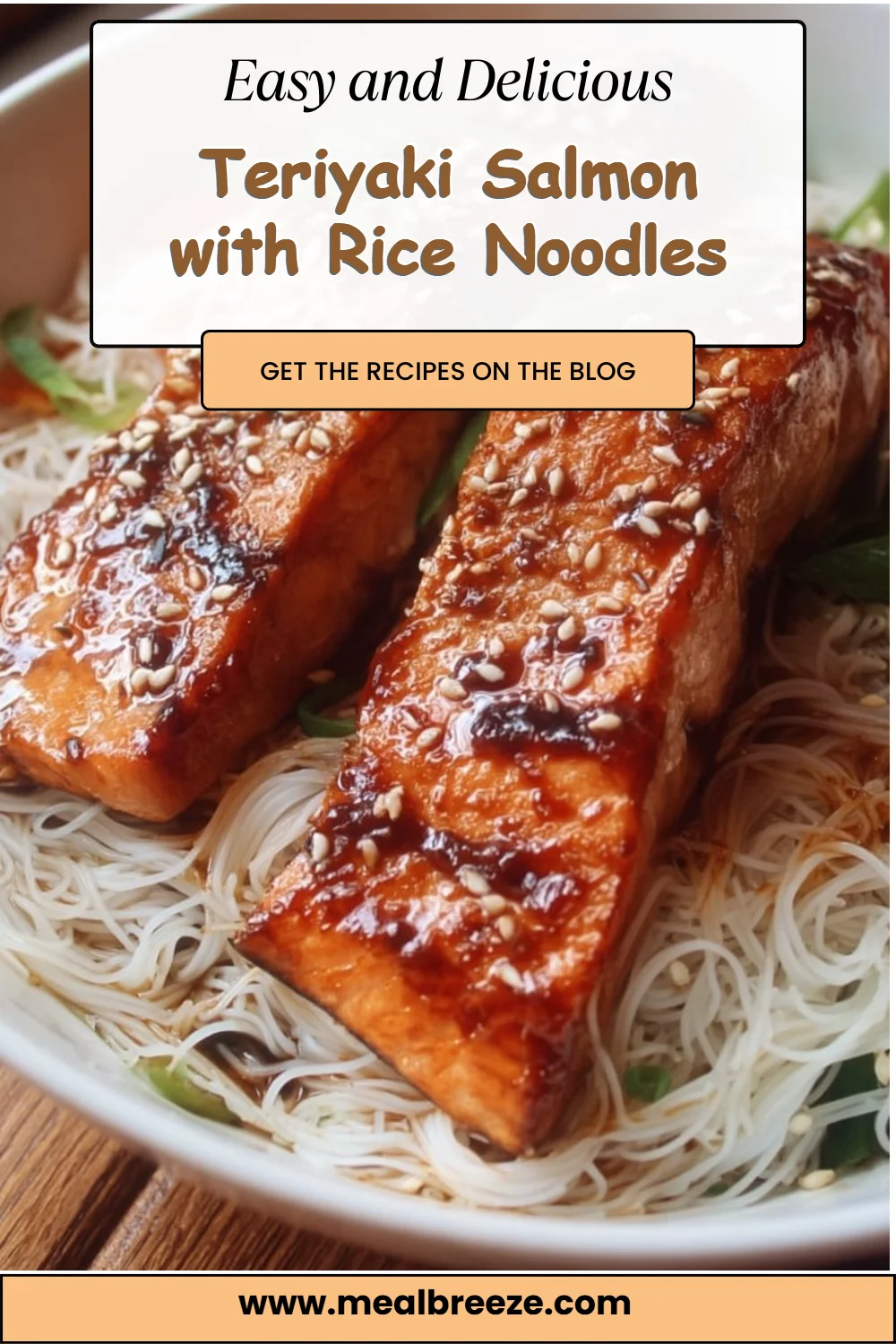
This teriyaki salmon with rice noodles is a delightful balance of glossy, salty-sweet sauce and tender, flaky fish set atop silky rice noodles and crisp-tender broccoli. The teriyaki glaze caramelizes just enough to give the salmon a sticky, flavorful crust while the rice noodles soak up the savory juices for a comforting, quick weeknight meal. Texture plays beautifully here — soft noodles, meaty salmon, and little pops of sesame add contrast. It’s effortless to assemble and feels special enough for guests, but simple enough for a busy Tuesday. If you like easy, satisfying meals that come together in under 30 minutes, this dish hits the mark — especially when served with a light green salad or something else savory like baked eggs with cottage cheese for a brunch-style spread.
Why You’ll Love This Teriyaki Salmon with Rice Noodles
- Bold sweet-and-salty teriyaki flavor clings to perfectly seared salmon.
- Fast to make: most of the work is hands-off cooking or steaming.
- Balanced textures: silky rice noodles, flaky fish, and tender-crisp broccoli.
- Minimal ingredients and simple steps — great for weeknights.
- Versatile plating: serve family-style, bowl-style, or plated for guests.
- Light enough for a midweek meal but satisfying enough for company.
- Easy to customize with optional add-ins without changing the core recipe.
What Is Teriyaki Salmon with Rice Noodles?
This dish pairs pan-seared salmon fillets brushed in teriyaki sauce with a bed of rice noodles and steamed broccoli. The salmon develops a glossy teriyaki coating that’s slightly caramelized from the skillet, while the rice noodles act as a neutral, silky base to soak up the sauce. It’s typically made on the stovetop and served hot, making it an ideal weeknight dinner or casual weekend supper. The overall vibe is approachable comfort food with an Asian-inspired profile — simple, flavorful, and satisfying.
Ingredients for Teriyaki Salmon with Rice Noodles
For the Base
- 200g rice noodles
- 1 cup broccoli florets
For the Salmon
- 2 salmon fillets
- 1/4 cup teriyaki sauce
- 1 tablespoon vegetable oil
For Serving
- 2 green onions, sliced
- Sesame seeds for garnish
Ingredient Notes (Substitutions, Healthy Swaps)
- Teriyaki sauce: If you want lower sodium, look for a reduced-sodium teriyaki or use a gluten-free tamari-based teriyaki. These keep the same flavor profile without changing the recipe.
- Salmon fillets: Any skin-on or skinless salmon works; just adjust searing time slightly if the fillets are much thicker or thinner.
- Rice noodles: Naturally gluten-free. If you prefer a different texture, you can optionally swap for other neutral noodles (see variations), but rice noodles keep the light, silky feel.
- Vegetable oil: Swap with avocado or light olive oil if you don’t have vegetable oil on hand.
- Broccoli: Tender-crisp florets are recommended; if you want an even quicker cook, chop them smaller so they steam faster.
Step-by-Step Instructions
Step 1 – Prepare the rice noodles
- Cook rice noodles according to package instructions; drain and set aside.
Visual cue: Noodles should be soft, translucent, and pliable — not sticky clumps.
Pro cue: Rinse briefly under warm water after draining to prevent sticking and keep them silky.
Step 2 – Heat the skillet
2. In a skillet, heat vegetable oil over medium heat.
Visual cue: The oil should shimmer slightly but not smoke.
Pro cue: Use a wide skillet so the salmon fillets sit flat without crowding.
Step 3 – Sear the salmon
3. Add salmon fillets to the skillet and cook for about 4–5 minutes on each side until cooked through.
Visual cue: The exterior should be golden and slightly caramelized; the interior should be opaque and flake with a fork.
Pro cue: Resist the urge to flip more than once — letting the salmon develop a sear creates better texture.
Step 4 – Glaze with teriyaki
4. Pour teriyaki sauce over the salmon and cook for an additional 2 minutes.
Visual cue: Sauce should bubble gently and turn glossy, coating the fish.
Pro cue: Spoon sauce over the top as it cooks so every bite is well glazed.
Step 5 – Steam the broccoli
5. In a separate pot, steam broccoli until tender.
Visual cue: Broccoli should be bright green and tender-crisp, not mushy.
Pro cue: Steam with a tight-fitting lid to trap heat and keep cooking time short.
Step 6 – Combine the base
6. Combine rice noodles with steamed broccoli.
Visual cue: Noodles should be evenly mixed with broccoli, with some sauce from the salmon ready to be absorbed.
Pro cue: Toss gently so the noodles don’t break and to distribute heat evenly.
Step 7 – Plate and garnish
7. Plate the noodles and broccoli, then top with teriyaki salmon. Garnish with sliced green onions and sesame seeds. Serve warm.
Visual cue: A glossy salmon fillet perched on a nest of noodles, sprinkled with green onions and sesame seeds — visually inviting and balanced.
Pro cue: Serve immediately to enjoy the contrast between warm glaze and tender noodles.
Pro Tips for Success
- Heat control: Medium heat gives a good sear without burning the teriyaki glaze during the final step.
- Doneness: Salmon is done when it flakes easily and the center is opaque. For a slightly more moist center, aim for 125–130°F (51–54°C) if using a thermometer.
- Texture control: Don’t overcook rice noodles — cook per package and rinse to stop carryover cooking.
- Sauce balance: Because teriyaki sauce can be salty, taste before adding more; the recipe uses 1/4 cup total.
- Avoid crowding: Cook salmon in a single layer so it sears evenly.
- Timing tip: Start the noodles first since they usually take the longest, then sear salmon while broccoli steams.
- Presentation: Place salmon skin-side up (if skin-on) for a clean plated look and sprinkle sesame seeds last to keep them toasty.
Flavor Variations
(All optional — they keep the base recipe intact.)
- Spicy kick: Add a few drops of sriracha or a pinch of red pepper flakes to the teriyaki sauce before glazing.
- Citrus brightness: Squeeze a little fresh lemon or lime over the plated salmon for a bright contrast.
- Ginger-forward: Stir a small amount of freshly grated ginger into the teriyaki sauce before pouring it over the salmon.
- Noodle swap (optional): Use soba or udon noodles instead of rice noodles if you prefer a chewier texture.
- Extra veggies: Toss in thinly sliced bell peppers or snap peas with the steamed broccoli for color and crunch.
Serving Suggestions
- Family bowls: Divide the noodles and broccoli among bowls and place a glazed salmon fillet on top for an easy, shareable meal.
- Light sides: A crisp cucumber salad or steamed green beans pair well and keep the meal balanced.
- Rice alternative: If someone prefers rice, a bowl of steamed rice works — but the silky texture will differ from the rice noodles.
- Casual entertaining: Lay out the ingredients buffet-style so guests can build their own bowls with extra green onions and sesame seeds.
- Complementary dishes: For a varied spread, serve alongside vegetarian mains like baked falafel with tahini sauce for guests who want a plant-based option.
- Garnish ideas: Add additional sliced green onions or a sprinkle of toasted sesame seeds on the table for personal preference.
Make-Ahead, Storage & Reheating
- Make-ahead: Cook the rice noodles and steam the broccoli up to a day in advance; store separately in airtight containers in the refrigerator. Salmon is best cooked fresh.
- Refrigerator storage: Store leftovers (salmon, noodles, broccoli) in an airtight container for up to 3 days.
- Reheating: Reheat salmon and noodles gently in a skillet over low–medium heat. Add a splash of water or a teaspoon of oil to the noodles to prevent them drying out. Avoid microwave reheating if possible, as it can make the salmon tough.
- Texture changes: Cooked salmon and rice noodles will soften further after storage; they’ll still be tasty but the ideal texture is right after cooking.
Storage and Freezing Instructions
- Freezing: Freezing the glazed salmon with rice noodles is not recommended because the noodles and broccoli can become mushy after thawing. If you want to freeze components, freeze raw salmon fillets (unglazed) wrapped tightly for up to 3 months and thaw before cooking.
- Alternative: For best results, freeze only uncooked salmon and prepare noodles and broccoli fresh. This preserves texture and flavor when you’re ready to eat.
Nutrition Facts (Per Serving)
| Calories | Protein | Carbs | Fat | Fiber | Sodium |
|———|——–|——|—–|——|——-|
| 720 kcal | 38 g | 72 g | 25 g | 4 g | 950 mg |
Nutrition values are estimates and may vary depending on ingredients and portion sizes.
FAQ About Teriyaki Salmon with Rice Noodles
- How can I tell when the salmon is cooked through?
- Salmon flakes easily with a fork and looks opaque in the center; use a thermometer to check for 125–130°F (51–54°C) for moist doneness.
- My rice noodles stuck together — how do I fix that?
- Rinse them under warm water after draining and toss with a tiny drizzle of oil; work quickly and separate with a fork.
- Can I use frozen broccoli instead of fresh?
- Yes — steam frozen broccoli until heated through and tender, but avoid overcooking to prevent sogginess.
- Will the teriyaki sauce burn if I cook it too long?
- Teriyaki sauce can caramelize quickly; cook for the short additional time in the recipe and keep heat moderate to avoid burning.
- How long will leftovers keep in the fridge?
- Store in airtight containers for up to 3 days; reheat gently on the stove for best texture.
- Can I make this recipe gluten-free?
- Yes — use a certified gluten-free teriyaki sauce or tamari-based sauce and confirm rice noodles are gluten-free (they typically are).
Notes
- Plate with intent: Twirl the noodles into a neat nest on each plate before placing the salmon on top for a restaurant-style presentation.
- Small flavor upgrade: Sprinkle a few extra sesame seeds right before serving for added texture and visual appeal.
- Adjust seasoning carefully: Teriyaki sauce is the main seasoning; taste before adding anything extra.
- Keep garnishes fresh: Slice green onions just before serving to maintain their bright color and crispness.
- Serve immediately: The dish is best enjoyed right after plating for optimal texture and shine on the teriyaki glaze.
Teriyaki Salmon with Rice Noodles
A delightful balance of glossy, salty-sweet teriyaki sauce and tender salmon, served on silky rice noodles with crisp-tender broccoli.
- Prep Time: 10 minutes
- Cook Time: 20 minutes
- Total Time: 30 minutes
- Yield: 2 servings
- Category: Main Course
- Method: Stovetop
- Cuisine: Asian
- Diet: Gluten-Free
Ingredients
- 200g rice noodles
- 1 cup broccoli florets
- 2 salmon fillets
- 1/4 cup teriyaki sauce
- 1 tablespoon vegetable oil
- 2 green onions, sliced
- Sesame seeds for garnish
Instructions
- Prepare the rice noodles. Cook according to package instructions; drain and set aside.
- Heat the skillet. In a skillet, heat vegetable oil over medium heat.
- Sear the salmon. Add salmon fillets to the skillet and cook for about 4–5 minutes on each side until cooked through.
- Glaze with teriyaki. Pour teriyaki sauce over the salmon and cook for an additional 2 minutes.
- Steam the broccoli. In a separate pot, steam broccoli until tender.
- Combine the base. Mix rice noodles with steamed broccoli.
- Plate and garnish. Plate the noodles and broccoli, then top with teriyaki salmon, garnishing with green onions and sesame seeds.
Notes
Serve immediately for the best texture and flavor. Option to add sriracha for a spicy kick.