
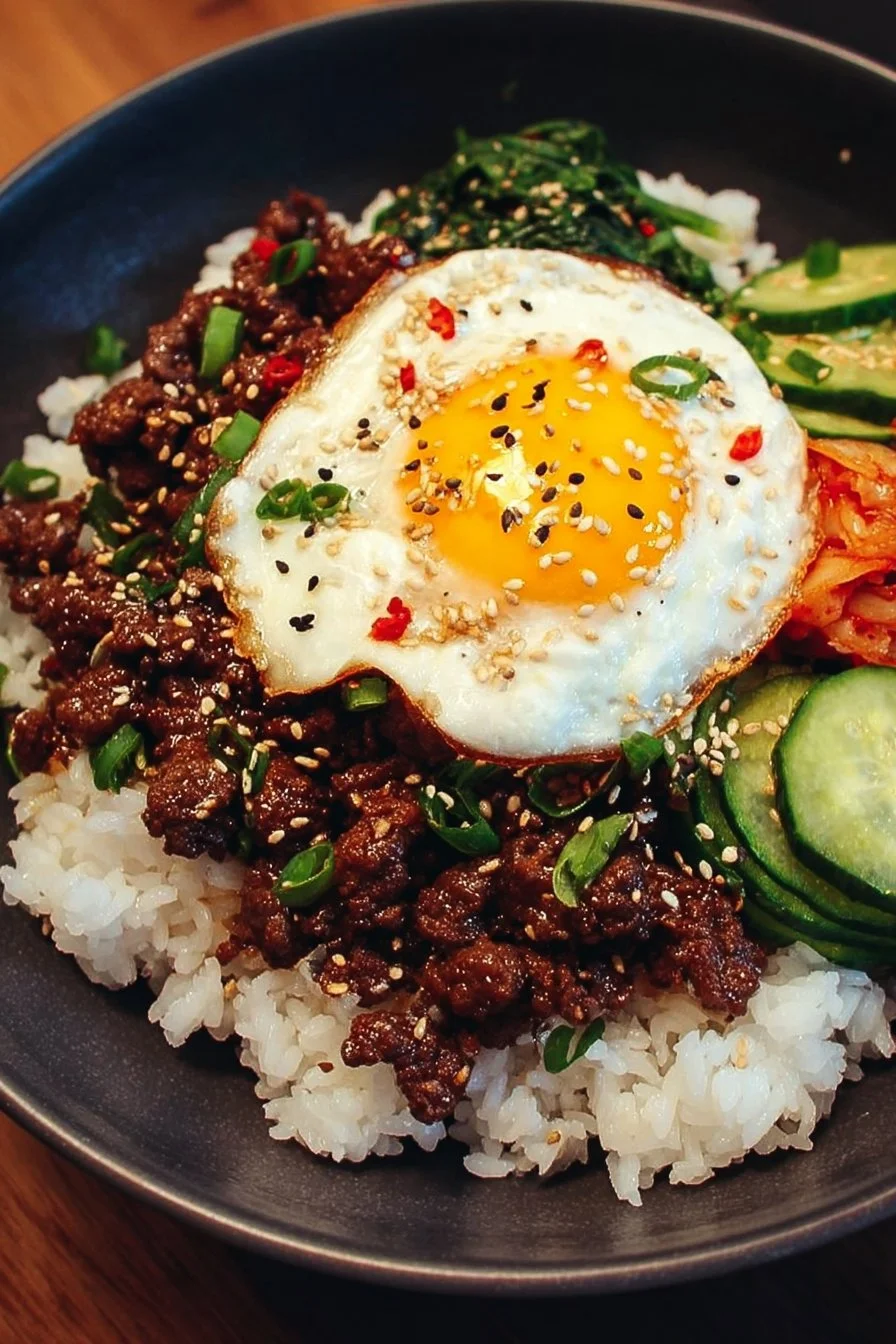
This Korean Beef Bowl is the kind of dinner that hits every comforting note: savory, slightly sweet, and deeply satisfying. Ground beef is caramelized with sesame oil, garlic, and ginger, then glossy soy and brown sugar create a lick-your-plate sauce that clings to every bite of rice. The texture is a perfect contrast — tender, slightly crisped beef against fluffy rice and bright, crunchy vegetables. It’s quick enough for weeknights, comforting enough for chilly weekends, and easy to scale for meal prep. If you love fast beef-and-rice bowls, you might also enjoy a pepper-forward twist like my beef pepper rice bowl for another weeknight favorite. Serve with a jammy fried egg on top for richness and an eye-catching finish.
Why You’ll Love This Korean Beef Bowl
- Big, bold savory-sweet flavor from a simple soy-and-brown-sugar sauce.
- Fast to make: one skillet, about 20 minutes from start to table.
- Handy texture contrast: tender beef, soft rice, crisp vegetables, and a runny egg.
- Very versatile—works as a solo meal, family dinner, or for meal prep.
- Uses pantry-friendly ingredients you probably already have.
- Easy to customize for spice, lighter versions, or different proteins.
- Comforting and familiar with a subtle Asian-inspired profile that’s not overwhelming.
- Great for serving in bowls, making it effortless to plate and enjoy.
What Is Korean Beef Bowl?
A Korean Beef Bowl is a simple rice bowl topped with seasoned ground beef and quick accompaniments. It’s not a single traditional Korean dish, but rather an Americanized, weeknight-friendly bowl inspired by savory Korean flavors—think soy, sesame, garlic, and a hint of sweetness. The beef is cooked on the stovetop (skillet or frying pan) until browned and slightly caramelized, then finished with a quick sauce so every morsel is glossy and flavorful. People typically serve it for dinner or lunch, often with rice and a fried or soft-boiled egg. The overall vibe is casual comfort food—easy, satisfying, and ideal for busy nights or lazy weekends.
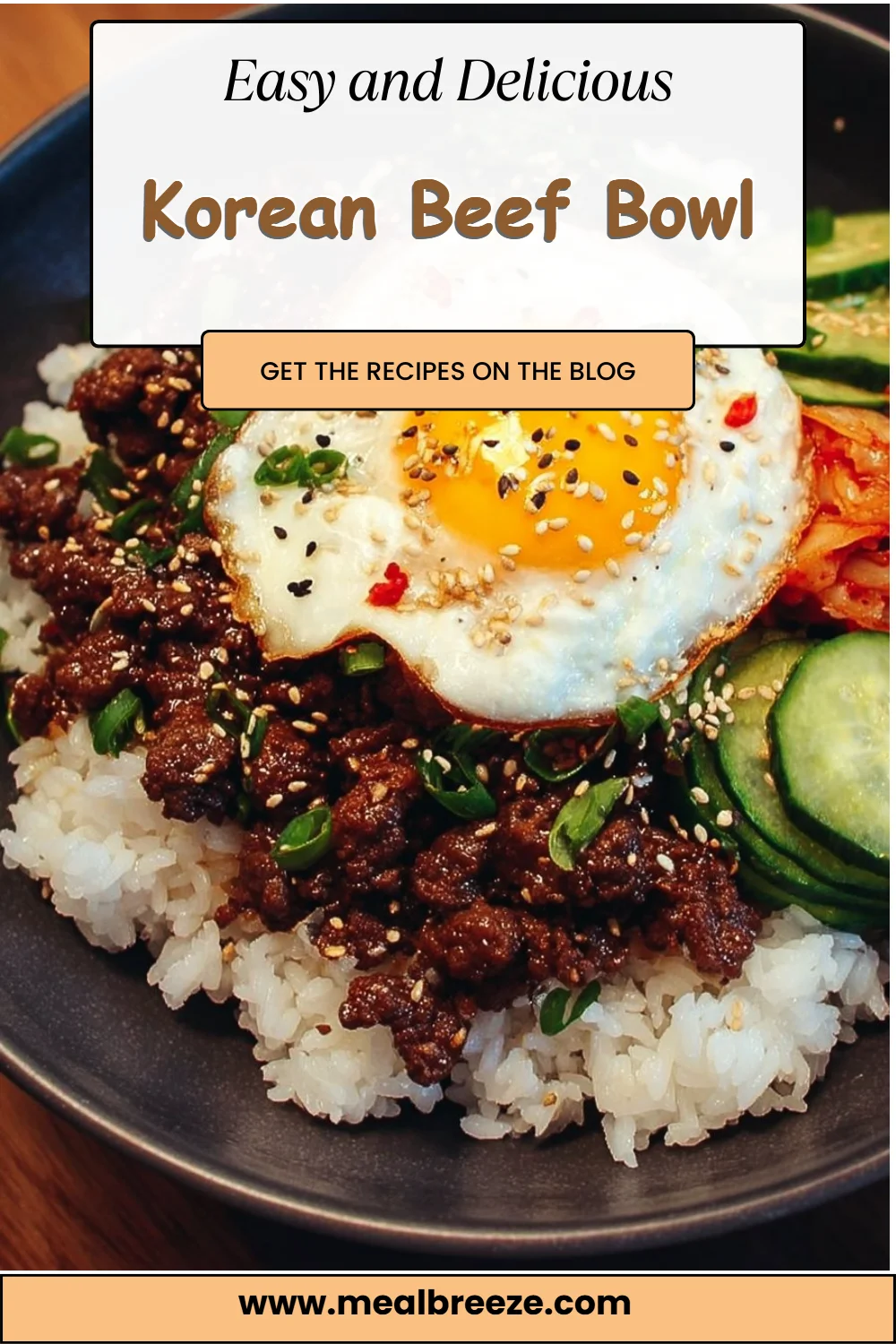
Ingredients for Korean Beef Bowl
For the Beef
- 1 pound ground beef
For the Sauce
- 2 tablespoons soy sauce
- 1 tablespoon brown sugar
- 1 tablespoon sesame oil
- 2 cloves garlic, minced
- 1 teaspoon ginger, minced
For the Base & Serving
- Cooked rice (white or brown)
- Vegetables (like carrots and green onions), thinly sliced or julienned
- Eggs (for topping) — fried to jammy or cooked your preferred way
Ingredient Notes (Substitutions, Healthy Swaps)
- Soy sauce: For a gluten-free option, use tamari or a gluten-free soy sauce substitute in the same amount.
- Brown sugar: Swap with coconut sugar or maple syrup (use slightly less maple syrup, about 3/4 tablespoon) for a different sweetness profile.
- Sesame oil: Adds nutty aroma, but you can reduce to 1/2 tablespoon and finish with a small drizzle of neutral oil while cooking if you want to tone it down.
- Ground beef: Use lean (90/10) for less fat, or 80/20 for richer flavor. Ground turkey or ground chicken can be used as lower-fat protein options (optional).
- Eggs: Omit for a vegetarian-friendly bowl only if you replace the beef with a plant-based ground meat alternative (optional).
Step-by-Step Instructions
Follow these 6 clear steps using only the ingredients listed above.
Step 1 – Heat the sesame oil
- Place a skillet over medium heat and add 1 tablespoon sesame oil.
- Visual cue: The oil should shimmer but not smoke; you’ll begin to smell that warm, toasty sesame aroma.
Step 2 – Cook the aromatics
- Add the minced garlic and minced ginger to the hot oil and cook until fragrant, about 30–45 seconds.
- Pro cue: Stir constantly and watch for color—garlic burns quickly, so keep the heat at medium and move it in the pan.
Step 3 – Brown the ground beef
- Add the ground beef to the skillet. Break it up with a spatula and cook until fully browned and no pink remains, about 6–8 minutes.
- Visual cue: Look for small browned bits and a dry-ish pan surface where fat has rendered away from the meat.
Step 4 – Finish with soy and brown sugar
- Stir in 2 tablespoons soy sauce and 1 tablespoon brown sugar. Cook another 2–3 minutes, allowing the sauce to reduce slightly and coat the beef.
- Pro cue: Tilt the pan and spoon the sauce over the beef to ensure even glazing; if the mixture looks too wet, cook a bit longer to evaporate excess liquid.
Step 5 – Prepare rice, eggs, and veggies
- While the beef finishes, ensure your rice is hot and your vegetables are prepped. Fry eggs until the whites are set but yolks are jammy (about 2–3 minutes in a separate skillet).
- Visual cue: The egg yolk should look glossy and soft—not runny liquid, but not fully firm.
Step 6 – Assemble and serve
- Serve a scoop of cooked rice in each bowl, spoon the beef mixture over the rice, top with a jammy egg, and scatter the sliced vegetables over the top.
- Pro cue: Break the egg yolk just before eating so it creates a silky sauce that mixes with the soy-browned beef.
Pro Tips for Success
- Heat control: Keep the heat at medium. High heat can burn garlic before beef browns; low heat lengthens cooking time unnecessarily.
- Texture control: Brown the beef well—those browned bits add flavor. If the pan accumulates too much fat, drain a little before adding soy and sugar.
- Seasoning balance: Taste a tiny bit of the beef before plating. If it needs more salt, add a splash more soy sauce; if you prefer sweeter, stir in a pinch more brown sugar.
- Egg timing: Fry eggs last so they’re hot and jammy when you serve. A covered pan for 30–45 seconds can help set whites while keeping yolks runny.
- Avoid overcrowding: Cook the beef in a single layer to encourage browning; crowding steams the meat.
- Even coating: After adding the soy and sugar, stir constantly and let the sauce reduce so it clings to the beef rather than pooling.
- Resting rice: Fluff rice with a fork before plating to keep grains separate and prevent a gummy bowl.
- Cleanup shortcut: Line a plate with paper towels to drain fat from the cooked beef if you want a leaner final bowl.
Flavor Variations (Optional)
- Spicy version (optional): Add a dash of sriracha or red pepper flakes to the sauce, stirring in to taste for a spicy kick.
- Veg-forward option (optional): Increase vegetables by adding shredded carrots, thinly sliced cucumbers, or blanched spinach for more color and freshness.
- Lighter version (optional): Use lean ground beef (95/5) and reduce sesame oil to 1/2 tablespoon; finish with lemon or lime juice if you want brightness.
- Egg-free bowl (optional): Omit the egg and top with extra green onions or a dollop of plain yogurt for creaminess.
- Protein swap (optional): Substitute ground turkey or chicken using the same method; cook through fully and adjust seasoning since leaner meats sometimes need a splash more soy.
- Double the garlic (optional): If you love garlic, add an extra clove for a bolder aromatic profile.
Serving Suggestions
- Quick sides: Serve with a simple cucumber salad or steamed broccoli for freshness.
- Plated for guests: Spoon the beef over rice, garnish with green onions and thin carrot ribbons, and place the jammy egg on top for an elegant bowl presentation.
- Meal pairing: Pairs well with miso soup or a light clear broth for a fuller dinner.
- Occasion ideas: Great for weeknight family dinners, casual potlucks, or meal-prep lunches.
- Garnish ideas: Finish with thinly sliced green onions (from the provided veggies) and extra sesame oil drizzle if desired.
- Bento-style serving: Pack rice and beef in a lunch container with raw carrot sticks and a separate compartment for a soft-boiled egg to be added at mealtime.
In case you’re hunting other simple beef bowls for inspiration, this hot-sweet twist on ground beef makes a great comparison to a hot honey ground beef bowl that balances sweet and heat beautifully.
Make-Ahead, Storage & Reheating
- What to prep ahead: Cook the beef mixture and rice up to 3 days in advance and store separately in airtight containers. Prep vegetables and slice just before serving to maintain crunch.
- Refrigerator storage: Store cooked beef and rice in separate airtight containers for up to 3–4 days.
- Reheating methods:
- Stovetop: Reheat the beef gently in a skillet over medium-low heat, adding a teaspoon of water or soy sauce if it feels dry.
- Microwave: Heat in 60-second bursts, stirring in between until hot; keep the egg separate and reheat only if fully cooked (jammy eggs don’t reheat well).
- Texture changes after storage: Rice may firm up and eggs can lose their jammy texture; reheat gently and consider frying a fresh egg for topping.
Storage and Freezing Instructions
- Freezing the beef: You can freeze the cooked beef mixture in a freezer-safe container for up to 2 months. Thaw overnight in the refrigerator before reheating.
- Freezing rice: Cooked rice freezes well in portioned containers or freezer bags for up to 2 months. Reheat from frozen in the microwave with a damp paper towel to restore moisture.
- Eggs and freezing: Eggs are not recommended to freeze once cooked; save egg preparation for serving time for best texture.
- If you prefer not to freeze: Keep beef and rice refrigerated and use within 3–4 days for optimal taste and texture.
Nutrition Facts (Per Serving)
| Calories | Protein | Carbs | Fat | Fiber | Sodium |
|———|——–|——|—–|——|——-|
| 520 kcal | 28 g | 52 g | 22 g | 3 g | 820 mg |
Nutrition values are estimates and may vary depending on ingredients and portion sizes.
FAQ About Korean Beef Bowl
Q: My beef tastes bland—what should I do?
A: Taste and adjust with a little more soy sauce or a pinch more brown sugar to brighten the savory-sweet balance.Q: The beef is watery after I add the sauce. How do I fix it?
A: Cook a bit longer to evaporate excess liquid and encourage the sauce to reduce and cling to the beef. Increase heat slightly and stir constantly to avoid burning.Q: Can I make this gluten-free?
A: Yes—use tamari or a certified gluten-free soy sauce in the same amount.Q: How do I keep the egg yolk jammy?
A: Fry eggs on medium heat for 2–3 minutes without flipping, or cover the pan briefly to set whites while keeping yolks runny.Q: How long will leftovers keep?
A: Stored separately, rice and beef will keep 3–4 days in the refrigerator.Q: Can I use ground pork or alcohol-based sauces?
A: This recipe calls for ground beef and no alcohol; if you change proteins, avoid introducing pork unless you intend to—this recipe’s directions are based on the ingredients provided.
Notes
- Plating idea: Serve in shallow bowls with the egg centered for a pretty, restaurant-style finish.
- Small flavor upgrade: A light drizzle of sesame oil right before serving enhances aroma—use sparingly.
- Seasoning adjustment: Add soy sauce a teaspoon at a time when adjusting salt to avoid over-salting.
- Presentation tip: Julienne the carrots thinly for a delicate crunch and color contrast against the glazed beef.
- Serving temperature: Serve hot so the sauce is glossy and the egg is warm; chilled rice and beef lose their appeal.
- Leftover hack: If reheating, crack a fresh egg on top and microwave briefly (about 30–40 seconds) to revive the jammy element if you don’t want to fry a new one.
Korean Beef Bowl
A comforting Korean Beef Bowl topped with seasoned ground beef, rice, vegetables, and a jammy egg, delivering a savory-sweet flavor in every bite.
- Prep Time: 10 minutes
- Cook Time: 20 minutes
- Total Time: 30 minutes
- Yield: 4 servings
- Category: Main Course
- Method: Stovetop
- Cuisine: Korean
- Diet: None
Ingredients
- 1 pound ground beef
- 2 tablespoons soy sauce
- 1 tablespoon brown sugar
- 1 tablespoon sesame oil
- 2 cloves garlic, minced
- 1 teaspoon ginger, minced
- Cooked rice (white or brown)
- Vegetables (like carrots and green onions), thinly sliced or julienned
- Eggs (for topping) — fried to jammy or cooked your preferred way
Instructions
- Heat the sesame oil in a skillet over medium heat.
- Add the minced garlic and ginger to the hot oil, cooking until fragrant, about 30–45 seconds.
- Brown the ground beef in the skillet, breaking it up until fully cooked, about 6–8 minutes.
- Stir in soy sauce and brown sugar, cooking for another 2–3 minutes to reduce and coat the beef.
- Prepare the rice, fry the eggs, and prep the vegetables while the beef finishes.
- Assemble bowls with rice, beef, vegetables, and a jammy egg on top.
Notes
Adjust the sweetness and saltiness of the beef mixture to your taste. For a gluten-free option, use tamari instead of soy sauce.